
Last updated September 23, 2026
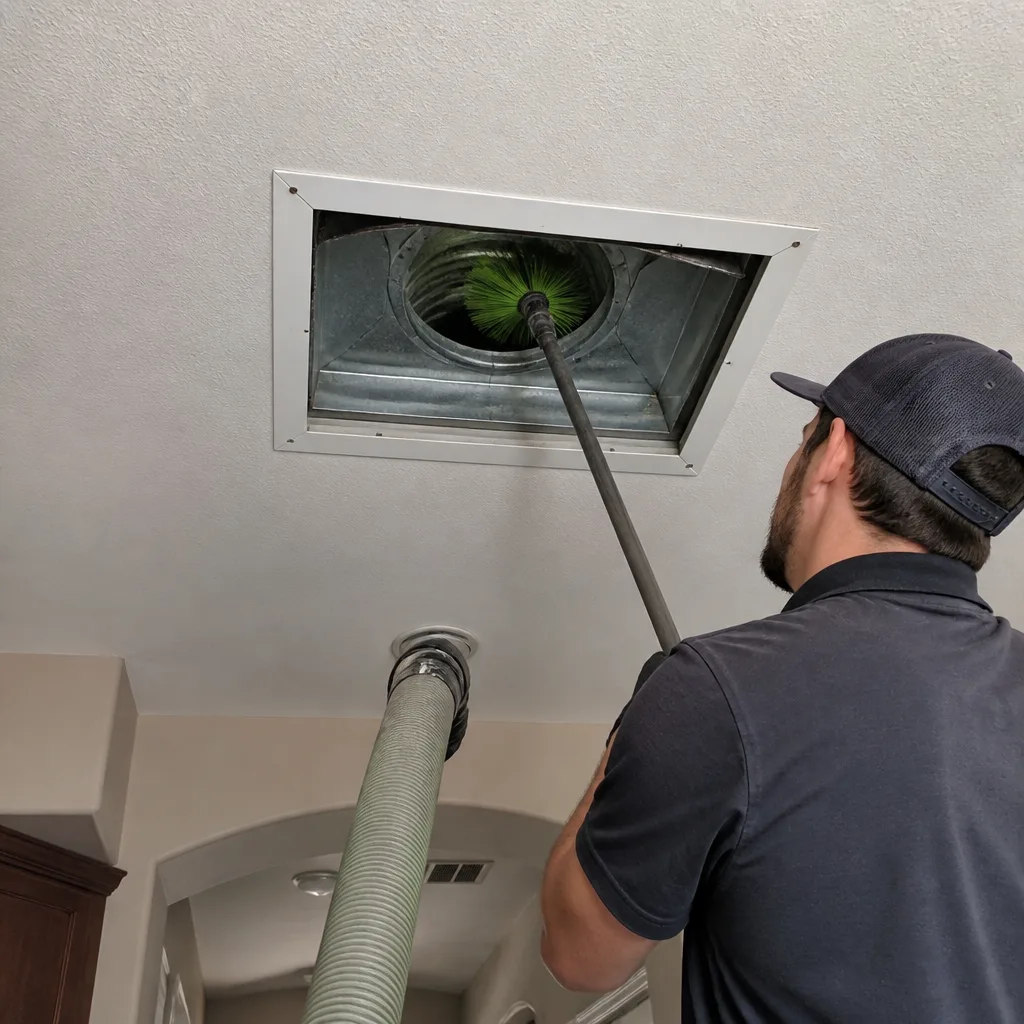
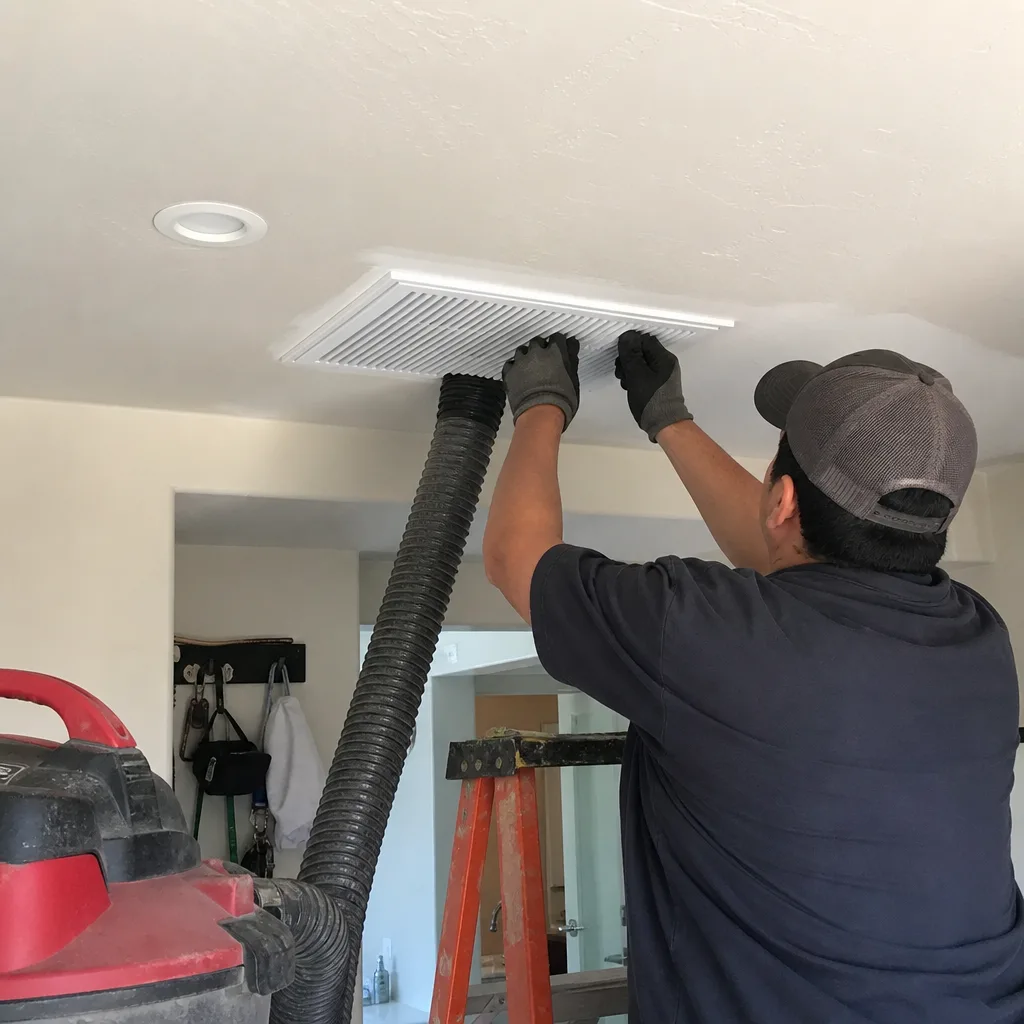
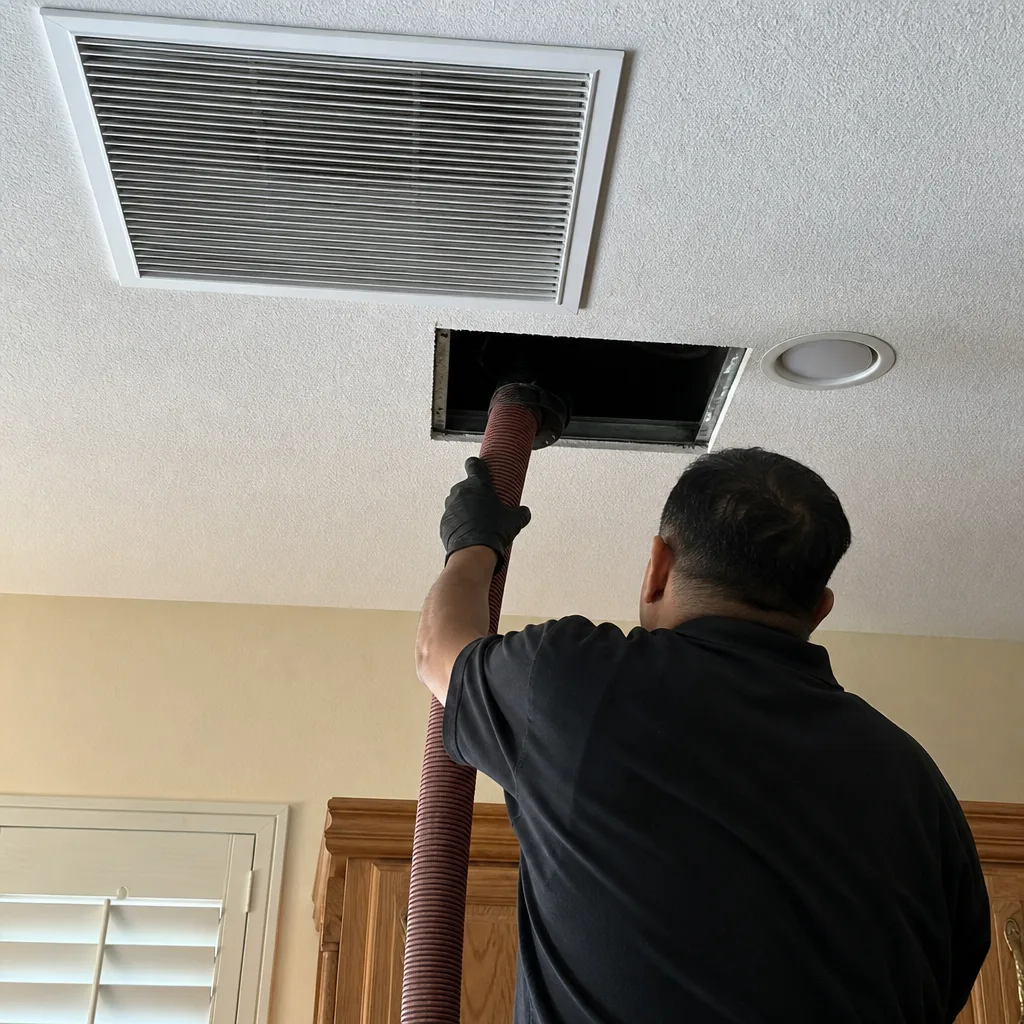
Whole-system duct and dryer vent check with before-and-after photos - you see exactly what came out of your vents
That "$99 whole-house special" is a bait ad - the real number appears once they are in your hallway, or the "clean" is a shop-vac at the register. We photograph the inside of your ducts before and after instead.

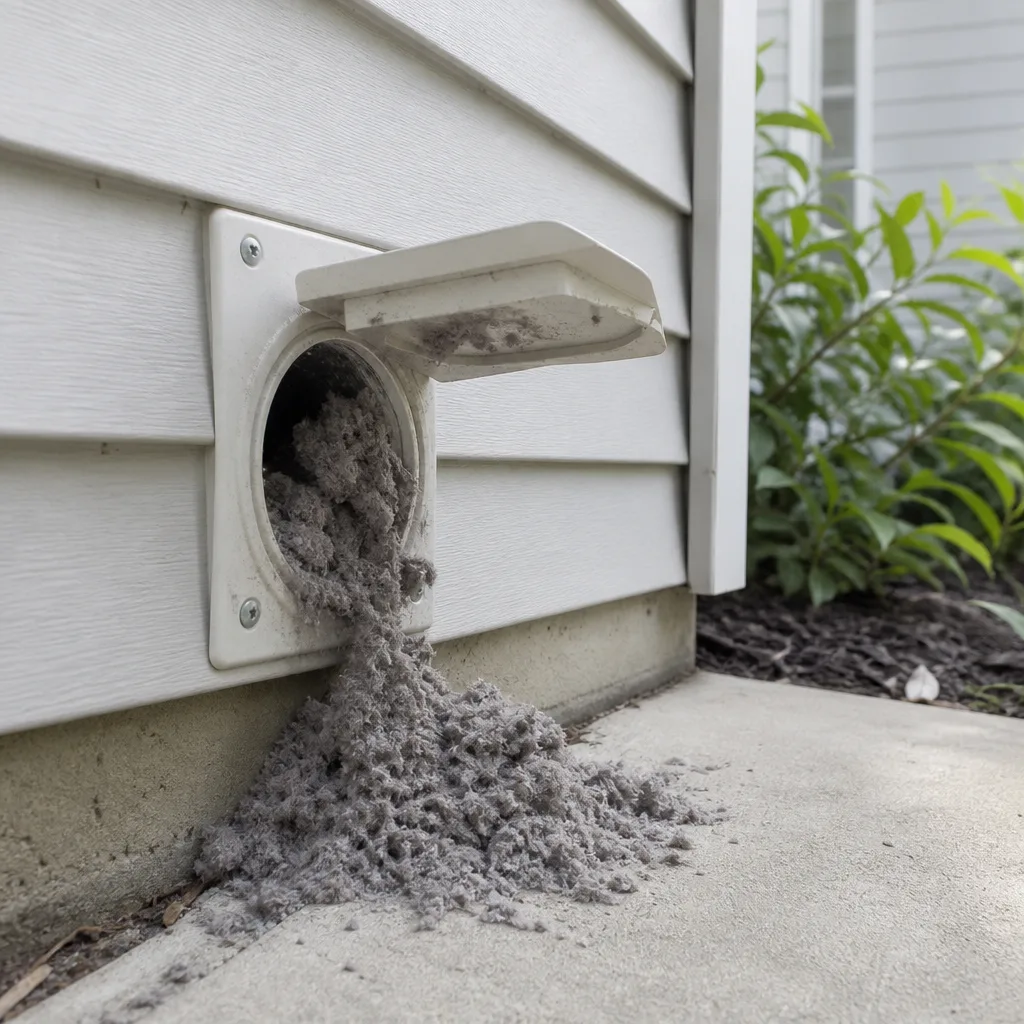
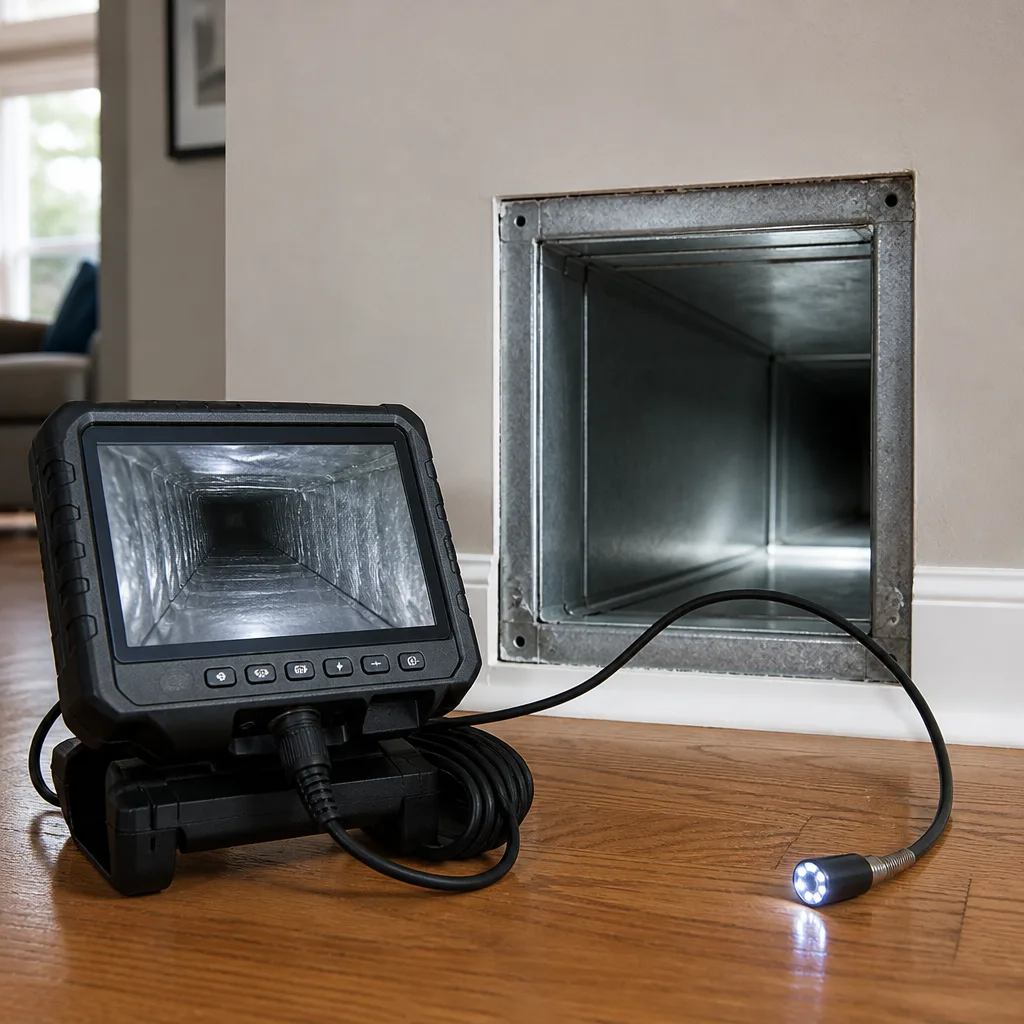
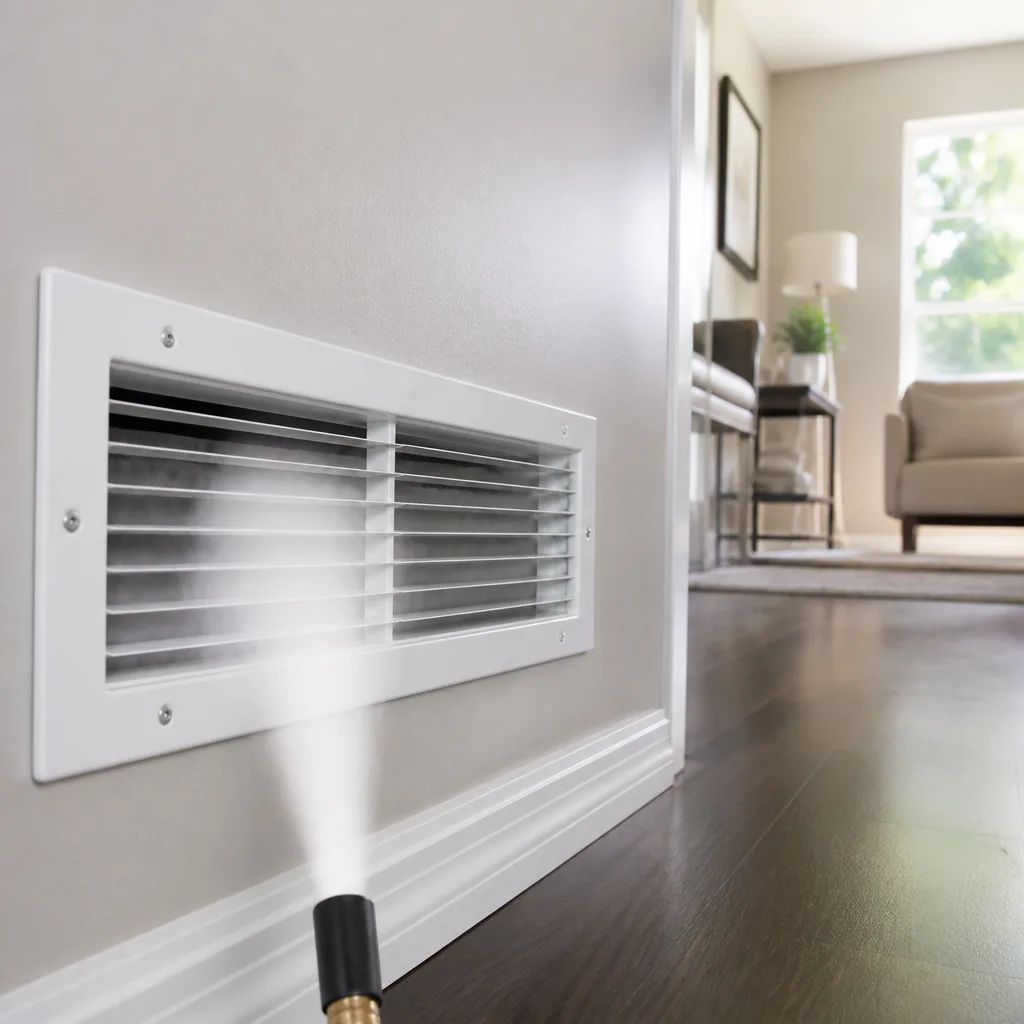
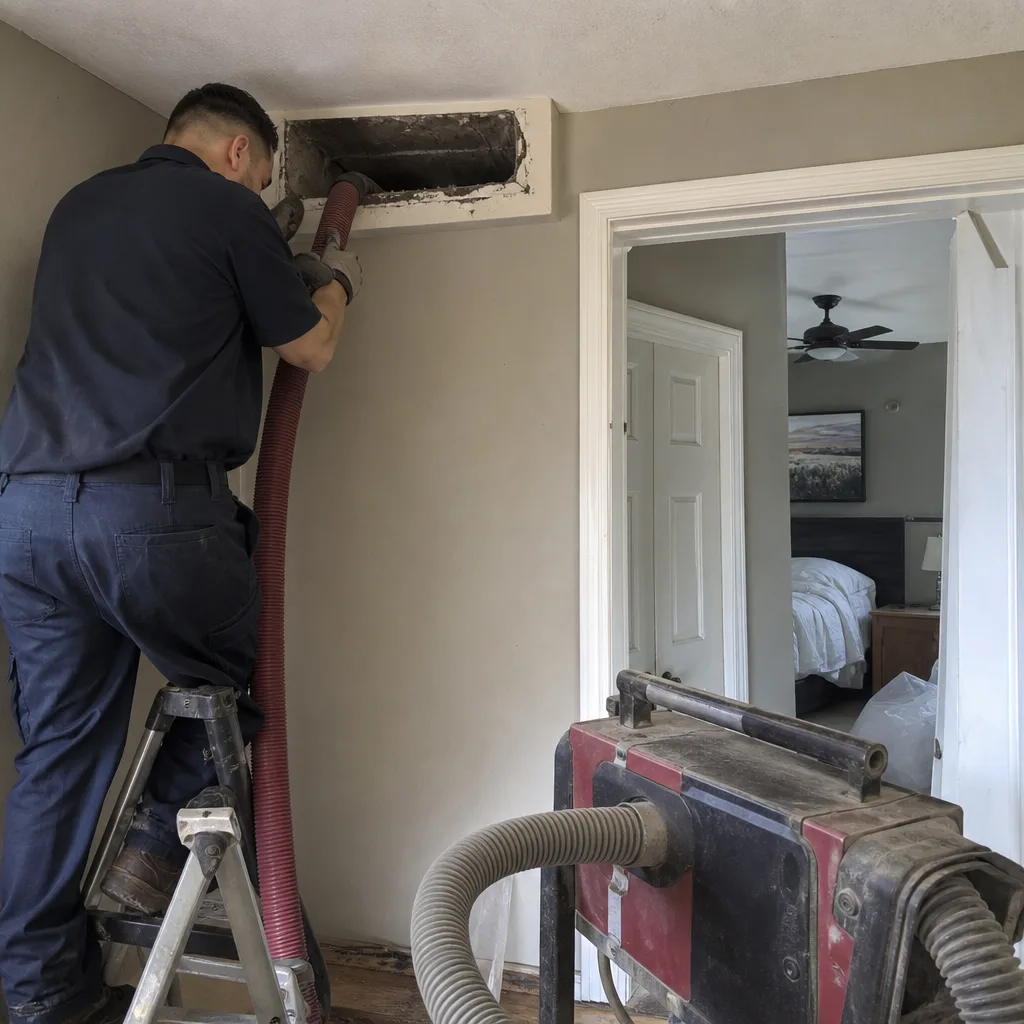 Before
 After
After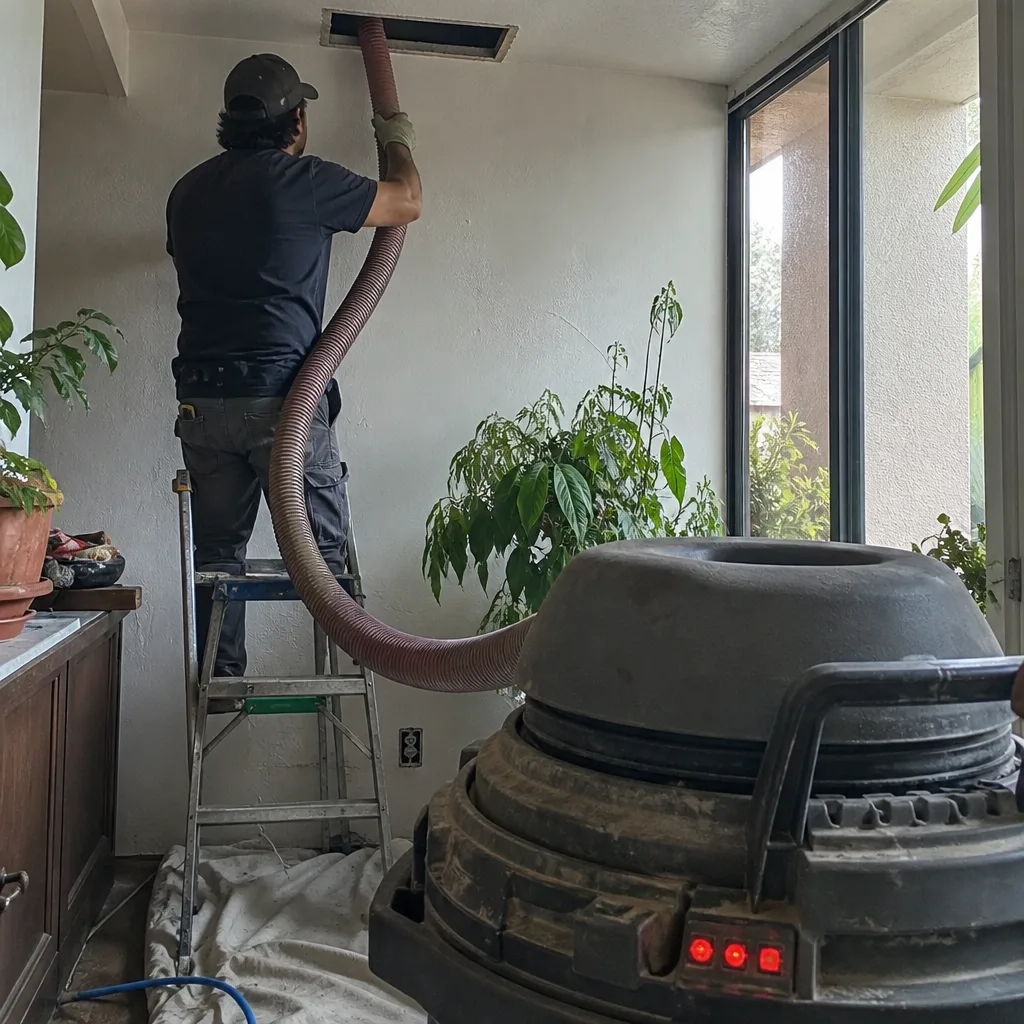 Before
 After
After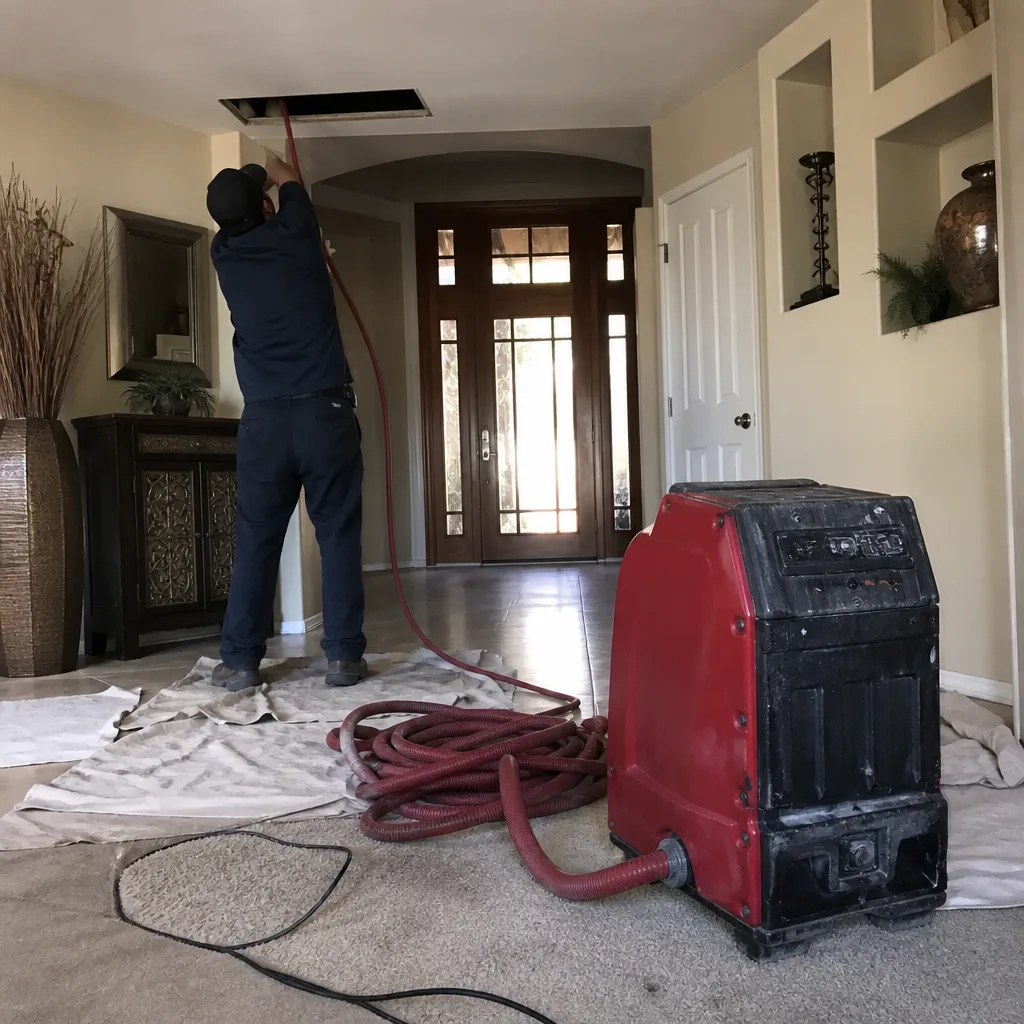 Before
 After
AfterAir Duct Cleaning Maintenance Checklist for Scottsdale Homeowners
Most Scottsdale homeowners can produce maintenance records for their pool pump, their water heater, even their garage door springs. Ask for the same documentation on their duct system and you’ll get a blank stare. In a market where the median home sale price crossed $600,000 in 2024, the HVAC distribution system that protects that investment typically has zero written history. No baseline photo. No filter log. No record of what a technician found, or claimed to find, the last time a van pulled into the driveway. This guide is a condition-tracking system, not a cleaning calendar. You’ll learn how to build a documented history that protects you from unnecessary services, proves whether work was actually performed, and catches the specific failures that Scottsdale’s desert environment predictably produces.
Quick Answer
A proper air duct cleaning maintenance checklist for Scottsdale homeowners is a year-round condition-tracking document with three seasonal checkpoints: pre-summer-peak inspection in April, pre-monsoon inspection in June, and post-monsoon review in October. It includes a room-by-room register inspection log with dated photographs, a filter change record noting MERV rating and visual condition at removal, and an attic flex duct sag measurement with reference-object photography to track degradation year over year.
Table of Contents
- Why a Written Baseline Matters More Than a Cleaning Schedule
- Room-by-Room Register Inspection Log: What to Photograph and When
- Scottsdale’s Three Seasonal Checkpoints: April, June, and October
- How to Document Flex Duct Sag from Attic Access
- Filter Change Log Format That Actually Predicts Duct Contamination
- The Checklist as Contractor Handoff Document
- What Goes in Your Documentation Kit
- Common Mistakes to Avoid
- When to Call a Professional
- Frequently Asked Questions
- The Bottom Line
BeforeAfterWhy a Written Baseline Matters More Than a Cleaning Schedule
The air duct cleaning industry in Scottsdale runs on a simple information asymmetry: the inside of your ductwork is invisible to you, and every contractor knows it. The $79 coupon arrives in the mailbox. The technician enters the attic. Thirty minutes later, you’re shown a photo of something gray and fuzzy, told it’s a health hazard, and presented with an invoice four times the advertised price.
A written baseline destroys this dynamic. If you photographed your master bedroom register face in April 2023, recorded no discoloration beyond light household dust, and have the dated image stored, then a technician’s claim in 2025 of “severe contamination requiring immediate sanitizing” becomes a conversation about evidence, not fear. The photo does not lie. The photo has a date stamp. The photo was taken with your phone, not extracted from a shared folder of “before” images every contractor in the valley seems to possess.
We’ve served over 52,000 homes since 2013, and the pattern repeats: homeowners who cannot describe what their ducts looked like three years ago cannot evaluate whether cleaning was necessary, whether it helped, or whether a new problem has emerged. The Air Duct Cleaning in Scottsdale market is particularly susceptible to this because our climate produces visible, dramatic symptoms that are often misattributed. A dust plume from a register in July is usually a failed filter seal, not “years of buildup.” A musty odor in September is typically condensate pan overflow from monsoon humidity, not mold in the duct runs. Without a baseline, every symptom becomes a sales opportunity.
The checklist that follows is designed for digital storage. Create a folder on your phone. Name it “HVAC Duct Record.” Subfolder by year. Every photograph, every filter log entry, every attic measurement goes there. When you sell your home, this folder is a transferable asset. When you dispute a bill, it is evidence. When you wonder whether your system is degrading faster than expected, it is data.
Room-by-Room Register Inspection Log: What to Photograph and When
The register face is the only part of your duct system you can inspect without tools. It is also the most diagnostically rich surface most homeowners ignore. A consistent photography protocol turns this visible grille into a trend line.
What to Photograph
Take three shots per register:
- Full face, straight-on: Camera parallel to the grille, showing the complete face and surrounding ceiling or wall. This captures frame discoloration, paint degradation from airflow, and whether the grille sits flush.
- Close-up of louvers: Zoom to show the gap between adjustable blades. Look for black streaking on the trailing edge of louvers, which indicates particulate accumulation at the exit point, and gray fuzz on the upstream side, which suggests filter bypass.
- Removed grille, looking into the boot: The boot is the short duct section connecting the main run to the register. Shine a flashlight into this space. Photograph what you see. A clean boot shows bare metal or smooth duct liner. A contaminated boot shows debris buildup, insect casings, or moisture staining.
How to Photograph Consistently
Consistency matters more than equipment. Use these rules:
- Same time of day, same natural light angle if possible. Morning east-light in a Scottsdale master bedroom in April produces different color temperature than afternoon July sun through west windows. Note the conditions in your log.
- Include a reference object for scale. A standard business card placed on the register face provides both size reference and color balance.
- Photograph before vacuuming or dusting. The point is condition documentation, not housekeeping.
What Discoloration Patterns Mean
Not all register staining indicates duct contamination. Learn to read the patterns:
- Uniform gray dust on louver tops: Normal household particulate. Correlates with filter efficiency and household activity. Track whether thickness increases year over year.
- Black streaking on louver trailing edges: Indicates fine particulate (often carbon from candle soot or cooking oil aerosols) being drawn through gaps in the filter seal. Check your filter frame for bypass leaks.
- Brown or rust-colored staining on the register frame: Moisture. In Scottsdale, this almost always means condensate blow-by from an oversized AC unit short-cycling in monsoon humidity, or a disconnected condensate line in the attic. The duct is not dirty; the duct is wet.
- Irregular clumps or fibrous masses: Insulation degradation. In homes built 2015-2020 in north Scottsdale and DC Ranch, we’ve found deteriorating flex duct liner breaking down and exiting at registers. This is a duct repair issue, not a cleaning issue.
Log every register by room name. Note grille dimensions (common sizes: 4×10, 4×12, 6×12 inches). Record whether the grille is stamped steel, cast aluminum, or adjustable multi-louver. This metadata matters when you compare year-over-year images and notice that the 4×12 in the guest bedroom suddenly shows different staining patterns than the identical grille in the office.
Scottsdale’s Three Seasonal Checkpoints: April, June, and October
Scottsdale’s climate is not generically “hot and dry.” It has distinct stress seasons that produce specific duct system failures. A calendar-driven inspection catches each one at the moment it becomes visible.
April: Pre-Summer-Peak Inspection
Before the first 110-degree day, inspect for the damage that winter heating and spring dust storms have produced.
- Filter condition at removal: The filter installed in October has run through heating season and the March dust season. Photograph it before disposal. Note whether loading is uniform (good) or concentrated at one edge (indicates filter bypass or return air leak).
- Outdoor condenser debris: Not strictly ductwork, but directly related. Cottonwood fluff, palo verde flower debris, and dust from spring winds accumulate on condenser coils. Reduced airflow here raises system pressure, which can flex and stress duct connections in the attic.
- Thermostat runtime history: If your thermostat tracks runtime hours, note the total. A 15% increase over the previous April indicates the system is working harder, which moves more air, which increases particulate deposition in ducts.
- Register photography round: Complete the full room-by-room log described above. This is your pre-stress baseline.
June: Pre-Monsoon Inspection
The monsoon season in Scottsdale typically arrives in early July with sudden humidity spikes, dust storms, and electrical activity. June is the window to catch vulnerabilities before they become failures under stress.
- Attic duct inspection for sag and disconnect: June attic temperatures in Scottsdale exceed 140°F. Flex duct that was marginally supported in April will sag measurably by June as the wire helix relaxes in sustained heat. This is the inspection that prevents the July “my bedroom has no airflow” emergency call.
- Condensate line verification: Run water through the primary condensate line. Verify it exits at the expected location. A clogged line during monsoon humidity produces pan overflow, which in Scottsdale’s dry climate often means water runs into ductwork before anyone notices moisture.
- Seal check on filter cabinet: The filter slot should be light-tight when the filter is installed. Use your phone flashlight in the return cavity with the filter in place; any visible light around the filter edge is bypass air carrying unfiltered dust directly to the evaporator coil and duct system.
October: Post-Monsoon Review
After the humidity subsides, assess what the stress season actually produced.
- Register photography round: Compare to April images. Look specifically for moisture staining that wasn’t present before, indicating condensate management failures during peak humidity.
- Filter condition at removal: The summer filter has run continuously. Note loading pattern and any unusual odor at removal. Musty filters indicate moisture events in the duct system.
- Attic re-inspection: Check for new sag, disconnected supports, or insulation displacement from wind intrusion through soffit vents during dust storms.
- Runtime comparison: Total cooling hours versus previous year. A significant increase with no thermostat setting change suggests duct leakage or degradation increasing system load.
This three-checkpoint rhythm aligns with how HVAC Cleaning in Scottsdale actually degrades: not linearly, but in seasonal pulses of thermal stress, particulate loading, and humidity shock.
How to Document Flex Duct Sag from Attic Access
Flex duct, the ribbed silver tubing that dominates residential attic installations in Scottsdale, degrades predictably in desert heat. The wire helix that maintains its shape relaxes over time. The insulation jacket compresses where supports fail. A 2-inch sag in a 25-foot run reduces airflow by a measurable percentage, and multiple sags compound the effect. Most homeowners never know this is happening because they never enter their attic with a reference object and a camera.
Safety Caveat
Attic work involves heat exposure, confined spaces, and walking on ceiling joists or truss chords that will not support weight between members. Falls through drywall are a genuine injury risk. If you are not comfortable with ladder safety, heat tolerance, and walking on narrow structural members, do not enter your attic. The documentation described below can be performed by a technician during any service visit, and you can request the specific photographs.
Measurement Protocol
- Locate the duct run: Identify the flex duct serving a specific room. Trace it from the plenum, the central distribution box where all ducts originate, to the register boot.
- Identify the lowest point: Visually locate where the duct sags most between supports. Supports should be every 4-5 feet per mechanical code; in practice, many Scottsdale attics have 8-foot or greater spacing.
- Place a reference object: A standard 12-inch ruler taped to the duct at the sag point provides absolute scale. A carpenter’s level placed across the bottom of the sag, with the ruler vertical at center, shows both depth and whether the sag is symmetrical.
- Photograph from two angles: One shot along the duct run showing the full sag profile. One shot perpendicular, showing the ruler measurement clearly. Include a piece of tape with the date written on it in the frame.
- Record the measurement: Note sag depth in inches, support spacing in feet, and room served. Example: “Master bedroom supply, 3.5-inch sag at 7-foot support spacing, 10/15/2024.”
What the Trend Means
A new sag measurement increasing year over year indicates support failure or duct degradation requiring repair, not cleaning. A sag that stabilizes suggests the initial installation was imperfect but not worsening. A sag that appears suddenly, particularly after monsoon wind events, often means a support strap has broken or a truss-mounted hanger has pulled out.
In Scottsdale’s 2015-2020 construction boom, particularly in communities like Eastmark and Vistancia, we’ve documented widespread flex duct support failures caused by truss uplift in the first two heating seasons. The wood trusses lift slightly in winter dryness; the duct hangers, rigidly attached, stress and fail. Homeowners who documented their attic in year one caught this pattern early. Those who didn’t discovered it three years later when airflow had degraded to the point of comfort complaints.
Filter Change Log Format That Actually Predicts Duct Contamination
Filter changes are the most frequent maintenance action a homeowner performs, and the most poorly documented. A proper log transforms this routine into predictive data.
Required Fields
Each entry should record:
- Date installed and date removed: Calculate actual service life in days. Nominal 90-day filters in Scottsdale often require 60-day replacement during summer peak load.
- MERV rating: The Minimum Efficiency Reporting Value printed on the filter frame. Common values: MERV 8 (basic residential), MERV 11 (improved particulate), MERV 13 (high efficiency, may restrict airflow in older systems).
- Filter dimensions: Actual measured if uncertain. Nominal 16x25x1 filters often measure 15.5×24.5×0.75, and fit matters for bypass prevention.
- Brand and model: For consistency tracking. Honeywell, Aprilaire, and Guardsman all produce filters with identical MERV ratings but different pleat density and frame rigidity.
- Visual condition at removal: Describe in specific terms, not “dirty” or “clean.” Use: “uniform gray loading,” “edge concentration,” “visible debris clumps,” “oil film,” “moisture staining.”
- Photograph: One image, same angle every time, with the date written on tape in frame.
How to Read the Pattern
After 12-18 months of entries, your log reveals:
- Shortening service life: If a filter that lasted 75 days in 2023 requires replacement at 45 days in 2025, your system is moving more air (possible duct leakage increasing fan speed) or your indoor particulate load has increased (construction nearby, new pets, changed occupancy).
- Edge loading: Consistent particulate concentration at one edge indicates a return air leak upstream of the filter, pulling unfiltered attic or wall cavity air. This bypass is a direct duct contamination pathway.
- Oil film: Indicates cooking aerosol or candle soot bypassing the filter. In Scottsdale’s open-concept homes, kitchen return registers often show this pattern. The solution is source control or a higher-MERV filter with verified fit, not duct cleaning.
- Moisture staining: Filter media that appears wavy or shows brown discoloration has seen humidity high enough to wet the media. In Scottsdale, this is almost always condensate-related and indicates a system problem, not a filter problem.
When you eventually engage a contractor for CleanRun Air Duct Cleaning Scottsdale home services, this log is the first document to hand over. It shows whether your ducts have been subjected to unfiltered air, moisture events, or abnormal loading. It transforms the conversation from “trust me, they’re dirty” to “given this filter history, what would you expect to find?”
The Checklist as Contractor Handoff Document
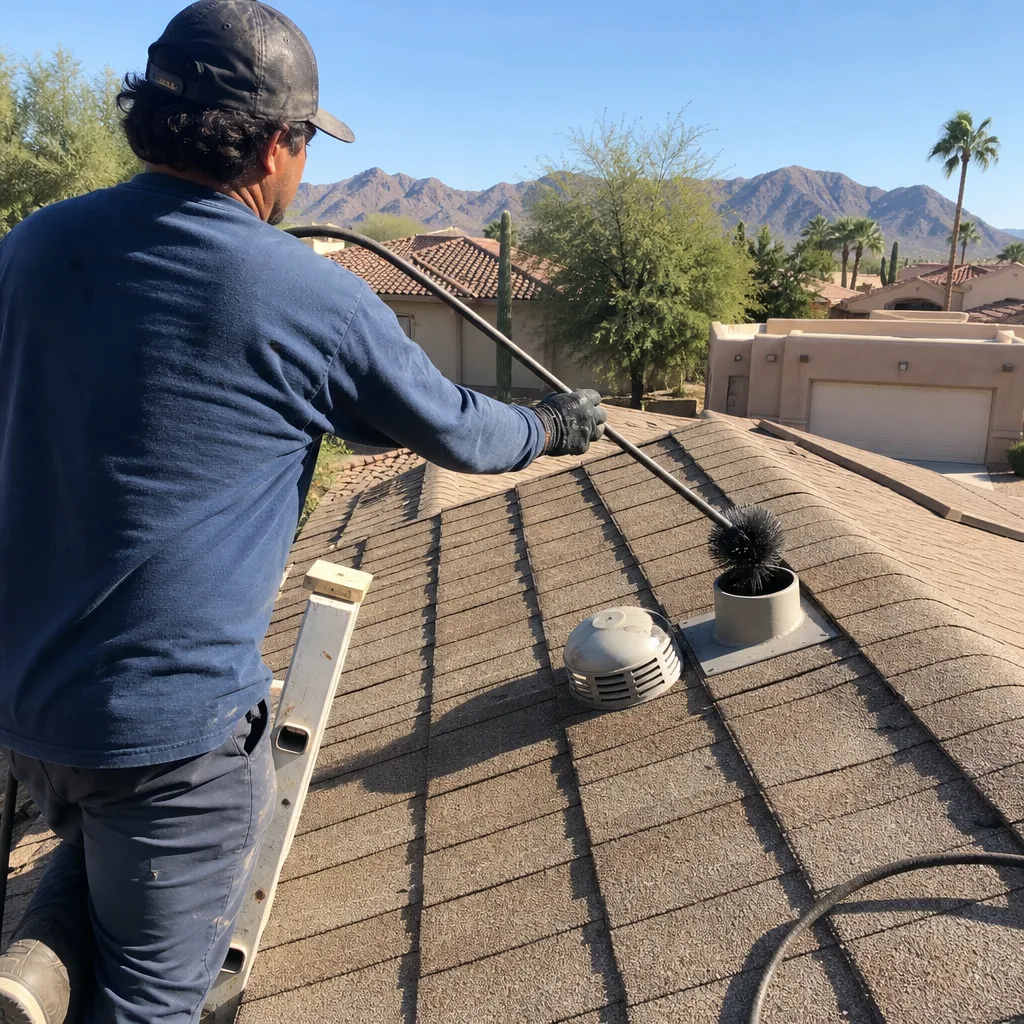
The ultimate purpose of this checklist is not self-knowledge. It is negotiation power. The air duct cleaning industry in Scottsdale, as in most markets, operates on a model of discovered problems: the technician arrives for a quoted service, enters the system, and reports additional conditions requiring immediate, additional-cost remediation. For Air Duct Cleaning Warning Signs: A Scottsdale Homeowner’s Reference Guide, see our companion resource. The homeowner, lacking independent information, accepts or refuses based on trust alone.
A completed checklist changes this dynamic entirely. When you hand a contractor your dated register photographs, your filter change log, your attic sag measurements, and your seasonal inspection notes, you have established a baseline that constrains what can be credibly claimed. A technician who reports “severe contamination throughout” when your April register photos show clean boots and your filter log shows consistent MERV 11 replacement with no bypass is making a specific, testable claim against documented evidence.
The checklist also prevents the opposite problem: unnecessary service denial. Some genuinely contaminated systems appear superficially clean at registers because the contamination is deep in the main trunk line, the plenum, or the return drop. Your documentation helps a legitimate technician locate the actual problem. A register photo showing progressive darkening at louver trailing edges, combined with filter log evidence of edge loading, correctly directs attention to return system leakage rather than supply duct contamination.
At CleanRun, we request this documentation before quoting. Haven Standard Clause 1, our written pricing protocol, requires that we define scope before stating price. A homeowner with a completed checklist receives a more precise scope, a tighter price range, and no post-arrival surprises. The checklist is not skepticism; it is the information that makes accurate work possible.
What Goes in Your Documentation Kit
You do not need specialized equipment. You need consistency and a designated storage location.
- Smartphone with dated photography: Enable location services and timestamp overlay. The EXIF data embedded in each image is secondary verification.
- Flashlight: A focused beam, not a phone light, for attic work and boot inspection. A $15 hardware-store LED with adjustable focus is sufficient.
- 12-inch metal ruler: For sag measurement and scale reference in all photographs.
- Blue painter’s tape and permanent marker: For date labels in photographs. Writes on tape, sticks to duct or register face, removes cleanly.
- Notebook or spreadsheet template: Physical or digital log for filter entries and seasonal notes. A simple spreadsheet with dated rows and category columns outperforms narrative notes for trend identification.
- Designated cloud folder: “HVAC Duct Record” with annual subfolders. Share access with your partner or property manager. This folder transfers with home sale.
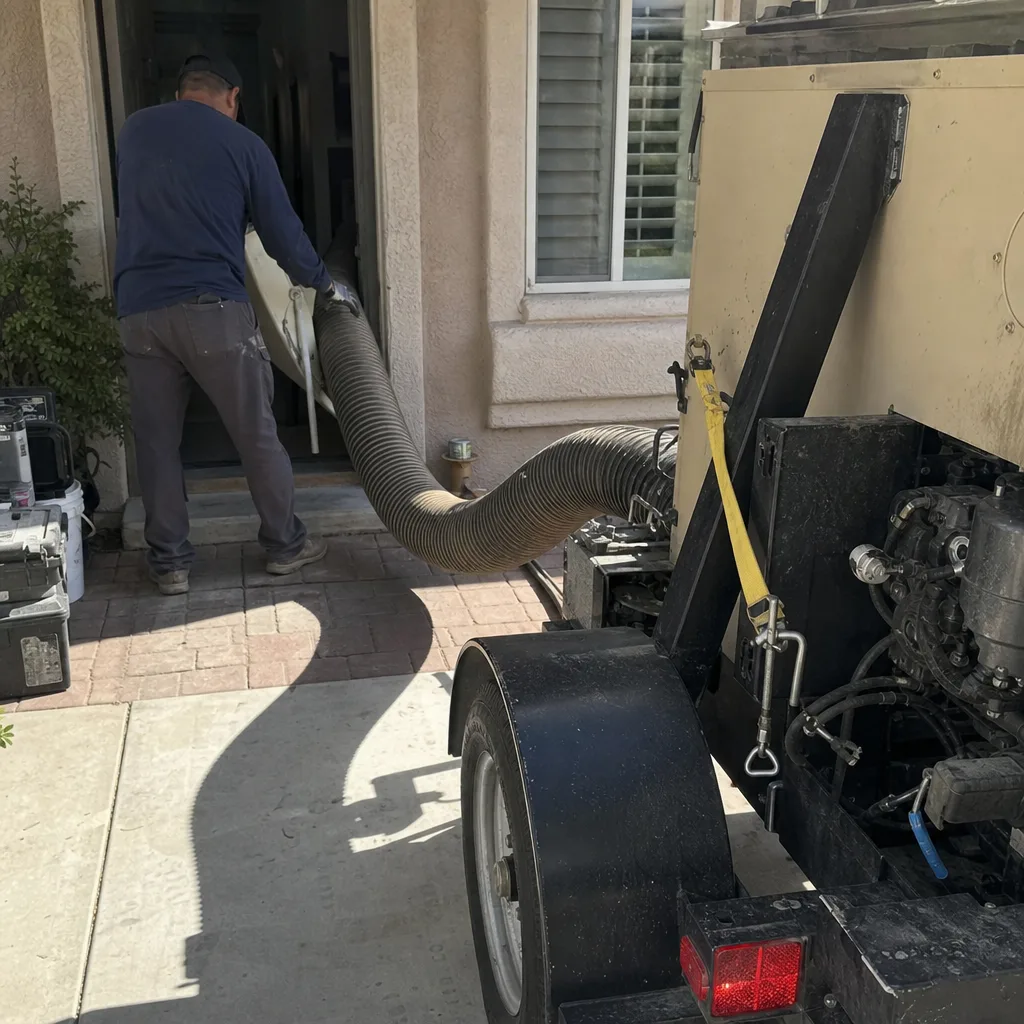
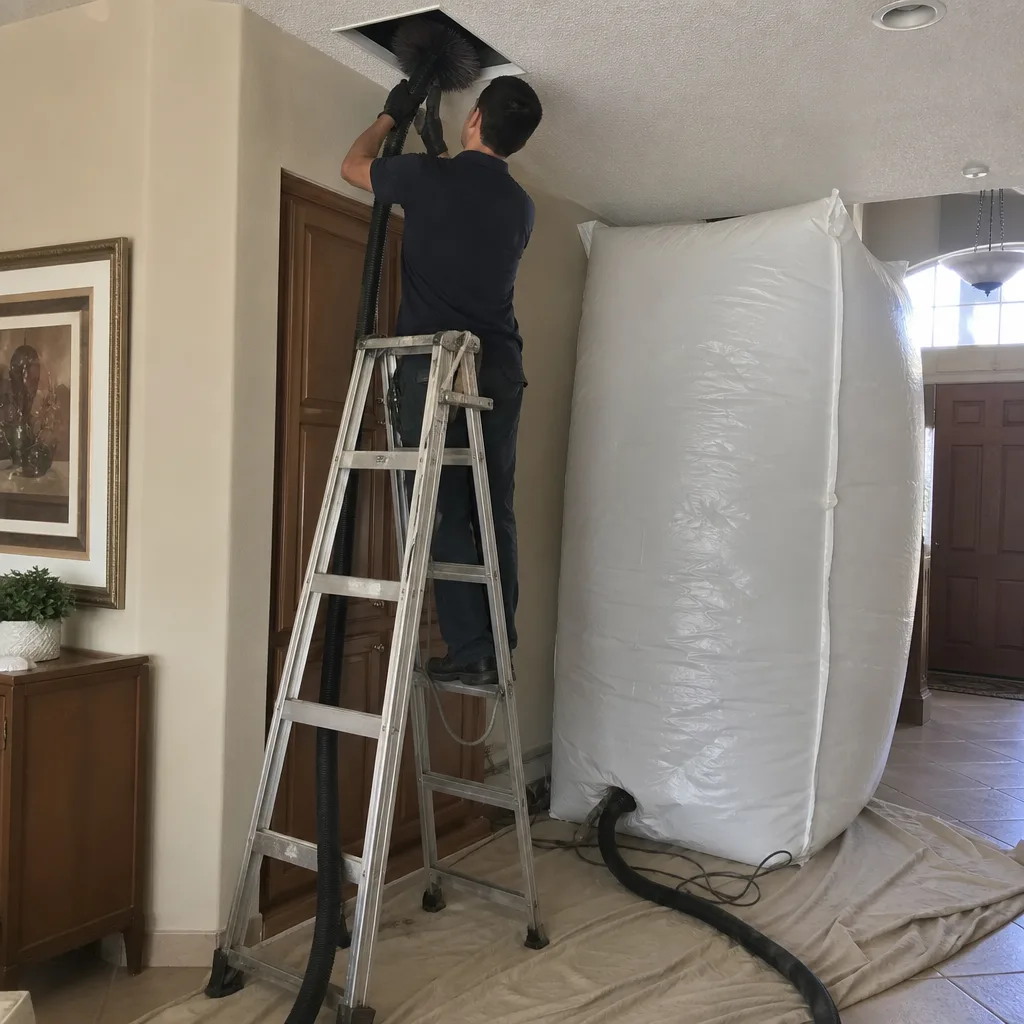
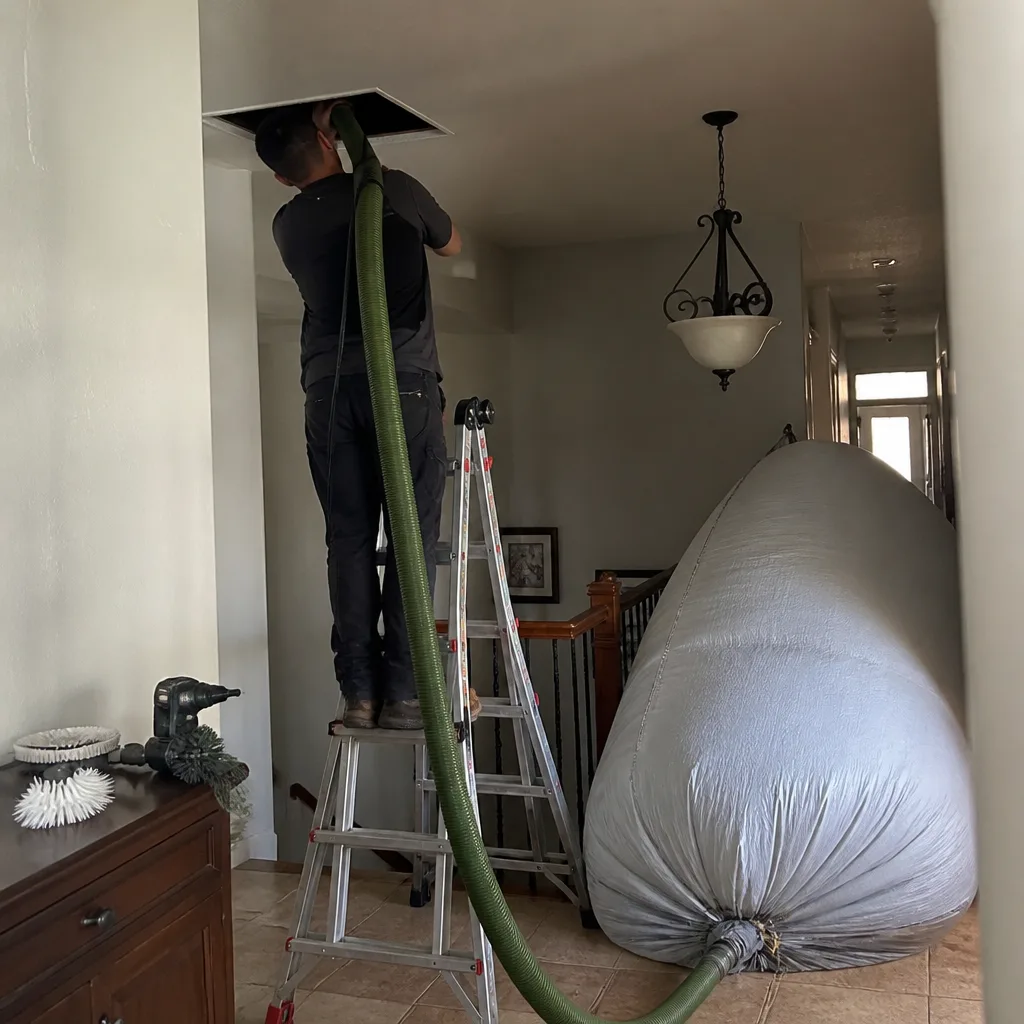
For homeowners who prefer professional documentation, our service includes the Documented Photo Record on every visit: inside every duct run, before and after, delivered as part of the standard job record. This is not a marketing claim. It is a practice we’ve held since 2013, using professional-grade equipment from Rotobrush, Nikro, and Abatement Technologies. The images are yours to keep, compare, and transfer.
Common Mistakes to Avoid
- Cleaning on calendar schedule instead of condition: Annual duct cleaning is unnecessary for most Scottsdale homes with proper filtration. Clean when documentation shows contamination, not because a reminder postcard arrived.
- Photographing after cleaning: The “after” photo proves nothing without the “before.” Always photograph first, clean second, photograph again.
- Ignoring the return side: Supply registers get attention because they’re visible in living spaces. Return grilles, often larger and in hallways or closets, show the actual air being drawn into the system. They are frequently more diagnostically valuable.
- Using different filters interchangeably: Switching between MERV 8 and MERV 13 without noting the change makes your filter log unreadable. Pick a rating, log deviations, note the reason.
- Storing records with the contractor: Your documentation belongs to you. Contractors change, go out of business, or lose records. Maintain your own folder.
- Confusing duct cleaning with duct repair: Sag, disconnect, and insulation degradation are mechanical failures requiring repair. No amount of vacuuming fixes a detached duct. Know which problem you have before engaging service.
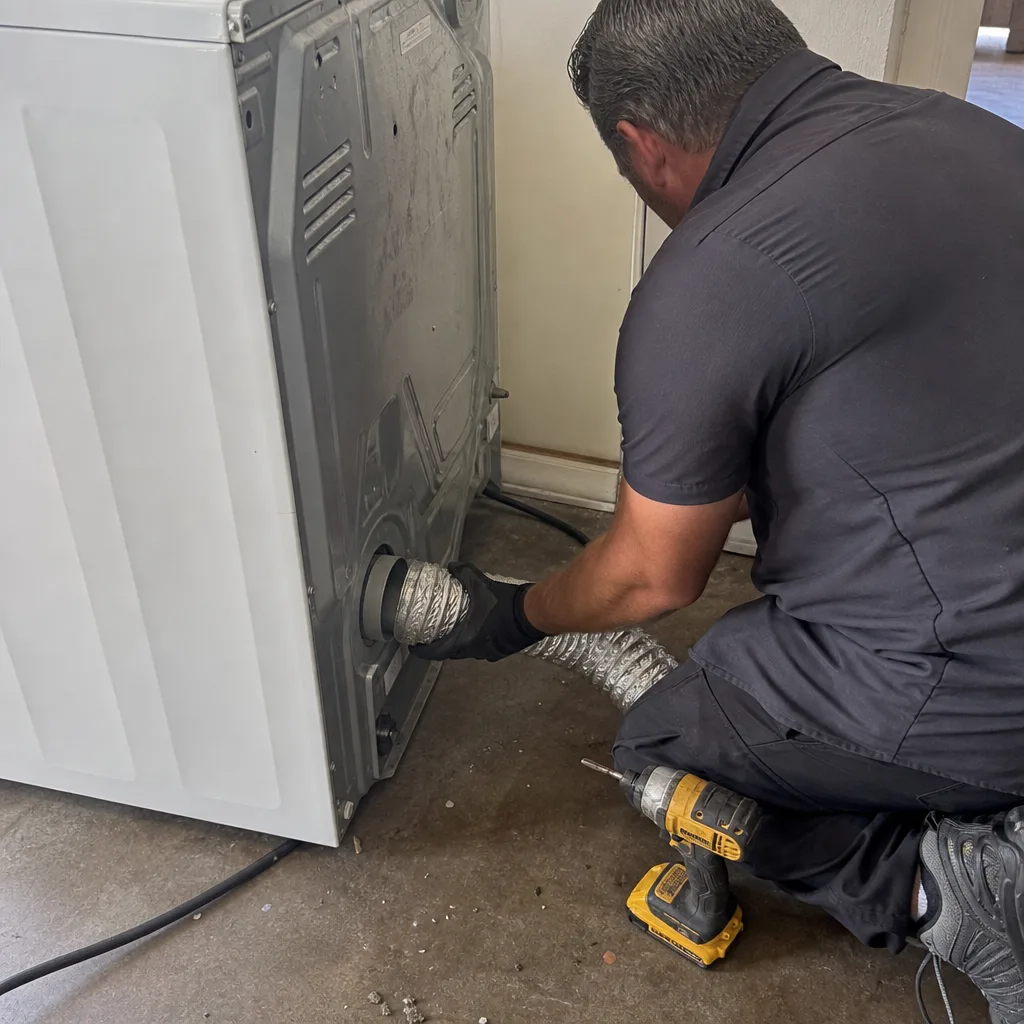
- Neglecting the dryer vent: Dryer lint accumulation is a fire hazard independent of duct contamination, and the two systems interact at the laundry room. Include Dryer Vent Cleaning in Scottsdale in your maintenance documentation.
When to Call a Professional
Call a qualified technician when your documentation shows: sag increase exceeding 1 inch year over year; moisture staining at any register after monsoon season; filter service life shortening by more than 25% with no household change; visible debris in the boot that your vacuum cannot reach; or airflow reduction in specific rooms that correlates with attic duct routing. These are mechanical or contamination issues requiring professional assessment.
CleanRun Air Duct Cleaning Scottsdale offers free estimates in Scottsdale. Every estimate includes a written price before any work begins, under Haven Standard Clause 1. Our technicians are background-checked, uniformed, and identified by name before arrival, per Haven Standard Clause 3: Verified Crews. Call (928) 267-0992 to schedule. Bring your checklist; we’ll review it together before inspecting your system.
Frequently Asked Questions
Whole-system air duct cleaning in Scottsdale typically ranges from $400 to $800 for a single HVAC system in a home under 3,500 square feet, with pricing varying by system count, accessibility, and contamination level. CleanRun provides a written price before any work starts, every time, with no per-vent add-ons or post-arrival adjustments. Call (928) 267-0992 for an exact quote; estimates are free.
The $79-$99 coupon price typically covers a brief vacuuming of accessible register faces, not full-system cleaning. The industry model relies on arriving at your home, inspecting the system, and presenting additional charges for “contamination,” “sanitizing,” or “extra vents.” A legitimate whole-system cleaning using negative-pressure extraction equipment requires 2-4 hours of labor and professional-grade tools. If the quoted price doesn’t cover that time, it isn’t that service.
Demand a documented photo record of inside every duct run, before and after, with timestamps. At CleanRun, this is standard on every job, delivered to you as part of the job record. If a contractor cannot or will not provide this, the work is unverifiable. Your own baseline photographs from this checklist provide independent comparison.
Most Scottsdale homes with consistent filter maintenance and no mechanical issues need cleaning every 5-7 years, not annually. Homes with pets, recent construction, or known filter bypass may need more frequent service. Your filter change log and register photography will show when particulate accumulation exceeds normal rates. Clean on condition, not calendar.
Different, not simply dirtier. The fine caliche dust in Scottsdale’s desert soil is extremely abrasive and penetrates filter media more readily than organic pollen or fibrous dust in humid climates. However, our low humidity inhibits mold growth that plagues Gulf Coast and Midwest duct systems. The specific failure pattern is dust-driven bearing wear in air handlers and evaporator coil fouling, not biological contamination. Your maintenance checklist should reflect this: monitor filter loading closely, but moisture indicators are the critical alert.
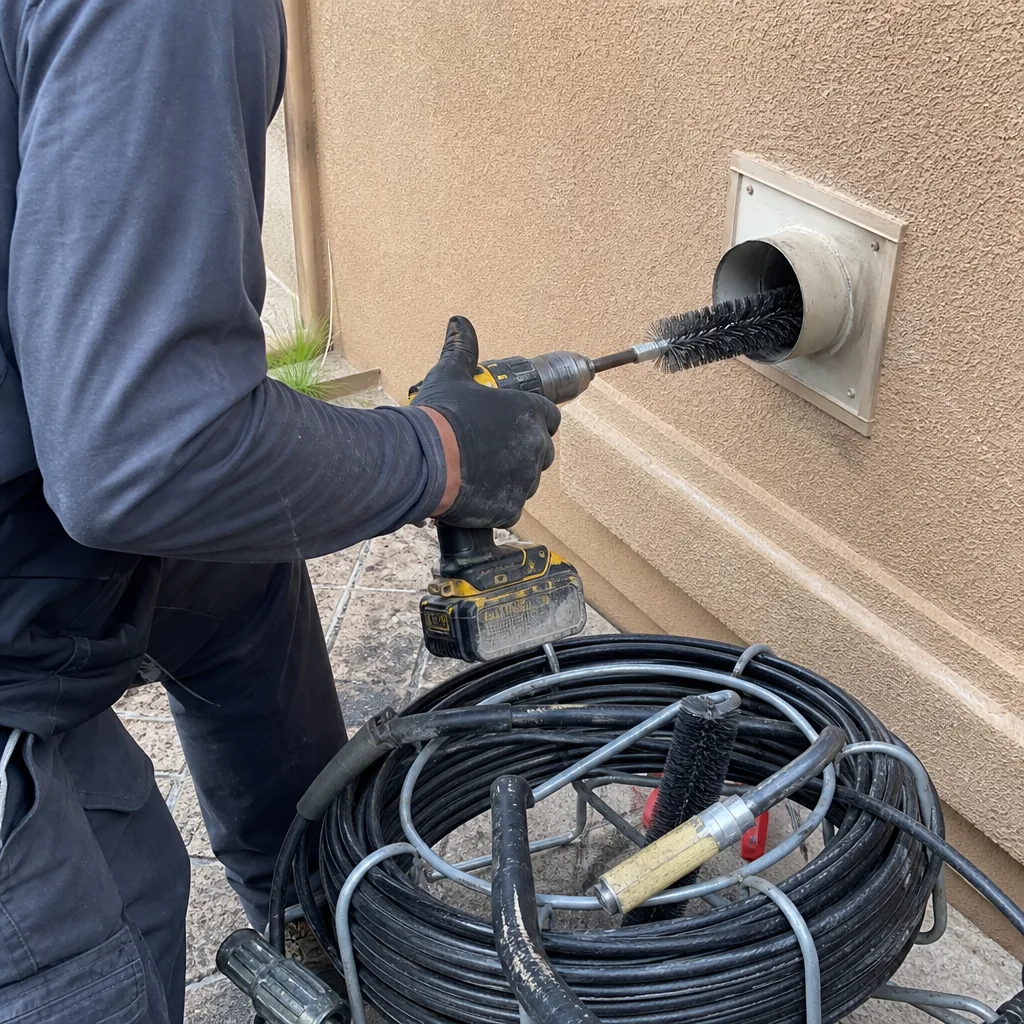
A shop vacuum can remove loose debris from register faces and short boot sections, but cannot reach the main trunk lines or create the negative pressure required to dislodge adhered particulate from duct walls. More importantly, aggressive DIY cleaning can damage flex duct liner, dislodge connections, or create leaks that degrade system efficiency. Document what you can reach safely; hire a professional with equipment like Rotobrush or Nikro systems for whole-system service. For genuine safety concerns, including attic access in summer heat, professional service is the appropriate choice.
The Bottom Line
A maintenance checklist for Scottsdale ductwork is a condition-tracking document, not a cleaning reminder. For more guides & resources on protecting your HVAC investment, explore our blog. Build your baseline with dated register photography, a rigorous filter change log, and annual attic sag measurement. Inspect in April, June, and October to catch the specific failures our desert climate produces. Use this documentation as a handoff document with any contractor, establishing evidence that prevents both unnecessary service and legitimate problem denial. The homeowners who protect their investment are not those who clean most often; they are those who know what their system looked like before someone told them what it needs.
Written by Tomas Reyes, Owner at CleanRun Air Duct Cleaning Scottsdale, serving Scottsdale since 2013.