
Last updated September 23, 2026
Whole-system duct and dryer vent check with before-and-after photos - you see exactly what came out of your vents
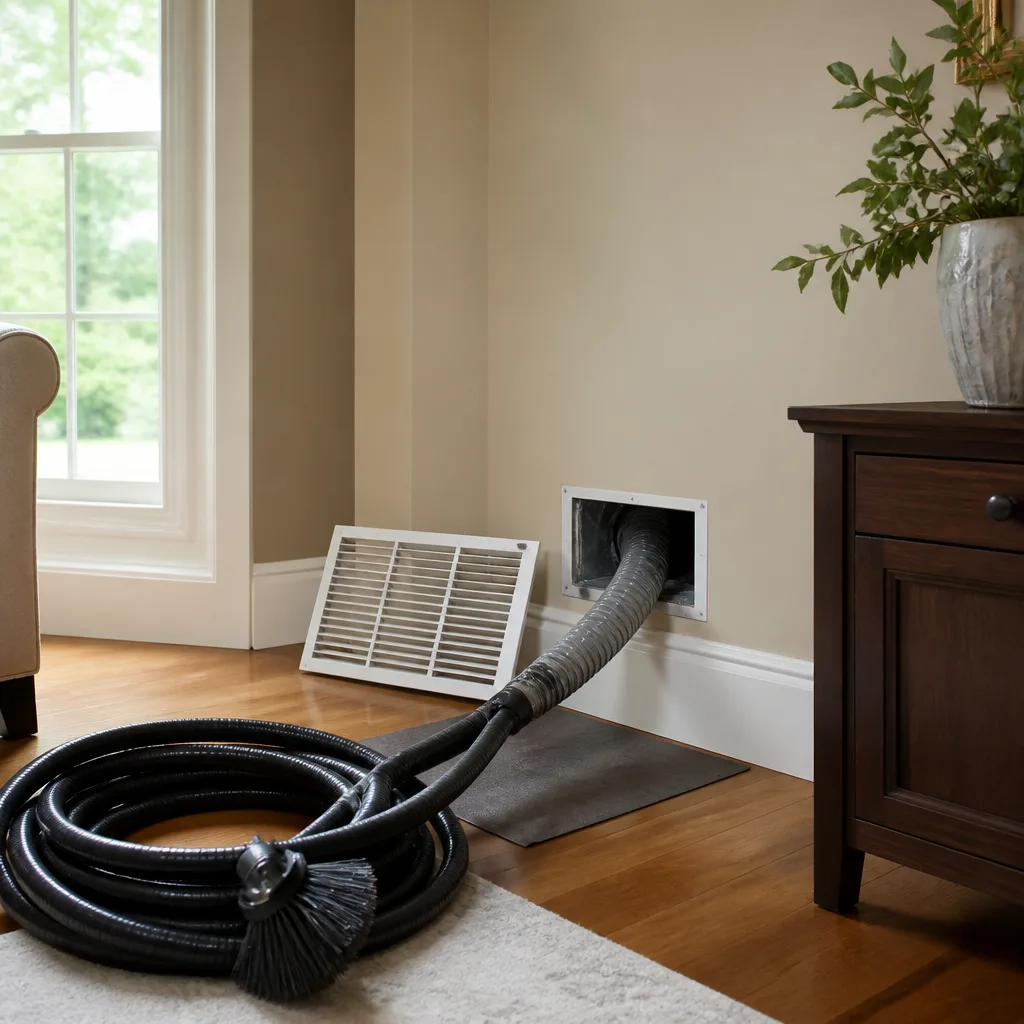
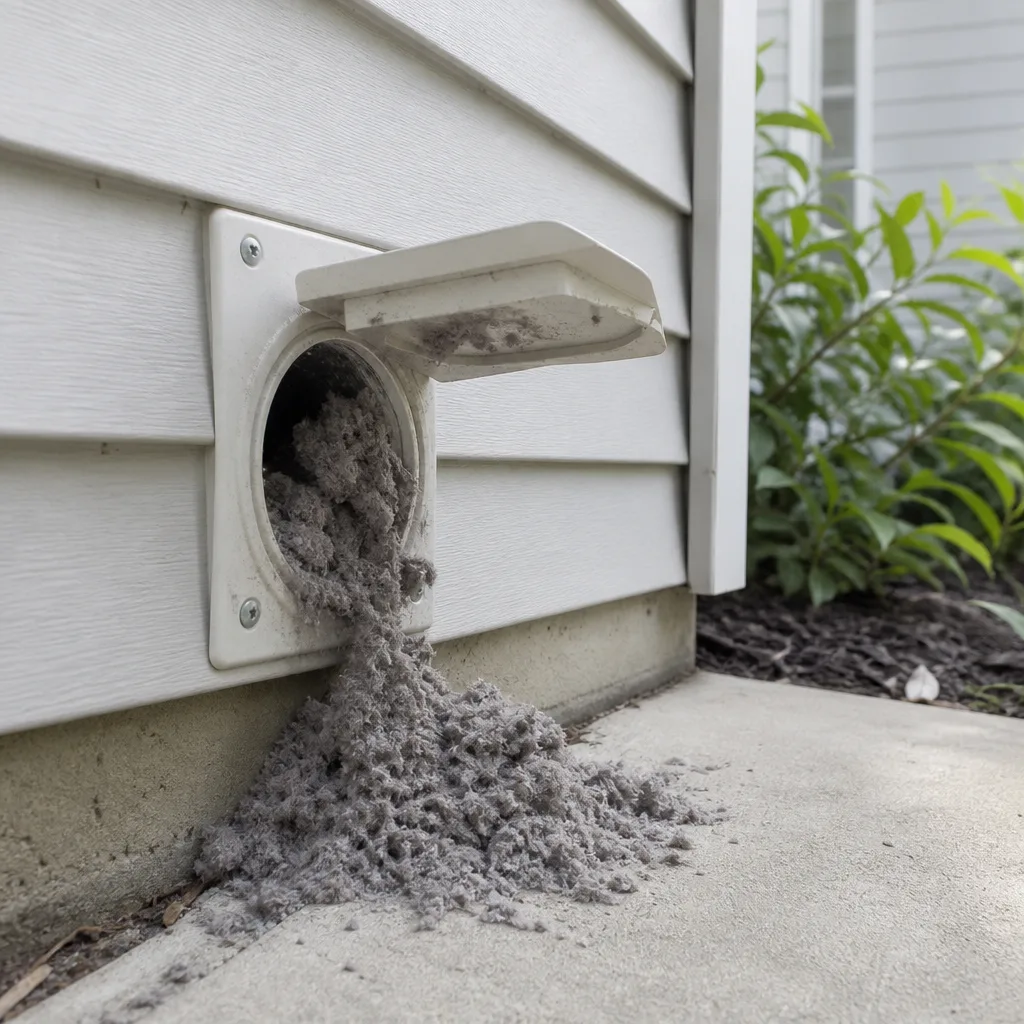
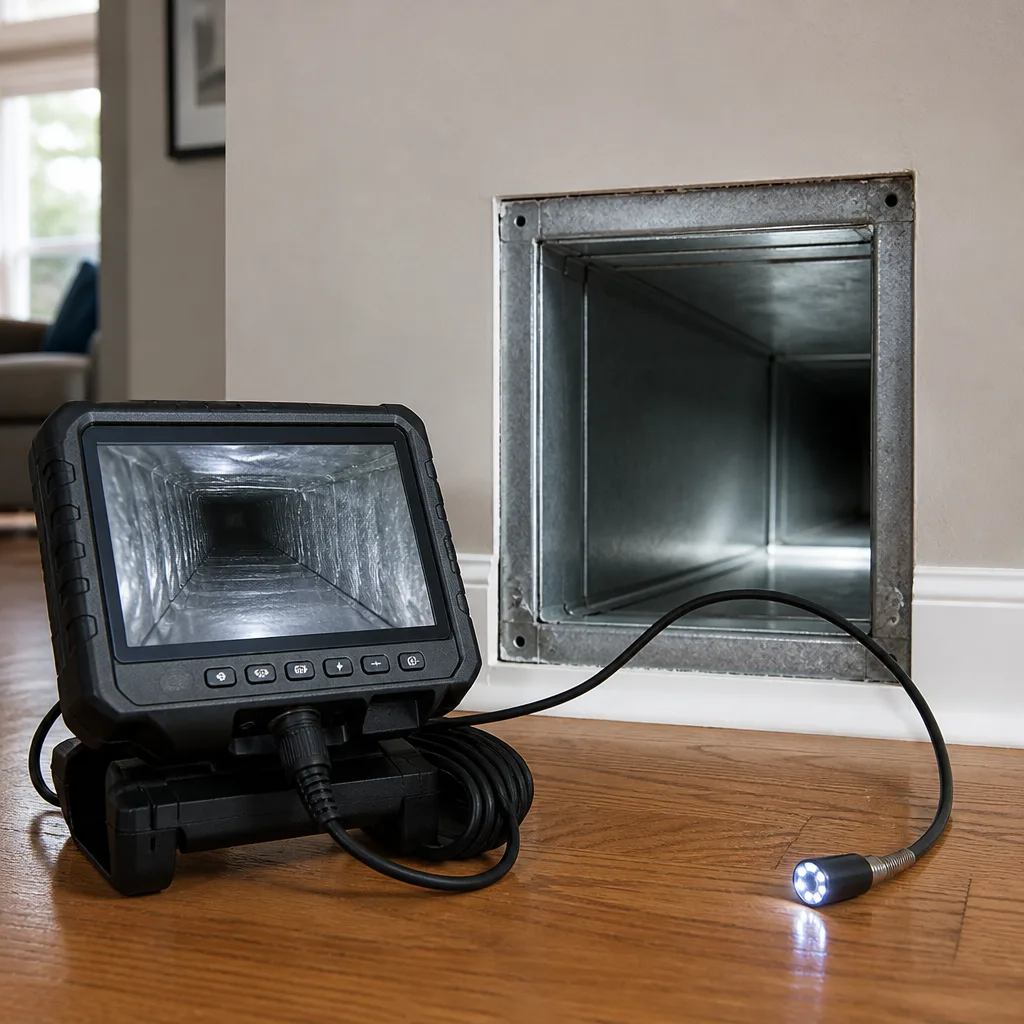
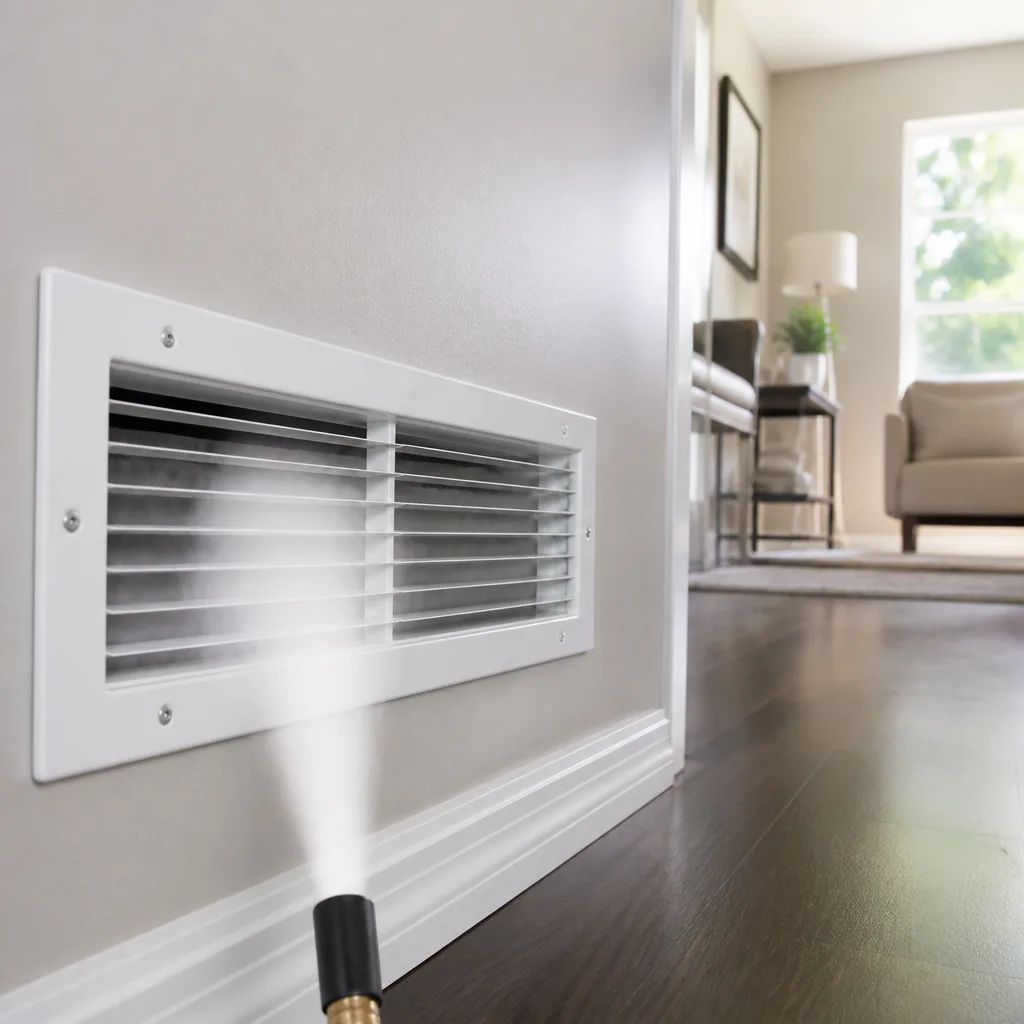
That "$99 whole-house special" is a bait ad - the real number appears once they are in your hallway, or the "clean" is a shop-vac at the register. We photograph the inside of your ducts before and after instead.
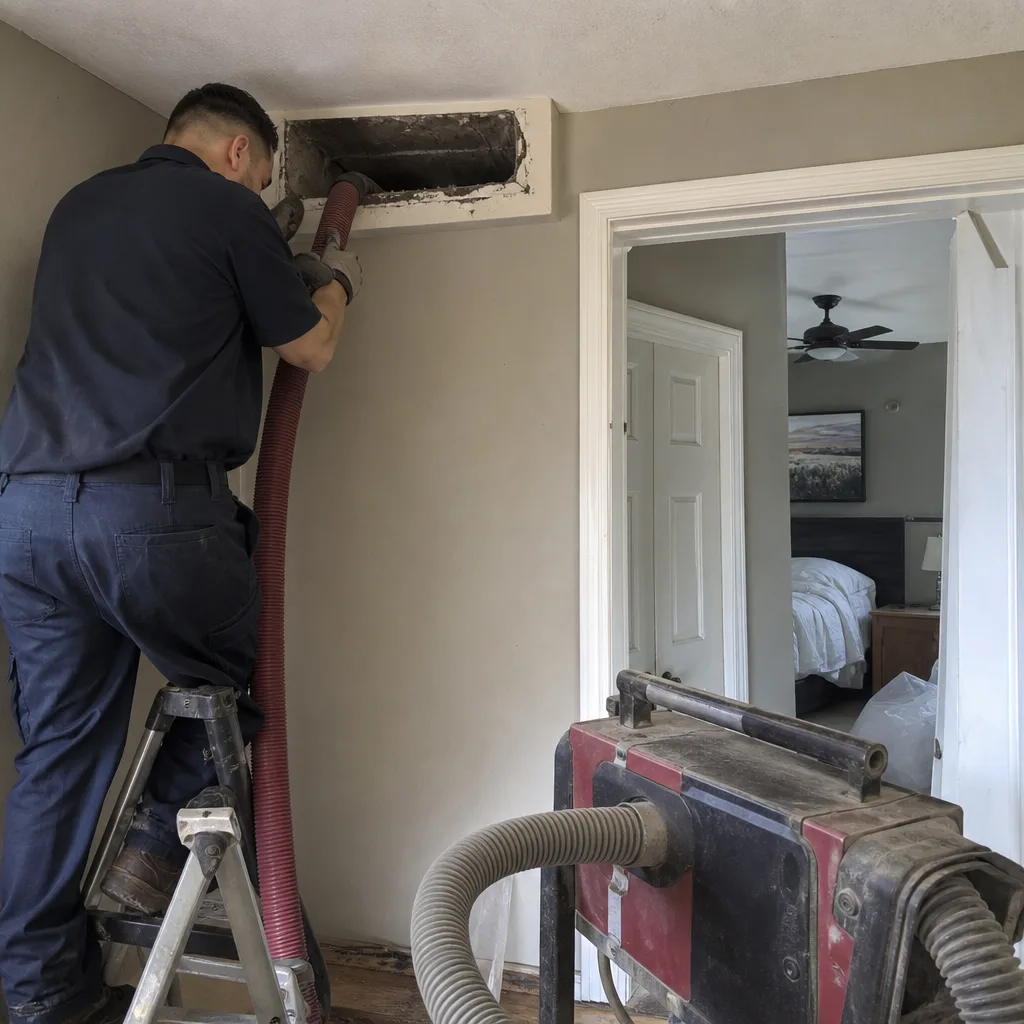 Before
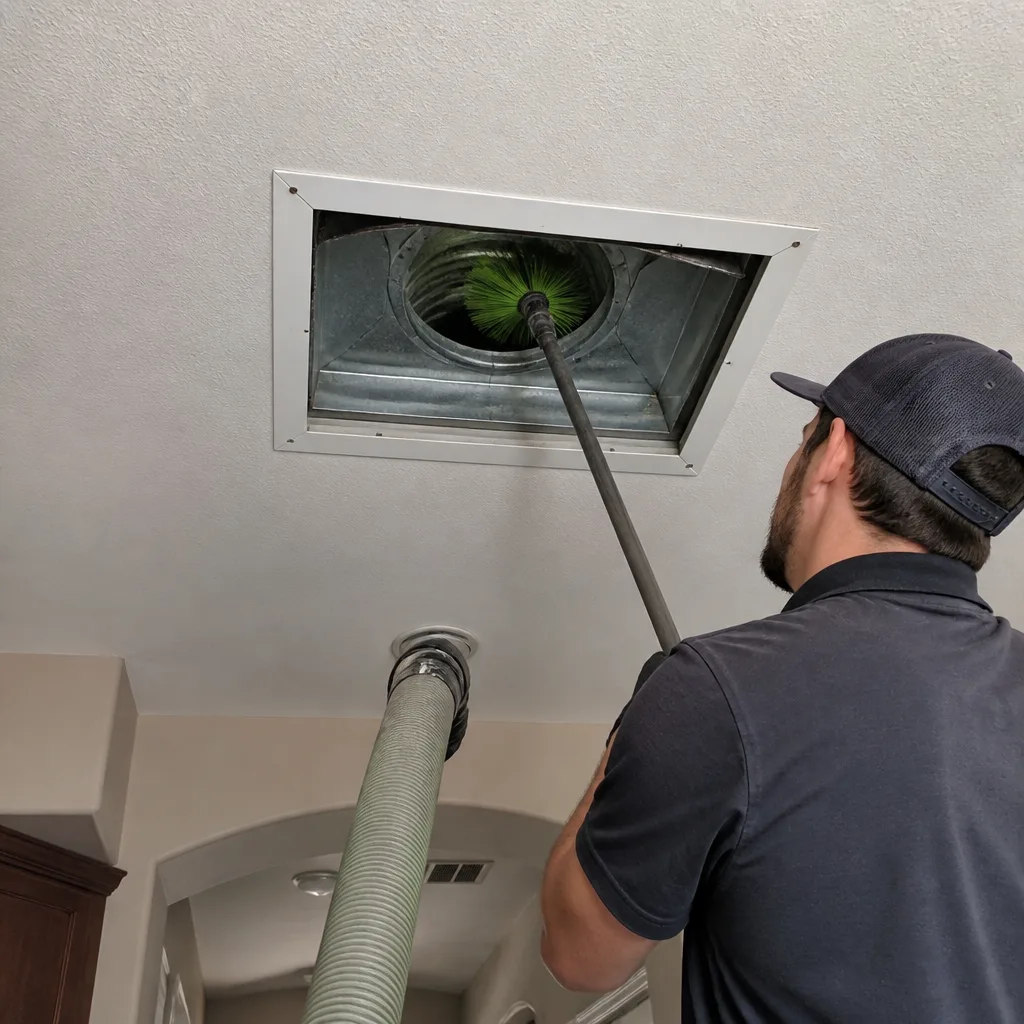 After
After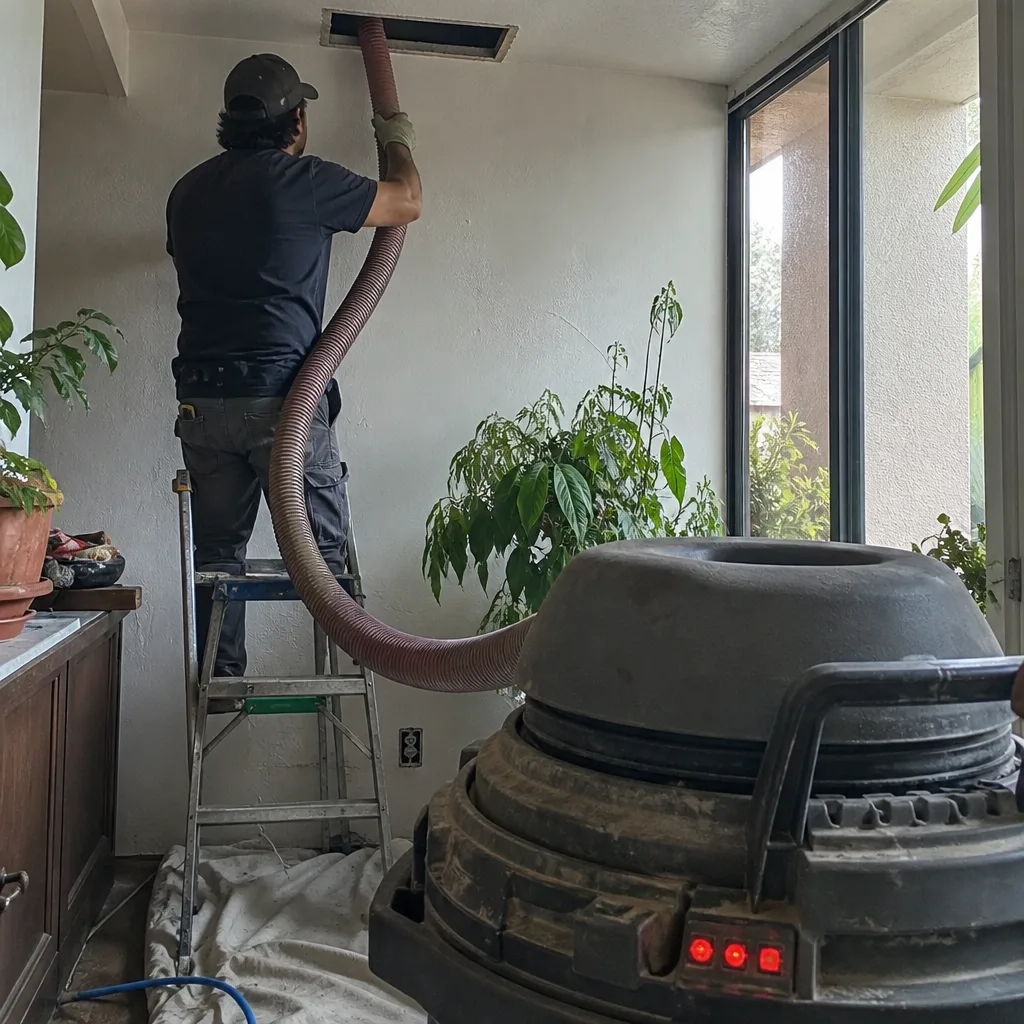 Before
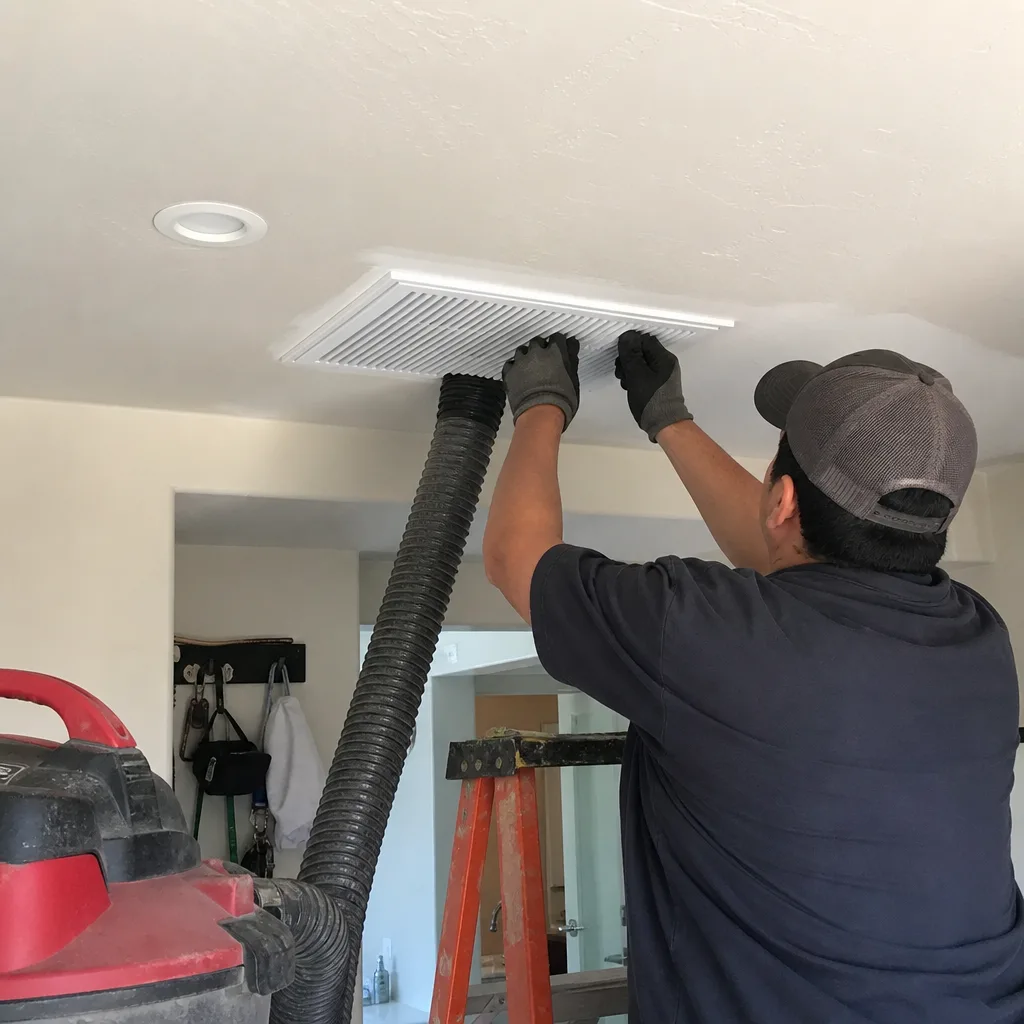 After
After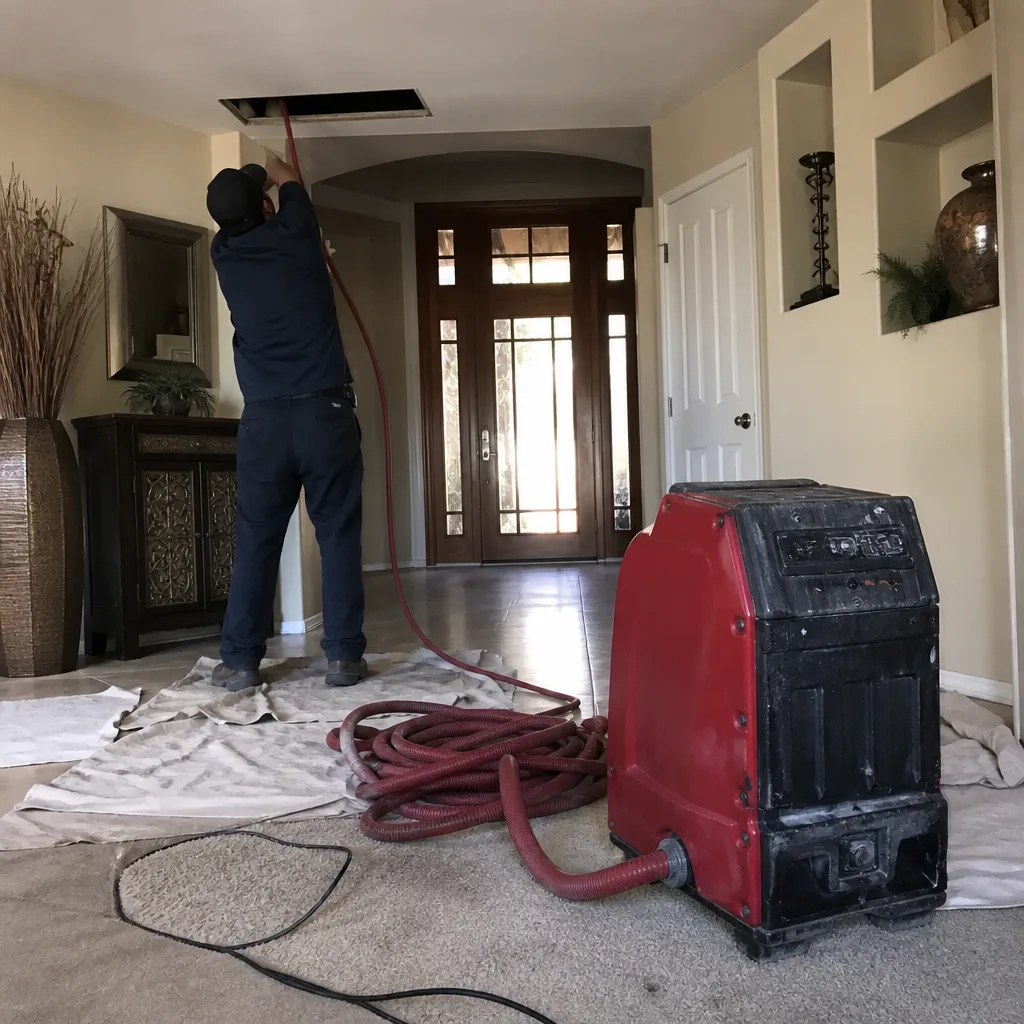 Before
 After
AfterAir Duct Cleaning Permits, Codes & Inspections in AZ: What You Need to Know
A homeowner in north Scottsdale paid $1,100 for what was billed as a standard duct cleaning. The crew also “reconnected a loose flex duct section” and sealed a plenum joint with mastic. Two years later, when the home sold, the buyer’s inspector flagged the work. No ROC license. No Maricopa County mechanical permit. The seller had to hire a licensed C-39 contractor to open the ceiling, photograph the repair, and re-certify it - a $2,400 fix for a $45 permit that should have been pulled in the first place. In The Complete Guide to Air Duct Cleaning in Scottsdale, we show you where duct cleaning ends and regulated mechanical work begins, how to verify permits in Scottsdale, and why the documentation you receive matters more than the work itself.
Quick Answer
Air duct cleaning alone - the removal of debris from existing duct runs using negative-pressure extraction - does not require a permit in Arizona. But duct repair, reconnection, plenum modification, or any work that alters the mechanical system’s airflow capacity crosses into regulated territory under the 2018 International Mechanical Code, and that requires an ROC-licensed contractor and a Maricopa County mechanical permit. If you’re in Scottsdale, the difference between our Air Duct Cleaning services and an unpermitted repair often comes down to what the technician did after the camera went in - and whether they documented it.
Table of Contents
- When Duct Cleaning Becomes Duct Repair Under Arizona Code
- Arizona ROC License Classifications: Who Can Legally Do What
- Maricopa County Permit Lookup: Costs, Timelines, and What’s Actually Covered
- How to Spot Unpermitted Duct Repairs When Buying a Scottsdale Home
- Why Written Job Records Beat Verbal Promises in Permit Disputes
- Scottsdale Climate, Dust, and Code: Local Factors That Affect Duct Work
- How CleanRun Handles the Cleaning-to-Repair Boundary
- Common Mistakes to Avoid
- When to Call a Professional
- Frequently Asked Questions
BeforeAfterWhen Duct Cleaning Becomes Duct Repair Under Arizona Code
The 2018 International Mechanical Code, adopted by reference into Arizona state law and enforced by Maricopa County, draws a specific line between maintenance and mechanical alteration. Understanding that line protects you from liability and protects your home’s insurability.
Maintenance (no permit required): Removing accumulated debris from the interior of existing duct runs, registers, and the plenum - the central distribution box - using brushes, compressed air, or negative-pressure extraction. This includes attaching cleaning equipment to existing access points. The system’s design airflow, measured in CFM (cubic feet per minute), remains unchanged.
Regulated mechanical work (permit required): Any activity that “installs, alters, or repairs” the duct system in a way that affects its capacity, routing, or connection to the HVAC unit. Specific thresholds include:
- Reconnecting disconnected or damaged flex duct sections
- Sealing joints with mastic or tape where the sealant becomes a structural repair rather than a cleaning adjunct
- Modifying or replacing the plenum, including cutting new access panels
- Adding, removing, or relocating supply or return registers
- Repairing or replacing duct board, metal trunk lines, or fittings
- Any work that requires opening walls, ceilings, or chases to access concealed ductwork
The critical language in the 2018 IMC, Section 107.1, states that a permit is required for “the installation, alteration, repair, replacement, or addition of any mechanical system.” Arizona’s adoption does not exempt residential duct work below a certain dollar threshold, unlike some states. The permit requirement is activity-based, not cost-based.
In Scottsdale, we’ve found this boundary creates confusion because many homeowners schedule a cleaning and discover, once the camera enters the duct run, that a section of flex duct has collapsed, a trunk line has separated at a joint, or a previous contractor installed a register without proper support - all issues we cover in our Air Duct Cleaning Warning Signs: A Scottsdale Homeowner’s Reference Guide. The technician faces a choice: clean around the damage and note it, or perform a repair that crosses into permitted territory.
At CleanRun, when our Rotobrush camera shows a collapsed flex duct in a Scottsdale home, we stop, photograph the finding, and present two written options: cleaning only, with the damage documented in the photo record, or a referral to a licensed C-39 contractor for the repair followed by our cleaning. We do not perform the repair ourselves. Haven Standard Clause 1 - Written Price Before Any Work Starts - applies to both paths, but only one path keeps the homeowner clear of permit liability.
Arizona ROC License Classifications: Who Can Legally Do What
The Arizona Registrar of Contractors issues classifications that determine exactly what work a contractor may perform. For duct systems, three classifications matter, and the distinctions are not intuitive.
C-39 Air Conditioning and Refrigeration: This is the broadest residential license for duct work. A C-39 contractor may install, alter, and repair complete HVAC systems, including all duct components. This license requires 4 years of documented experience, passage of trade and business exams, and a bond. Any duct repair that requires a permit must be performed by or under the direct supervision of a C-39 licensee.
C-37 Plumbing: May work on ventilation systems “as related to plumbing fixtures” - primarily exhaust fans and dryer vents connected to plumbing waste systems. This does not cover supply or return duct work.
B-3 General Residential: May perform HVAC work as part of a larger residential project, but cannot hold himself out as an HVAC specialist or pull mechanical permits as a standalone trade.
Unlicensed: May perform maintenance cleaning only. The moment repair work begins, the unlicensed operator violates Arizona Revised Statutes §32-1151, a class 1 misdemeanor, and the homeowner receives no warranty protection through the ROC.
Here’s how this plays out in Scottsdale. A duct cleaning company sends a technician who finds a separated trunk line in a Paradise Valley Village home. The technician carries only a business license from the City of Scottsdale - which permits tax collection, not mechanical work - and no ROC classification. If he reconnects that trunk line, both he and the company face ROC enforcement action. More critically for the homeowner, the work cannot be inspected, cannot be warranted through the ROC residential recovery fund, and may void homeowner’s insurance if it later causes water damage or mold.
Verify any contractor’s license at roc.az.gov. Enter the business name or license number. A legitimate C-39 will show active status, bond information, and complaint history. If the company performing your duct cleaning also offers “minor repairs,” check whether the person doing the repair holds the license personally, or whether the company employs a qualifying party. The ROC requires the qualifying party to exercise direct supervision; a license “held by the office” with no licensed technician on site does not satisfy the law.
Maricopa County Permit Lookup: Costs, Timelines, and What’s Actually Covered
Maricopa County’s Planning and Development Department processes mechanical permits for unincorporated areas and contracts with municipalities including Scottsdale for certain plan review functions. Understanding the actual permit product - what it costs, what it covers, and what it does not - helps you evaluate whether a contractor is being straight with you.
Step-by-step: How to verify or obtain a mechanical permit in Maricopa County
- Identify the jurisdiction: Enter the property address at maricopa.gov/222/Planning-Development. Scottsdale maintains its own building department for permits issued within city limits, though Maricopa County handles some plan review. Unincorporated areas like north Scottsdale beyond the city boundary use County permitting directly.
- Search existing permits: Use the “Permit History” or “Inspection Record” lookup. Enter the address. You’ll see a chronological list of all permits, including mechanical (MECH), electrical (ELEC), and building (BLDG). A duct repair permit will appear as MECH with a description like “HVAC duct modification” or “duct repair/replace.”
- Review permit details: Click through to see the permit holder (must match the ROC license), scope of work, issue date, and inspection status. A permit without a final inspection is incomplete and does not legally certify the work.
- Understand the fee structure: Maricopa County’s mechanical permit fee for residential duct repair is based on project valuation. For minor duct repairs - a reconnection, sealing, or limited replacement - the permit fee typically runs $45 to $120. The contractor also pays a plan review fee if the work exceeds $1,000 in valuation or involves structural modification. For context: that north Scottsdale homeowner’s $1,100 cleaning-with-repair should have triggered a permit fee under $100.
- Schedule inspection: Once work is complete, the contractor calls for inspection. A Maricopa County mechanical inspector verifies that the work matches the permitted scope, that materials meet code, and that the duct system maintains proper clearance from combustibles. Final inspection approval generates a certificate that should be retained with the home’s records.
What the permit does NOT cover:
- Verification of cleaning quality or debris removal - mechanical inspectors do not evaluate cleanliness, only structural and safety compliance
- Warranty of future performance - the permit certifies code compliance at the time of inspection, not that the system will remain clean or functional
- Protection against contractor default - that’s the ROC bond and residential recovery fund, separate from the permit
In Scottsdale’s 85254 and 85255 zip codes, we’ve observed that permit records are particularly important because of the high turnover in homes built during the 2004-2007 construction boom. Those homes often have original flex duct that is now reaching end of life. When a homeowner sells, buyer inspectors frequently request permit history for any HVAC work. A gap between visible repairs and permit records becomes a negotiation point - or a deal killer.
How to Spot Unpermitted Duct Repairs When Buying a Scottsdale Home
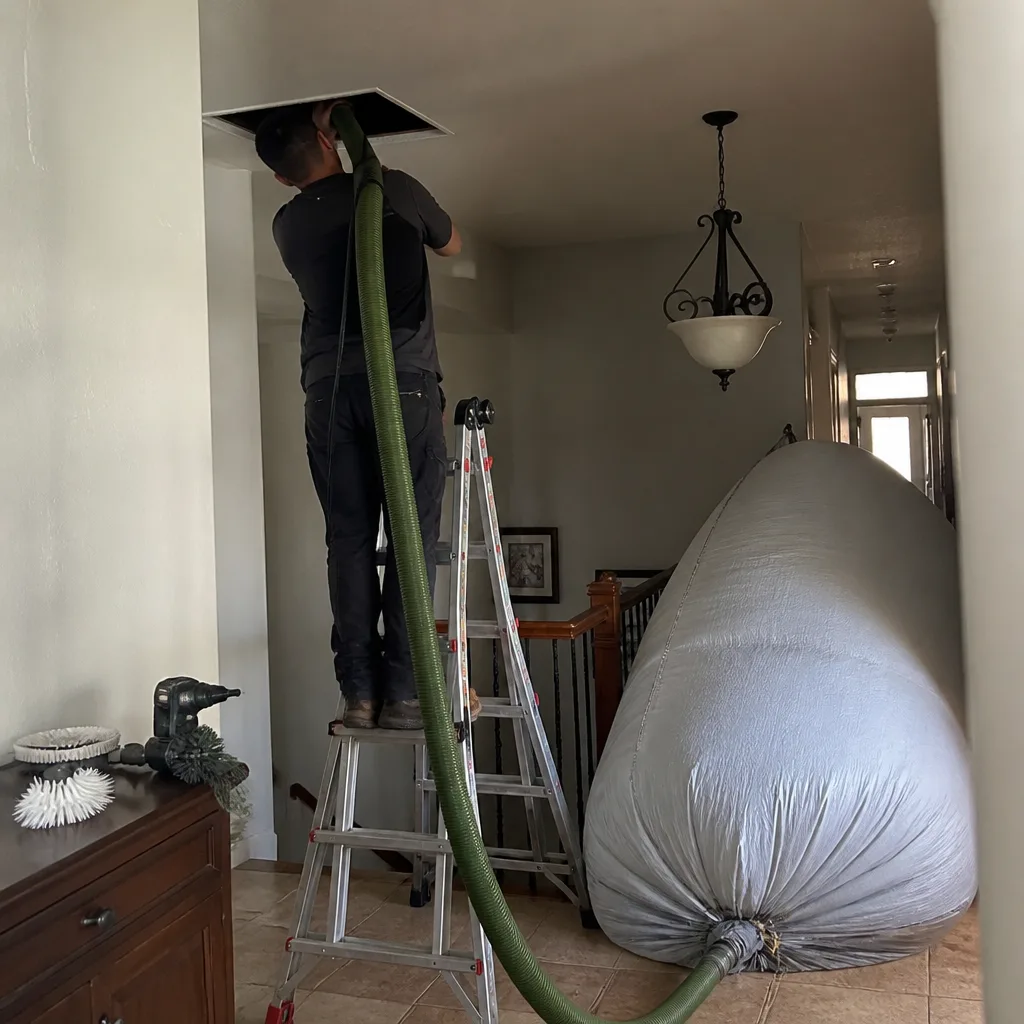
Scottsdale’s resale market moves fast, but due diligence on mechanical systems pays for itself. Here’s what to look for, whether you’re in an Arcadia-adjacent ranch from the 1970s or a 2019 build in Silverleaf.
Visual indicators of possible unpermitted duct work:
- Access panel cuts without professional finishing: A rectangular patch in the drywall where someone cut in to reach a duct, then spackled poorly. Permitted work typically includes proper access door installation or clean drywall repair.
- Mastic or tape visible at register boots: While sealing is common, heavy mastic application at the register boot - where the duct meets the floor or ceiling - may indicate a repair rather than original construction.
- Mismatched flex duct: Original flex duct in a 2005 Scottsdale home should be the same diameter and insulation rating throughout. A section of different color, thickness, or labeling suggests replacement without permit documentation.
- Unsupported sagging: Flex duct must be supported at intervals not exceeding 4 feet per the IMC. Sagging between supports, or supports made of non-standard materials like wire hangers, indicates handyman work rather than permitted installation.
- Plenum modifications with visible sealant beads: The plenum, typically a sheet metal box above the air handler, should show factory seams or professional field seams. Thick bead sealant around new edges suggests a field modification.
Documentation to request from sellers:
- Permit history printout from the City of Scottsdale or Maricopa County - free and public record
- ROC license number and verification screenshot for any HVAC contractor named in disclosure documents
- Written scope of work and invoice for any duct cleaning or repair mentioned
- Home inspection report from the seller’s original purchase, which may show pre-existing conditions
If the seller cannot produce permits for visible duct modifications, budget for a licensed C-39 contractor to inspect and potentially re-certify the work. In Scottsdale’s current market, that re-certification runs $800 to $2,500 depending on accessibility and scope. It’s not a dealbreaker, but it’s a negotiation lever you should wield with actual numbers in hand.
CleanRun provides free second opinions on any written estimate, including estimates for re-certification work. Bring us a contractor’s scope and price; we’ll put our assessment next to it in writing, no charge.
Why Written Job Records Beat Verbal Promises in Permit Disputes
The 365-day accountability window is not a marketing concept. In regulatory and insurance contexts, it is the difference between a documented event and a he-said-she-said dispute.
Consider the scenario: a Scottsdale homeowner has duct cleaning performed in March. The technician notes “minor separation at plenum, sealed during cleaning.” No permit. No license. October brings the first heating cycle, and the sealant fails. Dust blows into the return. The homeowner files an insurance claim for indoor air quality remediation and possible mold.
The insurer’s first question: who performed the work, and what was the scope? Without written documentation, the homeowner has no provable record of what occurred. The insurer may deny the claim based on unlicensed workmanship. The homeowner then faces the ROC complaint process, which requires documentation the homeowner never received.
Now consider the same scenario with CleanRun’s standard deliverables:
- Written price and scope, signed before work begins, under Haven Standard Clause 1
- Documented Photo Record showing the plenum condition before and after cleaning - not after repair, because we don’t perform unpermitted repairs
- Written notation of recommended repair, with referral to licensed C-39 contractor
- 365-Day Done Right Promise, backed in writing, covering the cleaning work we actually performed
If the sealant failure occurs in this scenario, the photo record proves we did not apply sealant. The written scope proves we identified the issue and recommended proper repair. The homeowner’s claim proceeds against the licensed contractor who performed the permitted repair, or against their own insurer with clear documentation of what work was whose.
In our experience across 52,000+ homes, the homeowners who fare best in disputes are those who have a file. Not a feeling. Not a memory of what someone said. A file with dates, names, license numbers, photos, and signed scopes. We produce that file as standard practice, not as an upgrade.
Scottsdale Climate, Dust, and Code: Local Factors That Affect Duct Work
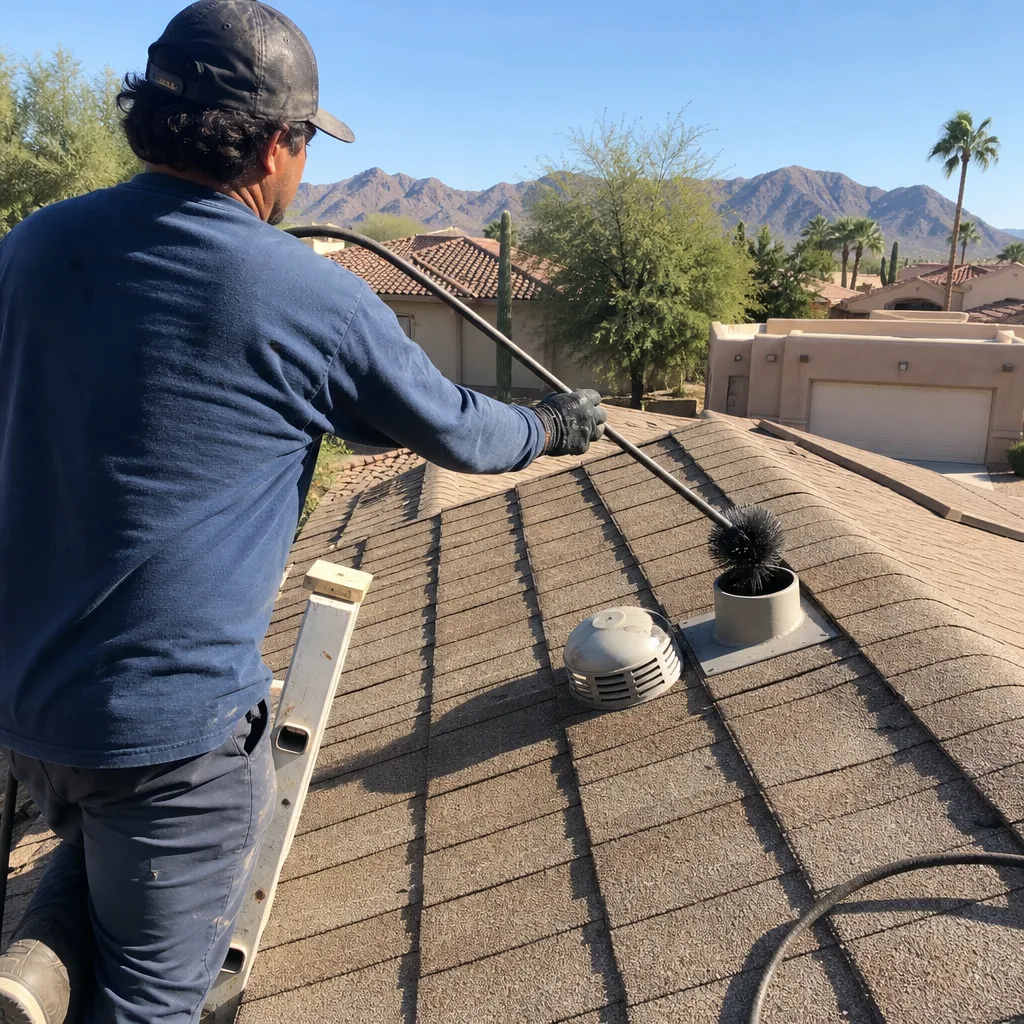
Scottsdale’s environment creates specific conditions that influence both duct degradation and the regulatory framework around repairs.
Caliche dust and monsoon debris: The desert soil around Scottsdale contains caliche, a calcium carbonate-cemented layer that generates fine, abrasive dust. During monsoon season, dust storms introduce this material through any gap in the building envelope. In duct systems, we regularly photograph caliche accumulation at the first elbow downstream from the return - the point where incoming air changes direction and deposits heaviest particles. This is not “dirt” in the generic sense; it is silica-heavy, mechanically abrasive, and accelerates wear on flex duct interior walls.
Temperature cycling: Scottsdale attic temperatures reach 140°F in July and drop below 40°F in January. Flex duct insulation, typically R-6 or R-8, degrades through this cycling. The adhesive that bonds insulation to the inner liner fails progressively. A duct cleaning that does not account for this condition - that is, a cleaning that does not include visual inspection of insulation integrity - may leave the homeowner with clean ducts and collapsing thermal protection.
Code implications: The 2018 IMC requires duct insulation to maintain its rated R-value and to be protected from damage. When our Nikro inspection camera shows delaminated insulation in a Scottsdale attic, we document it. If the homeowner chooses to replace that section, it triggers the permit requirement not because of the cleaning, but because the replacement constitutes “repair” of a thermal component of the mechanical system.
HOA and design review: In master-planned communities like DC Ranch or McDowell Mountain Ranch, duct work visible from exterior locations - such as dryer vent terminations or package unit platforms - may also fall under HOA architectural review. This is separate from code compliance but creates a parallel documentation requirement. A permit alone does not satisfy HOA covenants; written approval from the design review board may also be necessary for exterior modifications.
How CleanRun Handles the Cleaning-to-Repair Boundary
Our process is designed to make the permit boundary visible and navigable for homeowners, not to exploit the gray area where unlicensed operators thrive.
Step 1: Pre-work inspection with photo baseline
Before any equipment enters the duct system, our technician photographs the accessible components: registers, return grille, plenum exterior, and air handler cabinet. These images establish condition at arrival. The customer receives these as the first pages of the Documented Photo Record.
Step 2: Interior camera survey
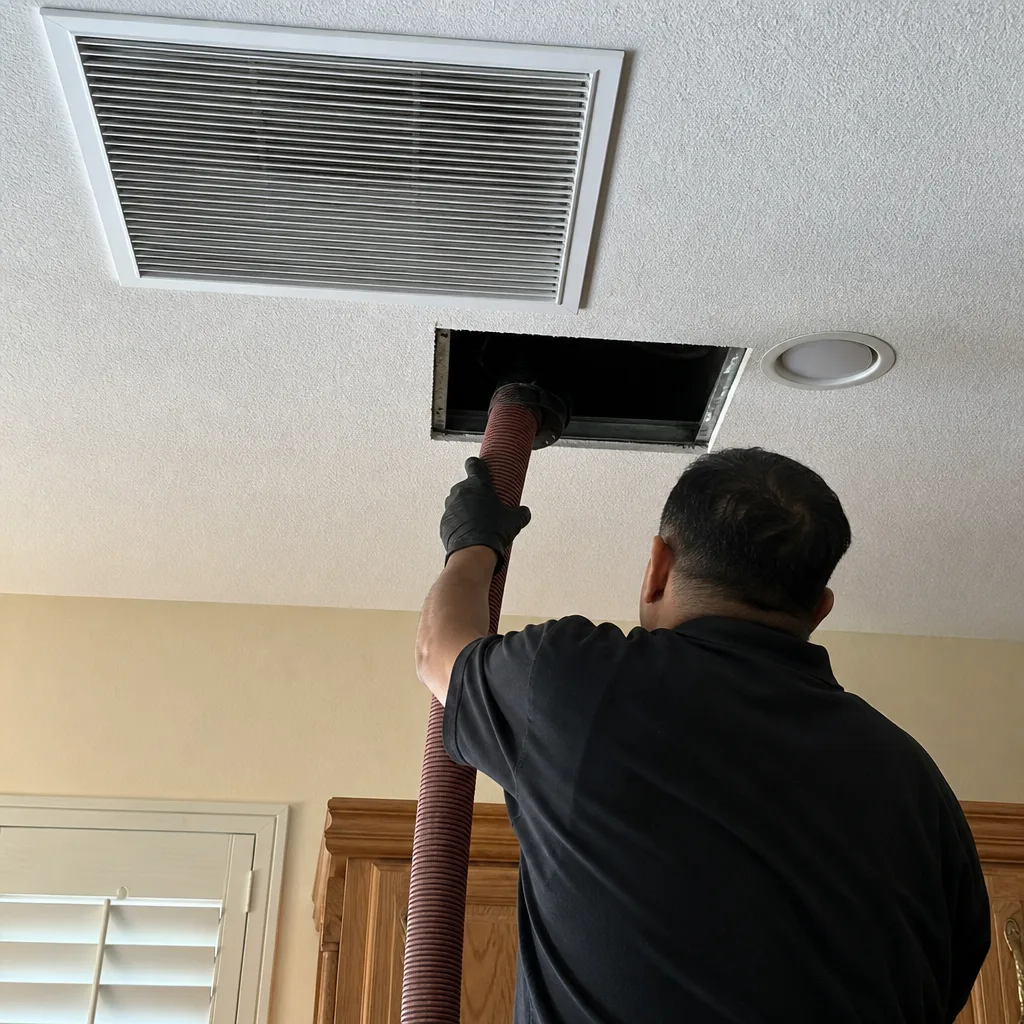
We run the Rotobrush inspection camera through every duct run we will clean. This is not a sales tool; it is a documentation tool. The camera shows debris type, accumulation depth, and - critically - structural conditions that may affect whether cleaning alone is appropriate.
Step 3: Written scope with boundary notation
Based on the camera survey, we present a written scope that explicitly states: “This proposal covers cleaning only. No repairs, modifications, or alterations to the duct system are included.” If the camera showed conditions requiring repair, a separate notation appears: “Recommended: C-39 contractor evaluation for [specific condition]. CleanRun can coordinate referral or customer may engage own contractor.”
Step 4: Cleaning with continuous documentation
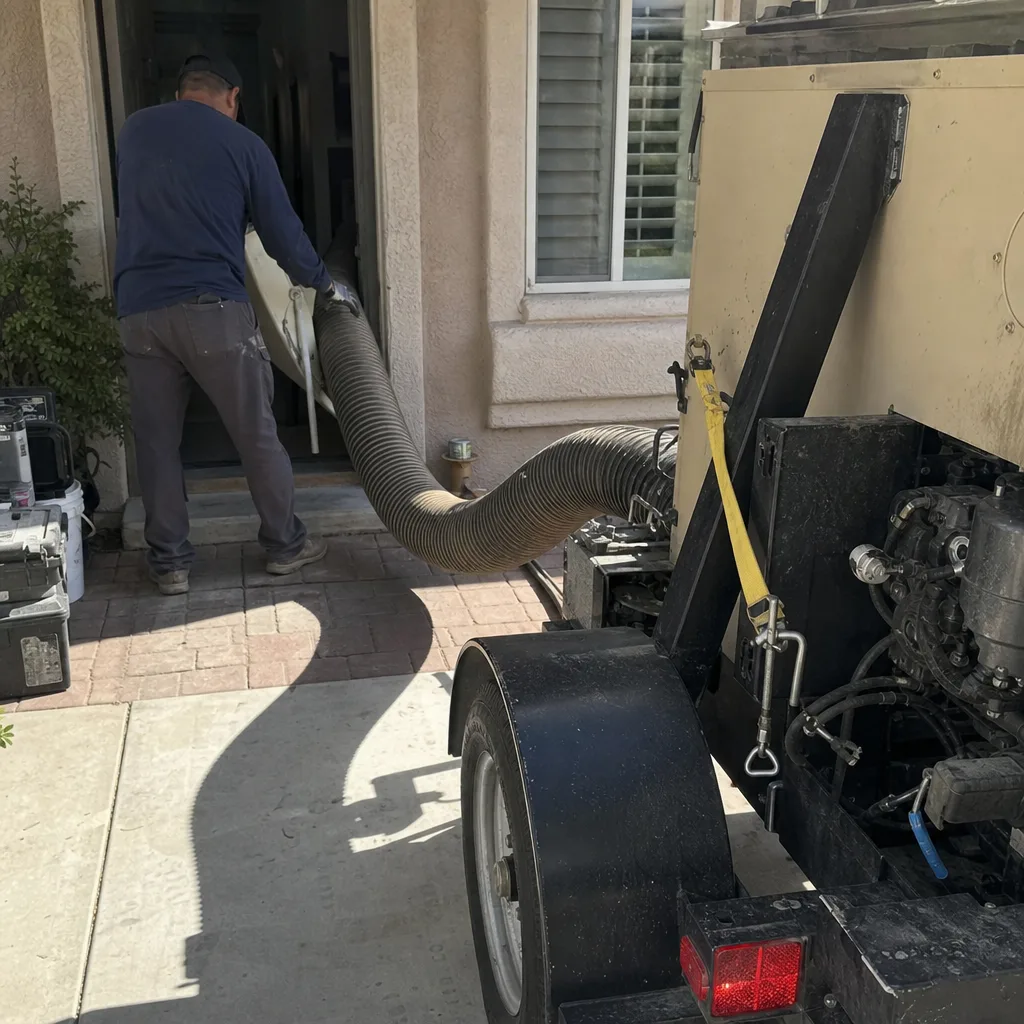
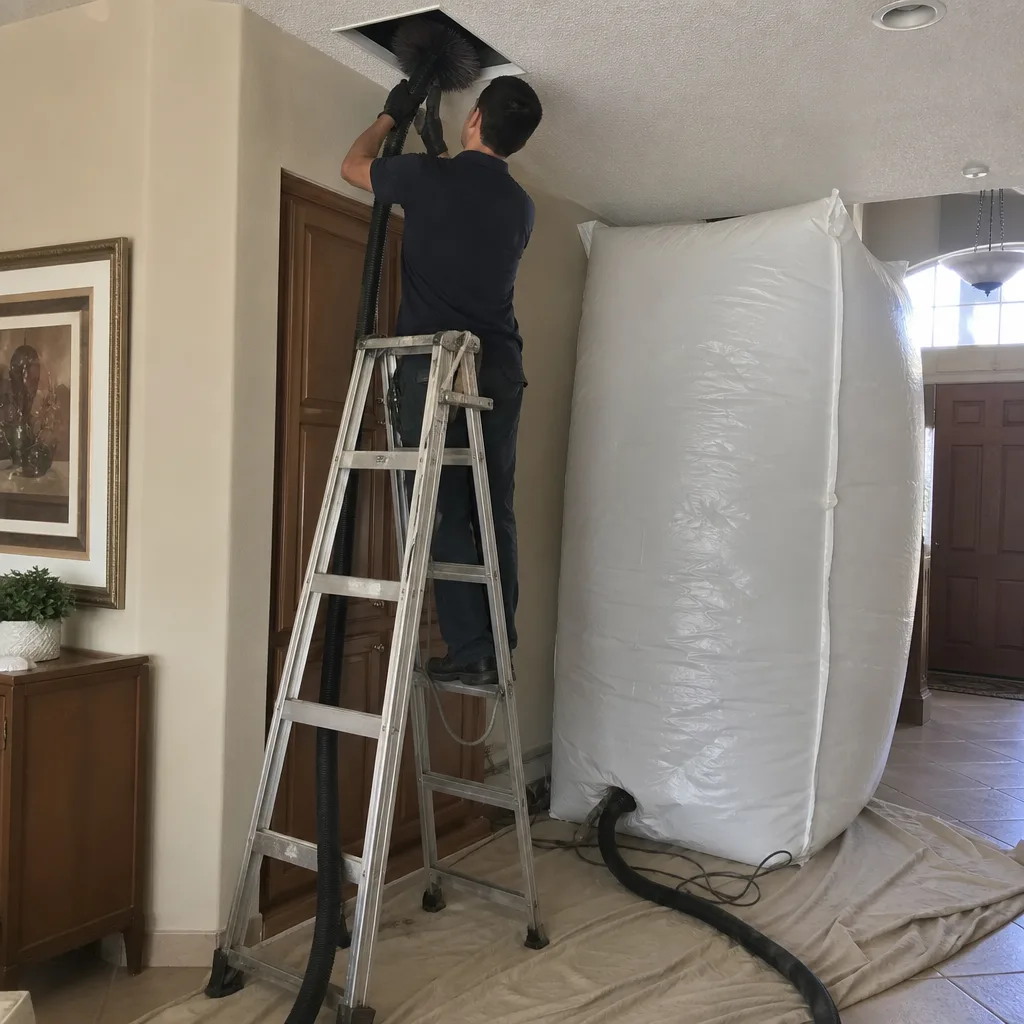
During cleaning with our Abatement Technologies negative-pressure extraction system, we photograph the interior of each duct run after cleaning. These after images, combined with the before images, constitute the complete Documented Photo Record delivered to the customer before we leave the property.
Step 5: Post-work review and record delivery
The technician reviews the photo record with the customer, noting what was found, what was done, and what was not done. The customer signs acceptance. The record is emailed as a PDF within 24 hours and stored in our system for the duration of the 365-Day Done Right Promise.
This process means we sometimes leave money on the table. A separated duct section could be “just a quick reconnect” with a $200 upcharge. We don’t do it. Haven Standard Clause 3 - Verified Crews - means our technicians are trained to recognize the boundary and stop. The written price we agreed to is the written price we invoice. If repair is needed, we refer to licensed professionals and return to clean after the permit work is complete.
Air Duct Cleaning in Scottsdale from CleanRun follows this protocol on every job, from a 1,200-square-foot condo near Old Town to a 6,000-square-foot custom build in Troon North.
Common Mistakes to Avoid
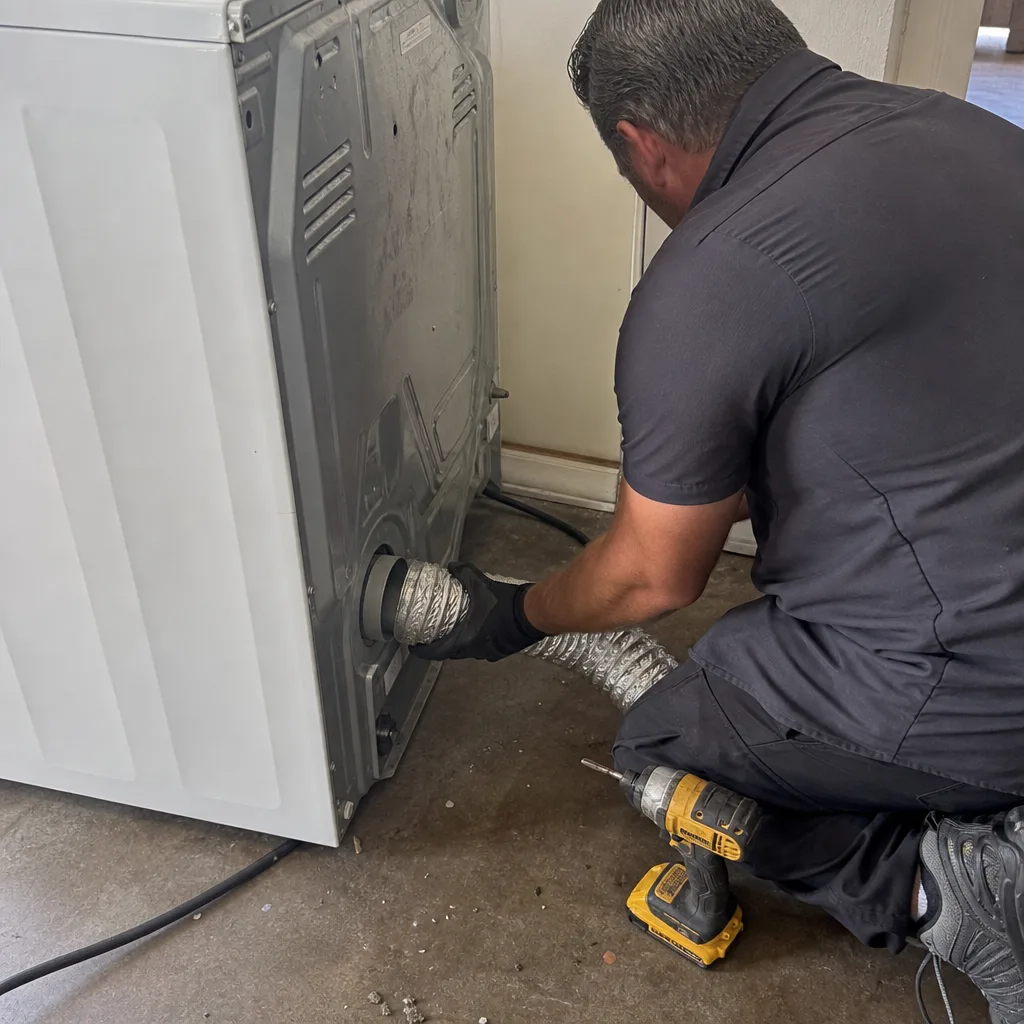
- Assuming “licensed and insured” means ROC-licensed for mechanical work. Many duct cleaning companies carry general liability insurance and a city business license, which sounds sufficient. Ask specifically for the ROC license number and verify it at roc.az.gov. If they hedge, the license doesn’t cover what they’re proposing to do.
- Accepting verbal assurance that a repair is “too minor for a permit.” Arizona does not have a de minimis exception for residential duct repair. The permit requirement is activity-based. A $45 permit protects against a $2,400 re-certification later.
- Neglecting to check permit history before buying a Scottsdale home. In competitive markets, buyers waive inspections to win bidding wars. Don’t waive permit history research - it’s free, public, and takes ten minutes online. Unpermitted duct work is common in homes flipped between 2020 and 2023.
- Hiring a cleaner who also “does a little repair on the side.” This is where most unpermitted work originates. The technician finds a problem, has the tools, and wants to be helpful. The result is work that cannot be inspected, warranted, or insured.
- Failing to request the photo record before paying. A legitimate documented record is delivered before or at final payment, not “emailed later” or “available on request.” If you don’t have it in hand, you don’t have documentation.
- Confusing duct cleaning with HVAC cleaning. These are distinct services with different regulatory implications. HVAC Cleaning in Scottsdale addresses the air handler, coils, and blower assembly - components that may involve electrical and refrigerant work requiring additional licensing. Know which service you’re buying.
- Ignoring dryer vent work as a separate trade issue. Dryer Vent Cleaning in Scottsdale often involves roof or exterior wall penetration, which may trigger building permit requirements separate from mechanical permits. Don’t assume one permit covers all.
When to Call a Professional
Call a licensed C-39 contractor when your duct system needs repair, modification, or any work that alters its structure or airflow capacity. Call CleanRun Air Duct Cleaning Scottsdale when you need documented, permitted-boundary-respecting cleaning that produces a written record of what was actually found and what was actually done. For more guides & resources on protecting your home, visit our blog.
If you’re unsure which category your situation falls into, start with a cleaning inspection. Our camera survey will show you the condition of your duct runs without committing you to repair work. If the camera reveals conditions requiring licensed repair, we’ll say so in writing and help you navigate the next step.
CleanRun Air Duct Cleaning Scottsdale offers free estimates in Scottsdale - call (928) 267-0992. Every estimate includes a written price before any work starts, under Haven Standard Clause 1. We also provide free second opinions on any written estimate from another contractor, including estimates for repair work that may require permitting.
Frequently Asked Questions
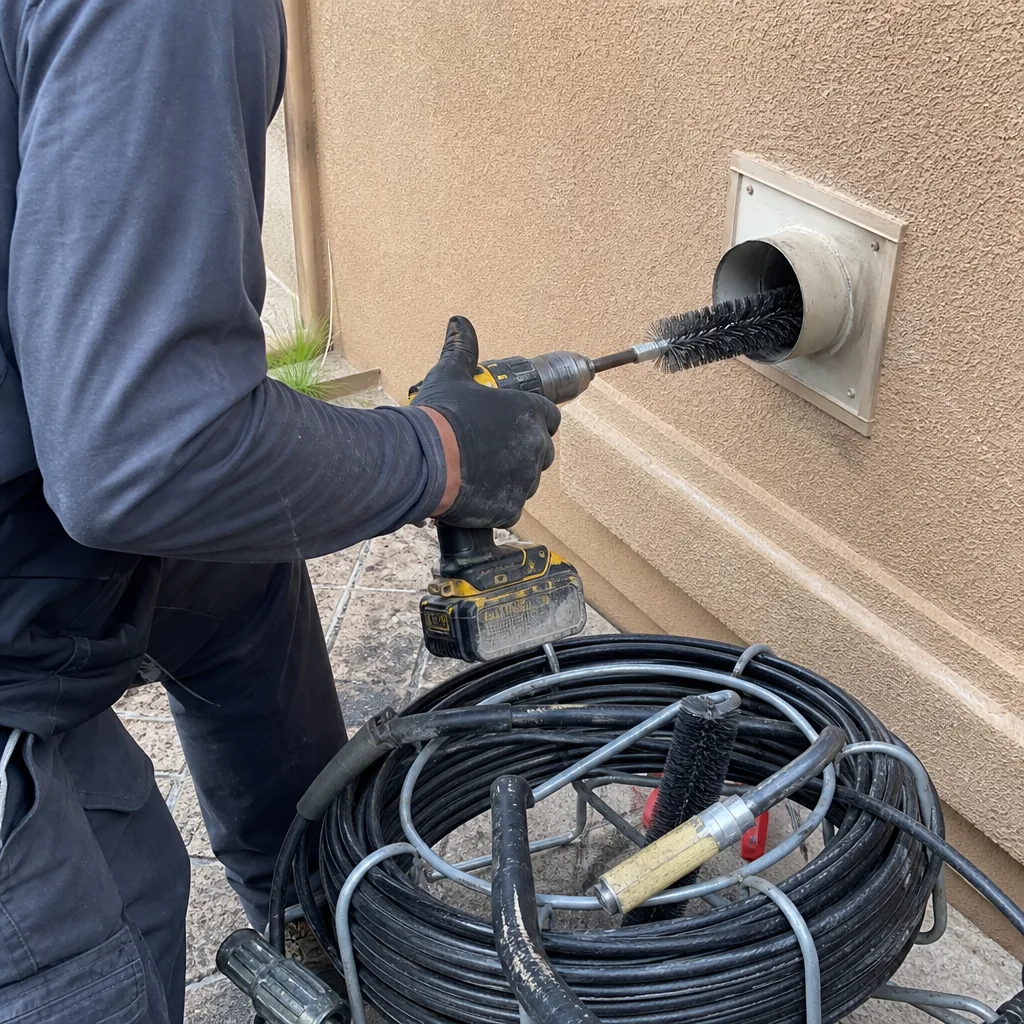
No. Cleaning - the removal of debris from existing duct runs using negative-pressure extraction or mechanical brushing - does not require a permit in Arizona. If the technician performs repair, reconnection, or modification, that work does require a Maricopa County mechanical permit and an ROC-licensed C-39 contractor. Call (928) 267-0992 for a free cleaning estimate that stays on the maintenance side of the boundary.
Residential mechanical permits for minor duct repair typically cost $45 to $120, based on project valuation. Work exceeding $1,000 in valuation or involving structural modification incurs additional plan review fees. The permit fee is the contractor’s responsibility, though it may be passed through on the invoice. What matters is that the permit exists and shows final inspection approval, not who paid the fee.
Search the property address at the City of Scottsdale building department or Maricopa County Planning and Development permit lookup. Look for mechanical (MECH) permits with descriptions mentioning duct, HVAC, or mechanical. Cross-reference the permit holder’s name with ROC license verification. Gaps between visible repairs and permit records indicate unpermitted work that may require re-certification.
You inherit the liability. Unpermitted work may void homeowner’s insurance coverage for related damage, complicate future sales, and leave you with no warranty recourse through the ROC residential recovery fund. Remediation typically requires hiring a licensed C-39 contractor to inspect, document, and re-certify the work, at cost to you. In Scottsdale’s current market, this runs $800 to $2,500.
Low quotes often exclude documentation, use substandard equipment, or bundle unpermitted repair work performed by unlicensed technicians. A $79 coupon that includes “free duct sealing” is almost certainly performing regulated work without proper licensing. At CleanRun, our written price covers cleaning with professional-grade equipment - Rotobrush, Nikro, Abatement Technologies - and includes the Documented Photo Record as standard. The price reflects what we actually do, not what we hope to upsell once inside your home.
Demand a photo record showing the interior of every duct run before and after cleaning. Not a single representative photo. Every run. At CleanRun, this is standard, not optional. The photo record is delivered as a PDF before final payment. If a company cannot or will not produce this documentation, you have no verifiable proof of work performed.
For most Scottsdale homes, every 3 to 5 years under normal occupancy and with standard 1-inch pleated filters changed quarterly. Homes with pets, recent construction, or located near active desert development may need more frequent cleaning. The definitive indicator is a camera inspection showing debris accumulation that restricts airflow or carries into the living space. We do not recommend calendar-based cleaning without visual verification - it’s unnecessary work for clean systems and insufficient for neglected ones.
The Bottom Line
Air duct cleaning in Arizona is unregulated by design - it’s maintenance, not construction. The trouble begins where cleaning ends and repair begins, a boundary that unlicensed operators cross daily in Scottsdale homes. Protect yourself by understanding the 2018 IMC threshold, verifying ROC licenses and permits through official channels, and demanding written documentation that survives beyond the technician’s departure. The $45 permit you verify today prevents the $2,400 re-certification you discover at closing. The photo record you receive today becomes the evidence that protects your insurance claim tomorrow. At CleanRun, we’ve built our practice on this principle since 2013: documented work, written prices, and accountability that outlasts the truck’s taillights.
Written by Tomas Reyes, Owner at CleanRun Air Duct Cleaning Scottsdale, serving Scottsdale since 2013.