
Last updated September 23, 2026
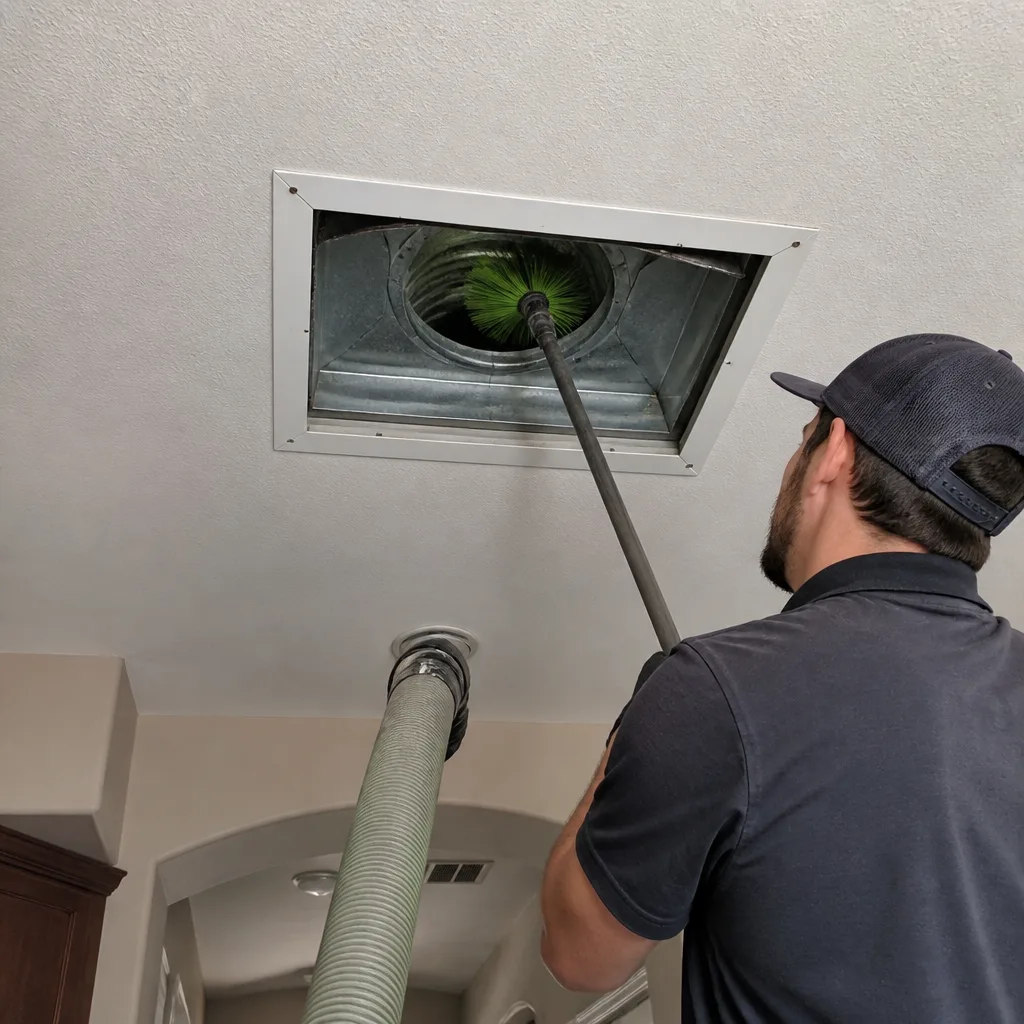
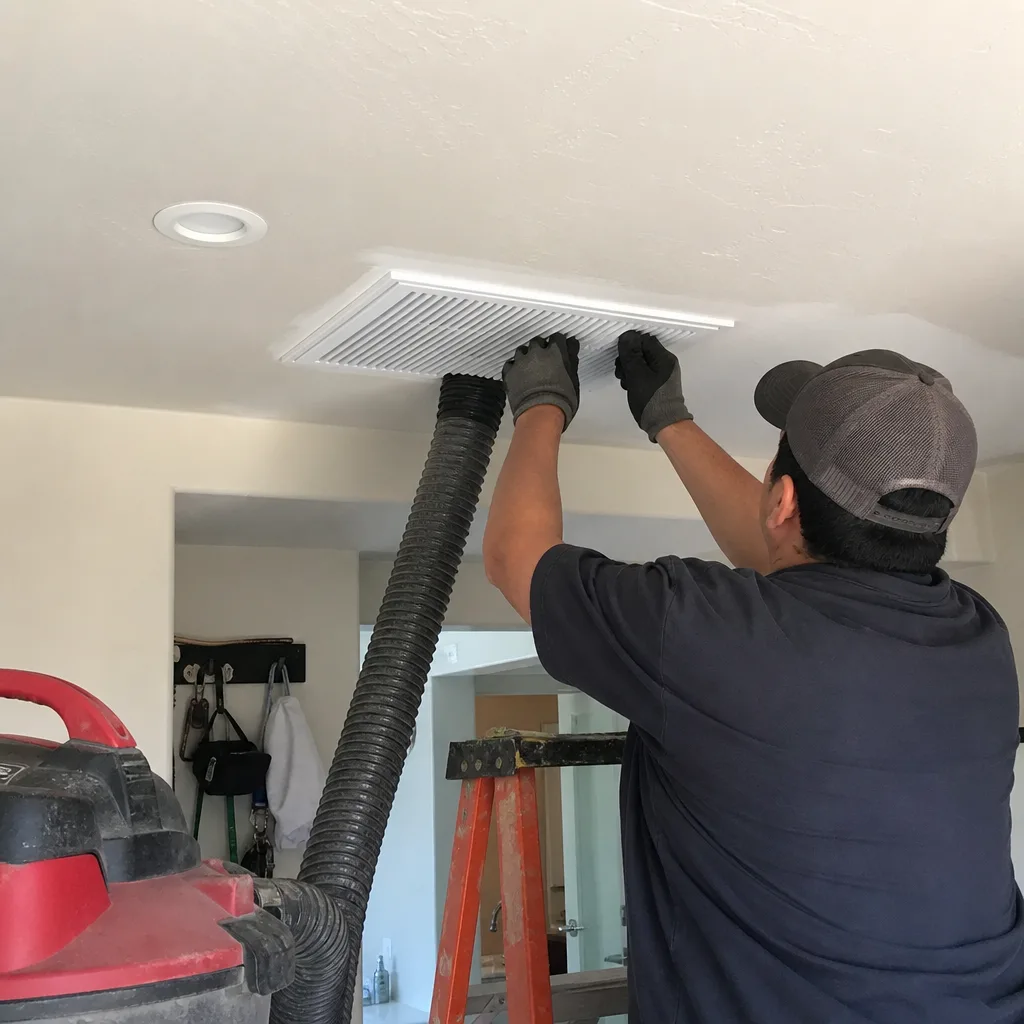
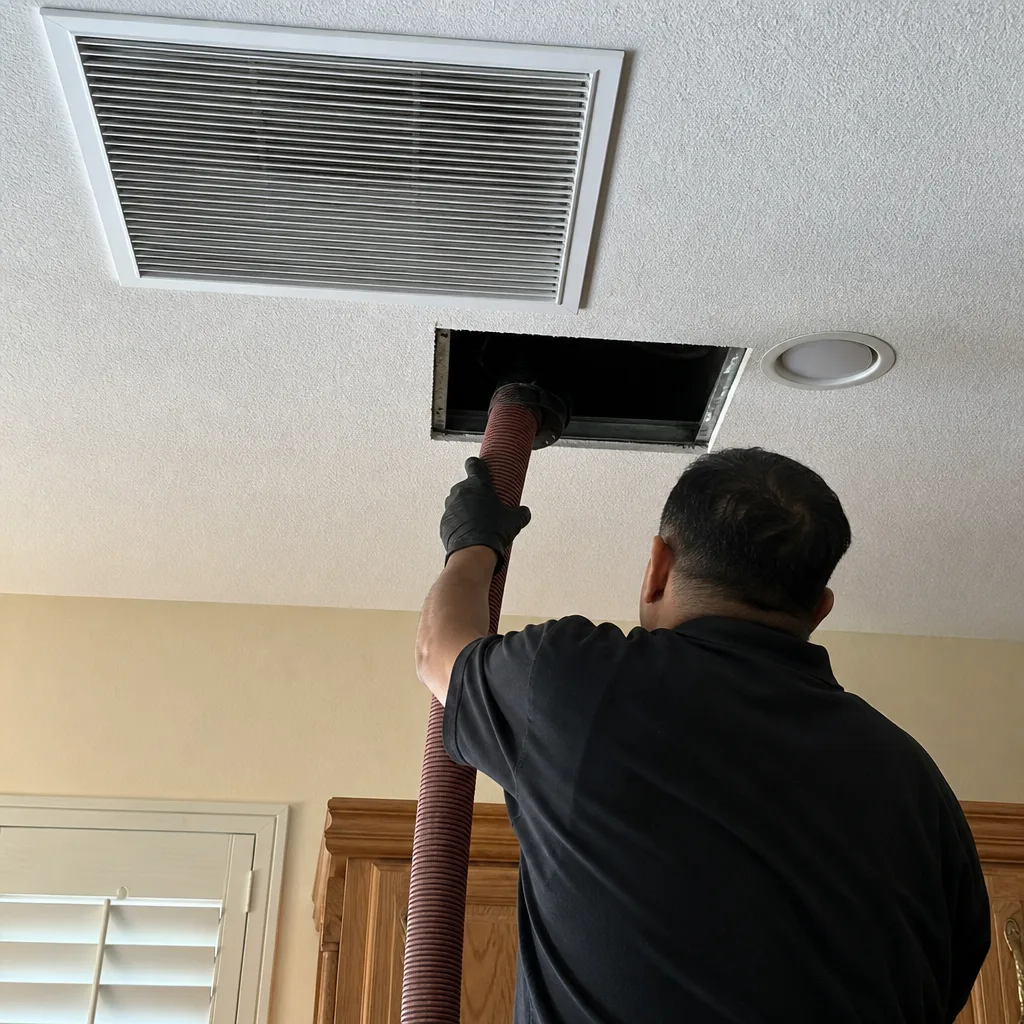
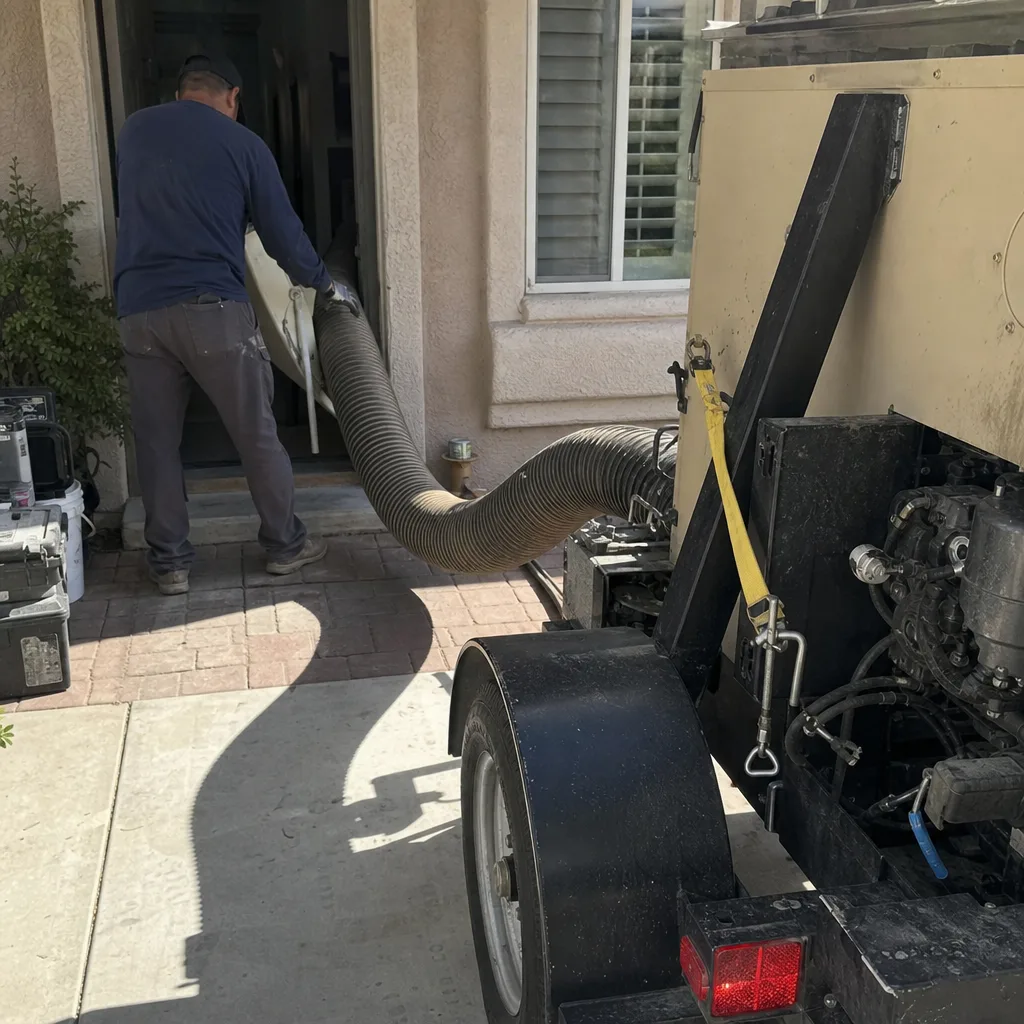
Whole-system duct and dryer vent check with before-and-after photos - you see exactly what came out of your vents
That "$99 whole-house special" is a bait ad - the real number appears once they are in your hallway, or the "clean" is a shop-vac at the register. We photograph the inside of your ducts before and after instead.

 Before
 After
After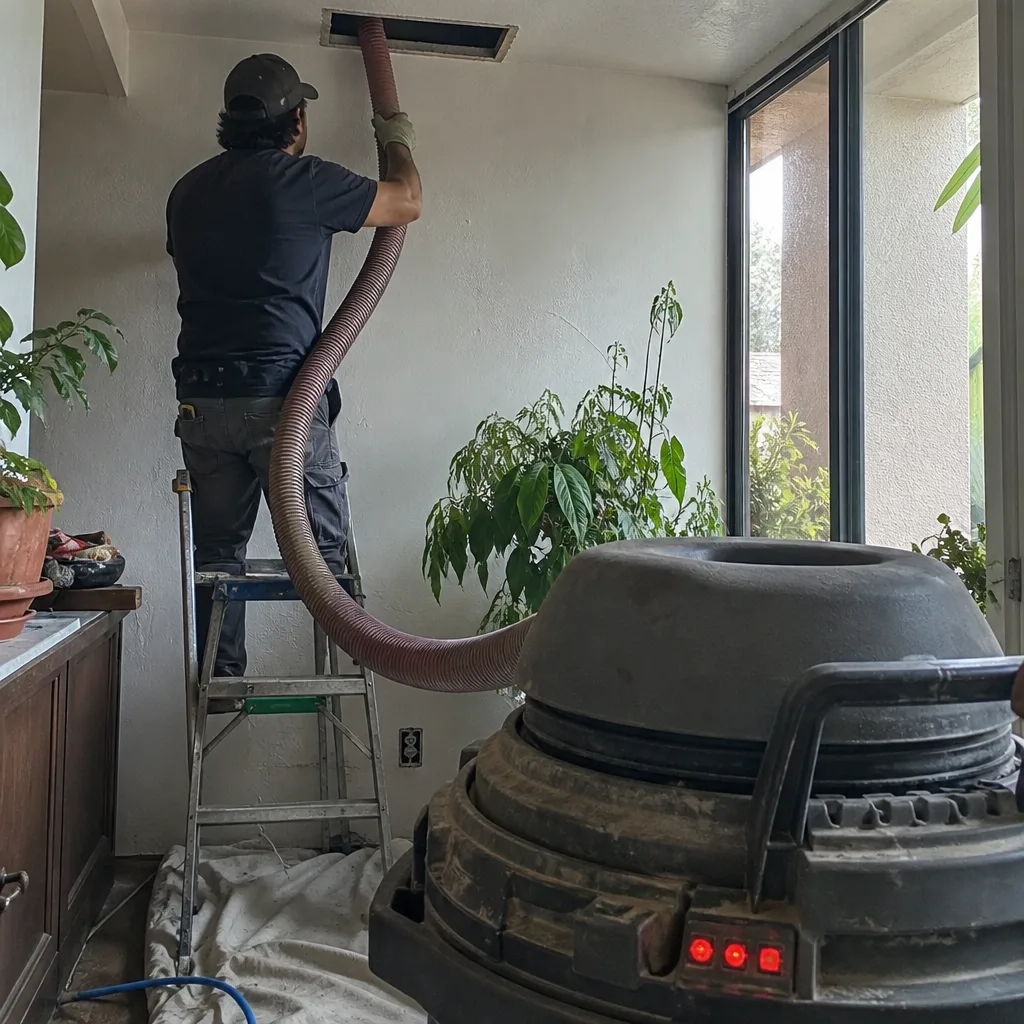 Before
 After
After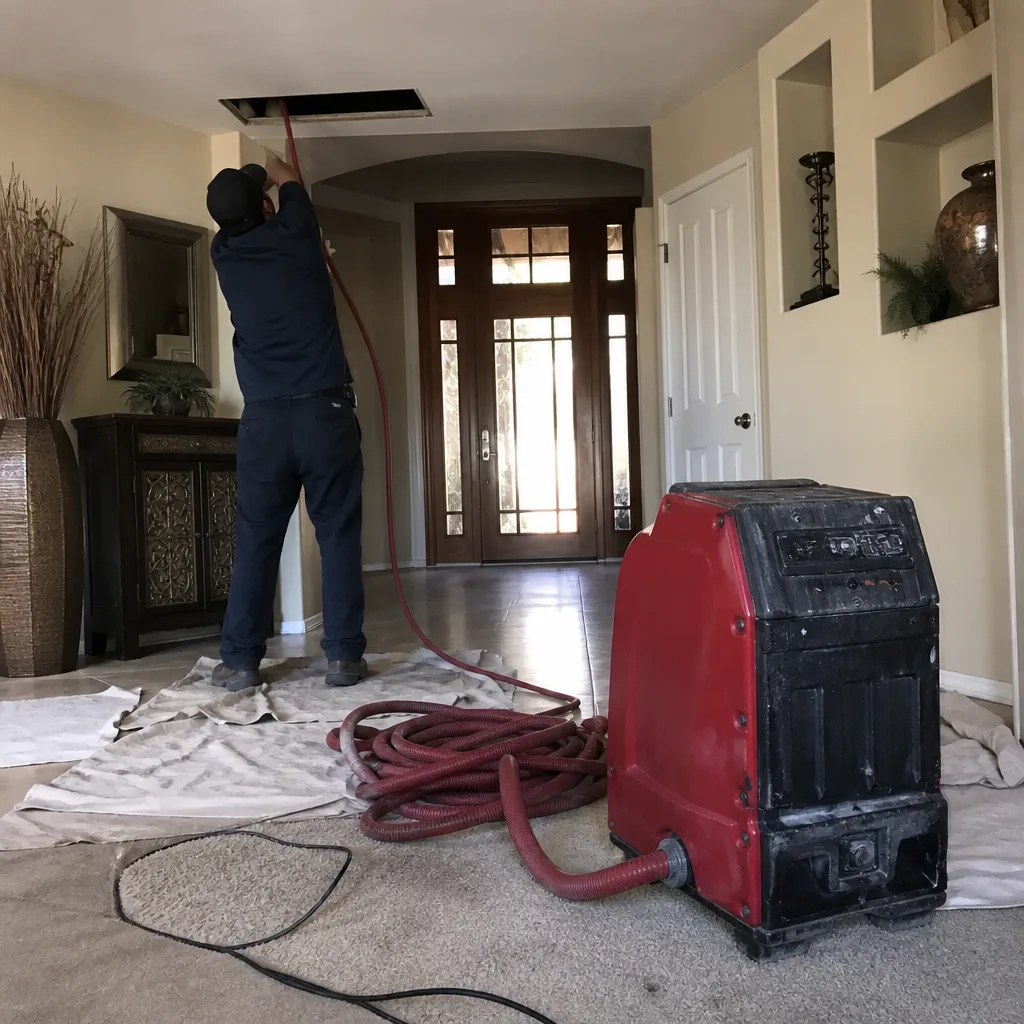 Before
 After
AfterAir Duct Cleaning Warning Signs: A Scottsdale Homeowner’s Reference Guide
Visible dust blowing from a supply register in Scottsdale is not automatically a duct cleaning indicator. In our experience across more than 52,000 homes, that same sign can mean a clogged evaporator coil is channeling airflow, a disconnected flex duct is pulling attic insulation into the system, or simply that someone replaced a MERV 11 filter with a MERV 4. The sign is identical; the cause and solution are completely different. Most warning sign guides stop at the symptom and never explain the mechanism behind it, which is why homeowners in Scottsdale spend money on Air Duct Cleaning services that do not solve their actual problem. This guide teaches you to read the signs mechanically, distinguish contamination sources, and know when cleaning helps, when it wastes your money, and when repair must come first.
Quick Answer
Warning signs that actually indicate duct contamination in Scottsdale include persistent debris around supply registers after filter changes, visible mold or pest debris inside duct runs, rooms with more than 20% airflow imbalance compared to others, and musty odors that persist after coil cleaning. Many apparent signs, ghosting stains, sudden dust increases, and uneven cooling, often point to filter bypass, coil fouling, or disconnected flex duct instead. A camera inspection of the duct run (the continuous metal or flex pathway from plenum to register) is the only reliable way to confirm contamination before paying for cleaning, as detailed in our DIY vs Professional Air Duct Cleaning: The Scottsdale Homeowner’s Decision Guide.
Table of Contents
- Register Dust: Duct Contamination or Filter Bypass?
- Ghosting Stains Around Supply Registers: What They Actually Indicate
- Coil Contamination vs. Duct Contamination: Three Signs That Look Identical
- Scottsdale Pest Intrusion: Rodent, Insect, and Reptile Debris in Ductwork
- Airflow Imbalance as a Structural Warning Sign
- Musty, Chemical, and Burning Odors: Decoded by Source
- Inspection, Cleaning, or Repair: Matching the Sign to the Response
- Common Mistakes to Avoid
- When to Call a Professional
- Frequently Asked Questions
- The Bottom Line
BeforeAfterRegister Dust: Duct Contamination or Filter Bypass?
Dust accumulation on supply register fins is the most reported warning sign we hear from Scottsdale homeowners. It is also the most misinterpreted. Before concluding your ducts need cleaning, you need to determine whether the dust is coming from inside the duct run or bypassing the filter entirely.
Filter bypass occurs when an incorrectly sized filter leaves gaps at the frame, when a filter is inserted backward (pleats facing the wrong direction), or when a high-MERV filter is forced into a system with inadequate fan static pressure. The system pulls unfiltered air through these gaps, and that debris deposits at the first supply registers downstream, typically the closest rooms to the air handler. In Scottsdale, we see this frequently in homes built 2015-2020 with variable-speed systems where homeowners upgraded to MERV 13 filters without verifying compatibility. The filter itself becomes a partial blockage, and air seeks the path of least resistance around it.
Duct contamination produces a different pattern. Debris originates inside the duct run itself, typically from years of particle settlement, construction debris left during initial build, or post-construction remodeling dust that entered open registers. This dust blows out intermittently, often when the system cycles on after a period of rest, and it reappears within days of wiping the register clean. Filter bypass dust, by contrast, accumulates steadily and uniformly while the system runs.
Here’s how to distinguish them in practice:
- Remove the register and photograph the interior of the boot (the sheet metal transition between duct and register). Filter bypass leaves clean metal; duct contamination shows debris lining the boot walls.
- Check the filter fit with the system running. Hold a tissue near the filter frame gaps. Suction indicates bypass.
- Replace with a properly fitted MERV 8 pleated filter, oriented correctly, and wait 10 days. If register dust diminishes, bypass was your problem. If it persists, the duct run needs inspection.
In Scottsdale’s desert climate, fine particulate from dust storms and caliche soil (the calcium carbonate-rich hardpan common to the Salt River Valley) creates particularly stubborn deposits. These particles are smaller and more angular than typical household dust, making them more likely to embed in duct lining and more visible when they exit at registers. A homeowner in McCormick Ranch or Gainey Ranch who sees white-gray dust with a gritty texture is often seeing caliche particulate that has entered through construction-phase ductwork or through gaps in exterior duct seams.
We document this distinction on every Air Duct Cleaning in Scottsdale job with before-and-after photography of the boot interior, not just the register face. The photo record shows whether the debris source was internal or external to the duct run.
Ghosting Stains Around Supply Registers: What They Actually Indicate
Dark rectangular stains on ceilings around supply registers are common in Scottsdale homes, and they are almost universally misidentified as “dirty ducts” by homeowners and some service providers. These ghosting stains are not evidence of duct contamination. They are a thermal and particulate physics phenomenon with three required conditions: airborne particles of specific size, thermal differential between duct air and ceiling surface, and electrostatic charge differential.
Here’s the mechanism. When conditioned air exits a supply register, it creates a zone of lower temperature on the surrounding ceiling. Warm, humid interior air carries ultrafine particles, candle soot, cooking oils, and in Scottsdale, often airborne caliche dust from open windows during shoulder seasons. Where this warm air contacts the cooled ceiling surface, particles deposit in a pattern that traces the airflow boundary. The stain outlines the register because that is where the thermal gradient is sharpest.
The particle size matters. Ghosting requires particles between 0.1 and 2.5 microns, small enough to remain airborne in interior currents but large enough to deposit on surfaces. Coarse duct debris, the kind removed by negative-pressure extraction, is typically larger than 10 microns and settles in ducts rather than remaining airborne. This means ghosting stains indicate an interior air quality issue or thermal bridging, not duct contamination.
Three specific conditions in Scottsdale homes accelerate ghosting:
- High attic temperatures in summer create greater thermal differential at ceiling registers. Attics in Scottsdale routinely exceed 140°F in July, and poorly insulated register boots become cold spots that attract particle deposition.
- Monsoon humidity spikes in July and August increase airborne particle adhesion to cooled surfaces. The brief, intense humidity periods create condensation microclimates at register edges.
- Desert landscaping and open windows during October-November and March-April bring caliche dust inside without the filtration that occurs during closed-window summer months.
Cleaning your ducts will not remove ghosting stains. The solution is sealing the register boot to attic space with mastic or foam, improving boot insulation, or in some cases, upgrading to registers with better airflow diffusion that reduces the thermal boundary. We have photographed ghosting stains in Scottsdale homes with pristine duct interiors and heavily contaminated ducts with no ghosting whatsoever. The correlation simply does not exist.
If you see these stains, request an inspection that includes thermal imaging of the register boot, not a duct cleaning quote. At CleanRun, we include boot thermal imaging as part of our standard assessment under Haven Standard Clause 1: Written Scope Before Work Starts.
Coil Contamination vs. Duct Contamination: Three Signs That Look Identical
Three warning signs, sudden dust increase at all registers, musty odor from vents, and reduced airflow, can originate from the evaporator coil, the duct run, or both. Treating the wrong source wastes money and leaves the problem intact. This section and our more guides & resources teach you to read the diagnostic differences.
Sign 1: Sudden dust increase at all registers
When dust appears simultaneously at every supply register in the home, the source is almost always upstream of the duct branching, either at the coil or the filter. Duct contamination develops unevenly; different runs have different lengths, orientations, and exposure to moisture or pests. A simultaneous, whole-house dust event points to a central component.
Check the evaporator coil first. In Scottsdale, coils foul rapidly due to monsoon humidity and near-continuous summer runtime. A coil clogged with dust and biofilm becomes a debris reservoir. When the system cycles on, condensate blow-off and turbulent airflow dislodge particles that travel through the plenum and distribute to all ducts. The dust is often dark, musty-smelling, and accompanied by a brief humidity spike at registers.
Duct contamination, by contrast, appears first and most heavily at the longest or most convoluted runs, typically second-story rooms or additions in Scottsdale’s 1990s-era homes with extended flex duct pathways. The dust is lighter in color, dry, and without odor.
Sign 2: Musty odor from vents
Musty odor requires organic material and moisture. In Scottsdale’s dry climate, persistent moisture inside ducts is unusual unless there is an active leak, a poorly sealed evaporator cabinet, or a humidifier overfeeding. More commonly, musty odor from vents indicates a contaminated evaporator coil or drain pan, not the duct run itself.
Inspect the condensate drain line for blockage. A backed-up drain pan overflows into the plenum, wetting insulation and creating microbial growth on the coil surface. The odor distributes through all ducts. Duct-run mold, by contrast, requires a localized moisture source, a roof leak above a specific duct, condensation in an unconditioned attic section, or a disconnected duct pulling humid attic air. It affects one or two registers, not the whole system.
Sign 3: Reduced airflow
Reduced airflow at specific registers indicates duct obstruction, kinked flex duct, or damper closure. Reduced airflow at all registers indicates blower motor degradation, severely clogged filter, or coil icing. In Scottsdale, coil icing is common when homeowners set thermostats below 72°F during 115°F outdoor conditions; the coil temperature drops below freezing, ice accumulates, and airflow collapses uniformly.
We use a handheld anemometer (airflow velocity meter) to measure register output in cubic feet per minute. A reading below 50% of design velocity at all registers indicates a central problem. A reading below 50% at isolated registers indicates duct-run problems. This measurement takes 30 seconds and eliminates guesswork. Our crews carry anemometers from Rotobrush and document readings in the written scope before recommending any work.
Coil cleaning and duct cleaning are separate services with separate equipment. HVAC Cleaning in Scottsdale addresses coils, blowers, and plenums. Duct cleaning addresses the run from plenum to register. We have assessed Scottsdale homes where three previous providers sold duct cleaning for a coil problem, and the homeowner paid for work that could not possibly solve the symptom.
Scottsdale Pest Intrusion: Rodent, Insect, and Reptile Debris in Ductwork
Scottsdale’s desert ecosystem produces specific pest signatures inside ductwork, and each requires a different response before cleaning can occur. Cleaning ducts with active pest entry points is temporary at best and can spread contaminants at worst.
Rodent debris appears as elongated pellets (typically 1/4 inch, rice-shaped), shredded paper or insulation fragments, and urine crystallization visible as white scaling on metal duct surfaces. In Scottsdale, roof rats are the primary invader, entering through gaps as small as 1/2 inch in soffits, roof vents, or uncapped chimneys. They prefer attic-mounted ductwork in the cooler months, October through April, and often establish nests near the plenum where temperatures are most stable.
Rodent debris carries Hantavirus and Leptospira risks that require specific PPE and disposal protocols. We do not clean ducts with active rodent contamination without prior pest control clearance and entry point sealing. The Nikro negative-pressure extractors we use are HEPA-filtered, but extraction alone does not sanitize the duct surface. After pest clearance, we apply a registered sanitizer and document with before-and-after photography.
Insect debris varies by species. Crickets and cockroaches leave frass (insect excrement) as fine, dark granules concentrated near register boots where they access living spaces. Paper wasps build nests in unused duct branches or abandoned bathroom vents, producing papery fragments and larval remains. Termite swarmers, common in Scottsdale’s March-May swarming season, enter through foundation cracks and leave discarded wings in low-lying return ducts.
Insect debris is generally less hazardous than rodent debris but indicates active entry points that must be sealed. We have found cricket infestations so dense in Scottsdale’s Desert Mountain and DC Ranch homes that the register boot was completely occluded, producing airflow readings below 20% of design. The homeowner assumed a duct cleaning would help; the actual problem was biological obstruction requiring removal, not extraction.
Reptile intrusion is distinctively Scottsdale. Western fence lizards and geckos enter ductwork through exterior gaps, gaps where flex duct connects to roof jacks, or through uncapped registers during construction or renovation. They cannot exit vertical duct runs and die, producing a specific decomposition odor that is sulfurous and localized to one register. The remains are typically found at the first elbow or boot transition where they fell and could not climb.
Lizard intrusion does not produce debris visible at the register until decomposition occurs, but homeowners often report a “dead animal” smell that intensifies when the system runs. The response is physical removal, duct surface sanitizing, and sealing the entry point. Negative-pressure extraction alone will not remove adhered decomposition residue.
We document pest findings with photography and flag entry points in the written scope. If pest control is required first, we state this explicitly under Haven Standard Clause 1 and schedule cleaning only after clearance. This sequencing protects our crews and prevents the customer from paying for cleaning that will be recontaminated.
Airflow Imbalance as a Structural Warning Sign
A room that will not cool despite filter changes and thermostat adjustment is often diagnosed as “needs more insulation” or “the sun hits that side.” In our Scottsdale work, the actual cause is frequently a structural duct defect detectable with a $30 anemometer and visible to any camera.
Disconnected flex duct is epidemic in Scottsdale homes built 1995-2010, when flex duct dominated residential construction. Attic temperatures exceeding 140°F degrade the adhesive on flex duct tape and cause the inner liner to separate from the insulation jacket. The conditioned air dumps into the attic; the room starves. Homeowners run the system longer, utility bills rise, and the symptom is misattributed to insulation or window quality.
Detecting this requires measurement, not guesswork. We measure supply register velocity at every register with an anemometer and compare to design CFM (cubic feet per minute, calculated from room square footage and system capacity). A room reading 40% or more below adjacent rooms indicates duct-run problems. Common patterns:
- Zero airflow at a previously functioning register: complete disconnection or severe kink in flex duct, often where the duct crosses a truss chord.
- Reduced airflow with attic-temperature air: disconnection where the duct pulls unconditioned attic air through the insulation jacket.
- Reduced airflow with debris at register: partial disconnection pulling attic insulation into the duct run, visible as gray fibrous material at the register.
In Scottsdale’s 1980s-era homes near Old Town and the Shea corridor, we also find collapsed metal duct where internal fiberglass lining has detached and occluded the airway. This produces gradually diminishing airflow over years, not sudden loss, and is often misdiagnosed as normal aging.
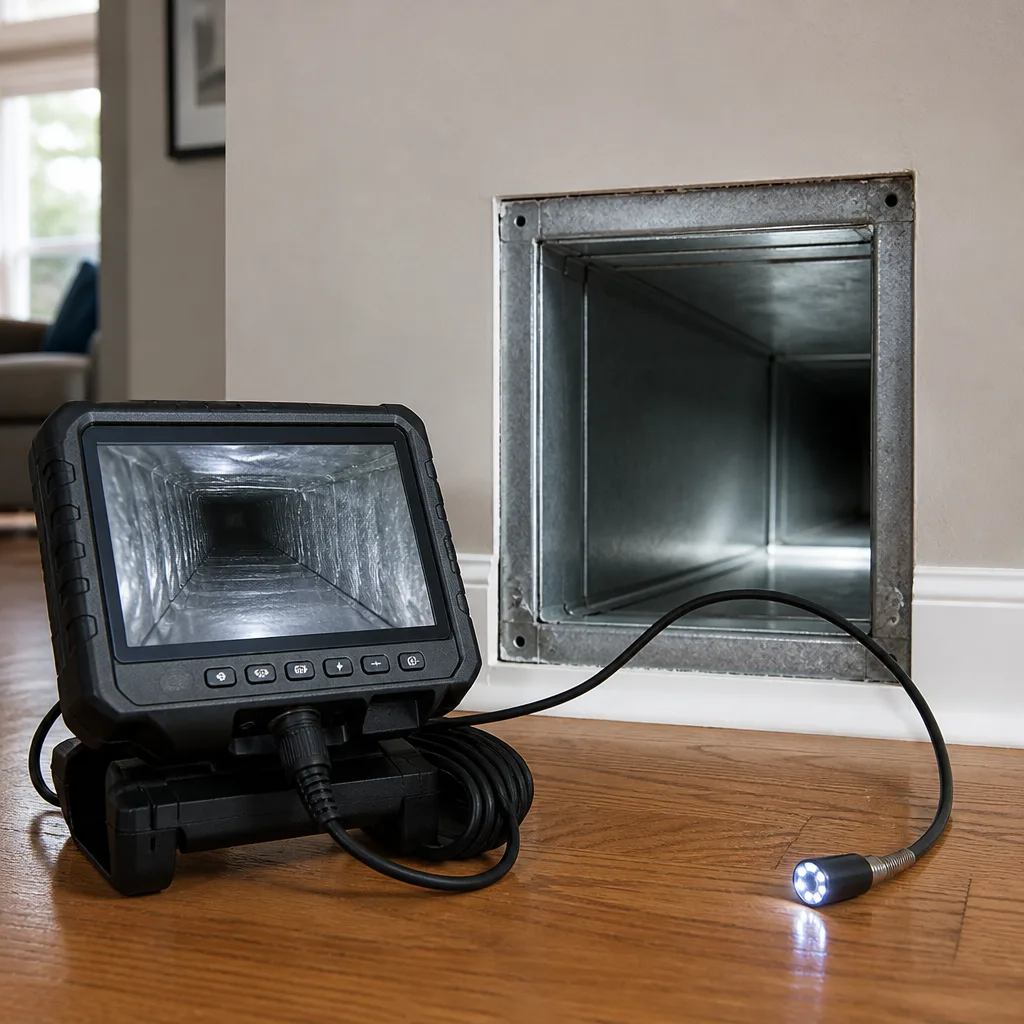
Airflow imbalance does not respond to duct cleaning. Cleaning a disconnected duct run is vacuuming an attic. The required response is repair or replacement of the affected duct section, followed by pressure testing to verify sealed connections. Our crews use Abatement Technologies duct inspection cameras with 90-degree articulation to examine every elbow and connection, and we include repair in the written scope when indicated.
After repair, cleaning the remaining duct system may be appropriate if contamination is present. But the sequence matters: repair first, then assess cleaning need. We have declined cleaning jobs in Scottsdale where repair was the actual need, and we have documented the finding with photos for the homeowner’s records.
Musty, Chemical, and Burning Odors: Decoded by Source
Odor is the most subjective warning sign and the most useful when decoded correctly. Different odors indicate different sources, and each source demands a specific response.
Musty or earthy odor from vents indicates microbial growth requiring moisture. In Scottsdale’s dry climate, this almost always means an active water source, not ambient humidity. Check these locations in order:
- Evaporator coil and drain pan: condensate overflow or standing water from clogged drain line.
- Plenum insulation: roof leak or improperly sealed platform allowing attic air infiltration with monsoon moisture.
- Duct run in unconditioned space: disconnected duct pulling humid attic air, or rare but serious, slab leak wicking into underground ductwork in homes with in-slab ducts (common in 1970s Scottsdale construction).
Musty odor without visible mold at registers requires camera inspection. We have found substantial mold growth in duct runs with clean register boots, where the contamination was 15 feet upstream at a low point where condensate collected.
Chemical or solvent odor, often described as “paint thinner” or “acetone,” indicates volatile organic compound (VOC) offgassing. In Scottsdale, this commonly results from stored chemicals in attached garages or storage rooms where return ducts draw air across the source. Less commonly, it indicates overheating blower motor insulation or capacitor failure in the air handler. The distinction is critical: VOC source removal solves the first; electrical repair solves the second. Duct cleaning addresses neither.
Burning or electrical odor requires immediate system shutdown and professional inspection. Do not run the system. Potential causes include failing blower motor bearings, seized condenser fan motor backfeeding through control wiring, or overheated electrical connections in the air handler. These are fire risks. We include this warning explicitly because we have arrived at Scottsdale homes where homeowners reported “a smell from the vents for weeks” and the actual problem was a failing motor with charred wiring.
Dead animal odor is sulfurous, localized to one or two registers, and intensifies when the system runs. As noted in the pest section, lizard intrusion is the most common cause in Scottsdale. Rodents produce similar odor but typically affect multiple registers or the whole system if the carcass is in the plenum. In either case, the response is physical removal and surface sanitizing, not duct cleaning in the conventional sense.
We document odor source findings with photography and air sampling when microbial growth is suspected. Our written scope specifies exactly what was found, where, and what response addresses it, under Haven Standard Clause 1.
Inspection, Cleaning, or Repair: Matching the Sign to the Response
Not every warning sign warrants the same response. This framework, developed from our Scottsdale fieldwork, matches signs to the appropriate action and prevents unnecessary spending.
Signs that warrant inspection only:
- Ghosting stains around registers (thermal issue, not contamination)
- Single-room temperature variation without airflow measurement confirmation
- Intermittent odor that resolves before professional assessment
- Dust accumulation after known filter bypass event (construction, filter omission, incorrect size)
Inspection means camera examination of the duct run, anemometer readings at all registers, and written documentation of findings. We charge for inspection time but apply it toward any subsequent work. The Guardsman inspection cameras we use provide 1080p documentation that the homeowner receives as part of the record.
Signs that warrant cleaning:
- Visible debris build-up on duct walls confirmed by camera (typically >1/8 inch measurable accumulation)
- Post-construction or post-renovation dust loading
- Documented pest debris after clearance and entry point sealing
- Musty odor with confirmed microbial growth in duct run, after moisture source elimination
- System performance restoration after verified contamination event (water intrusion, smoke damage)
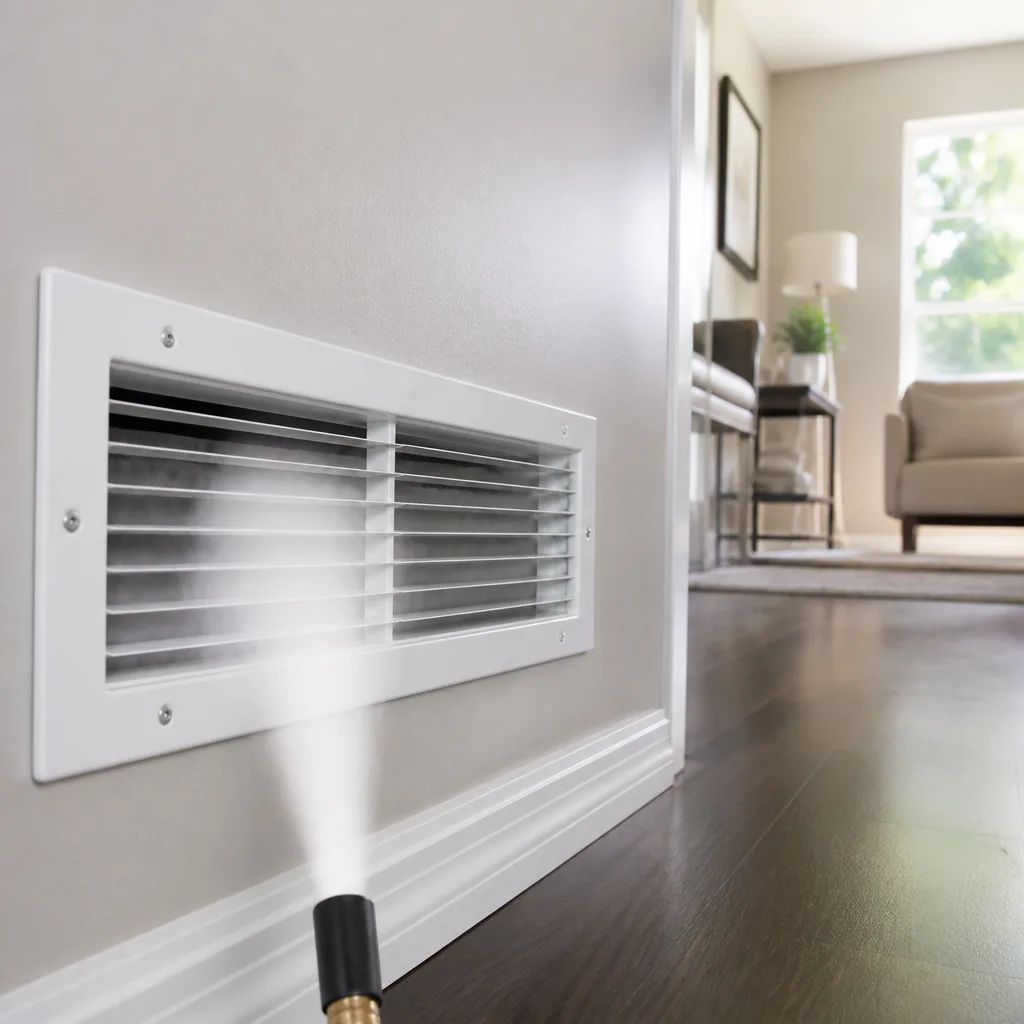
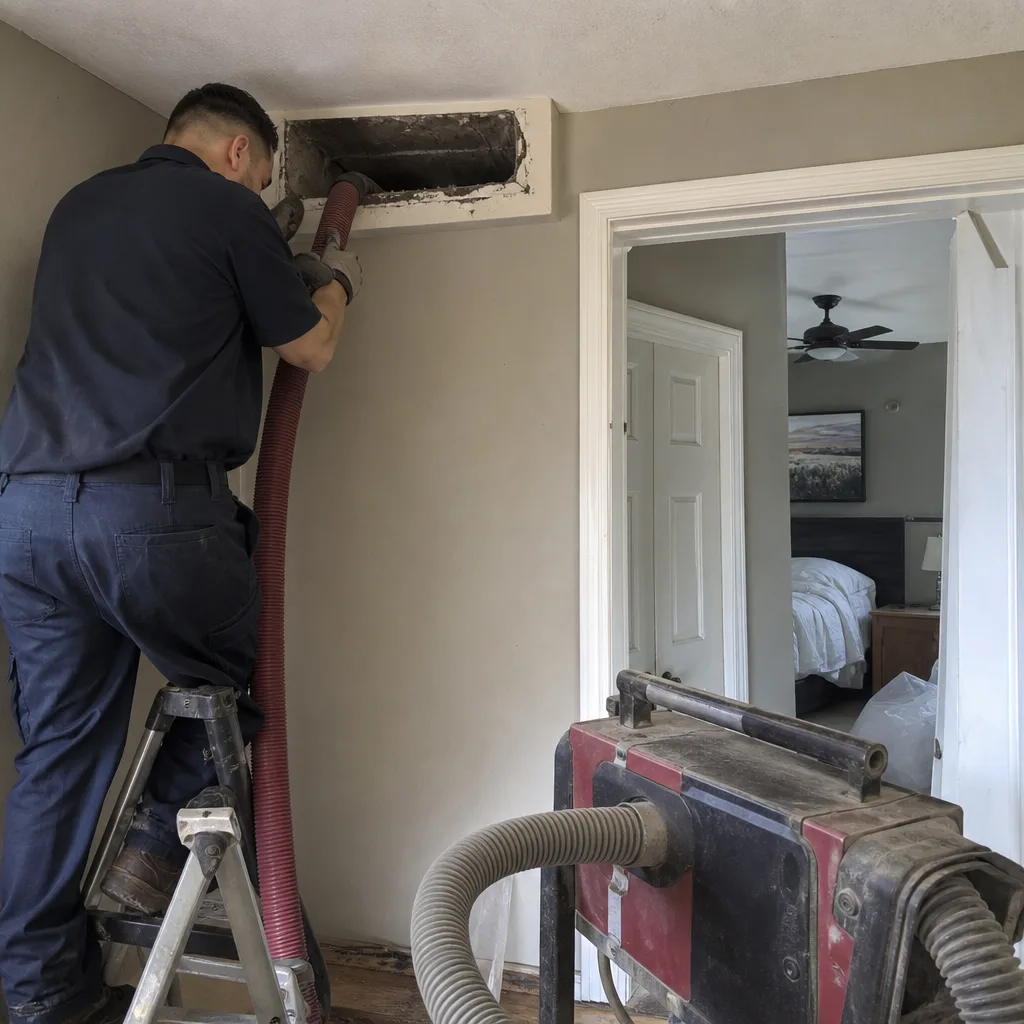
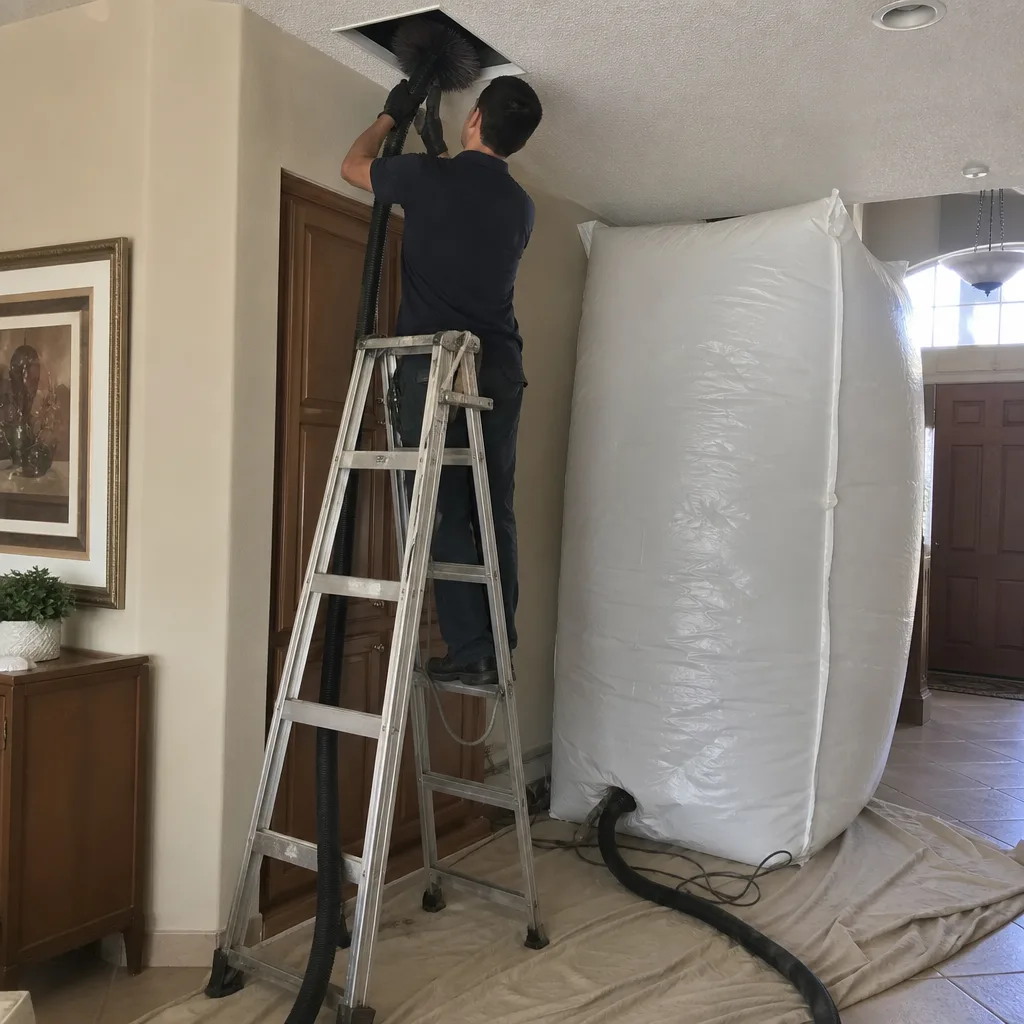
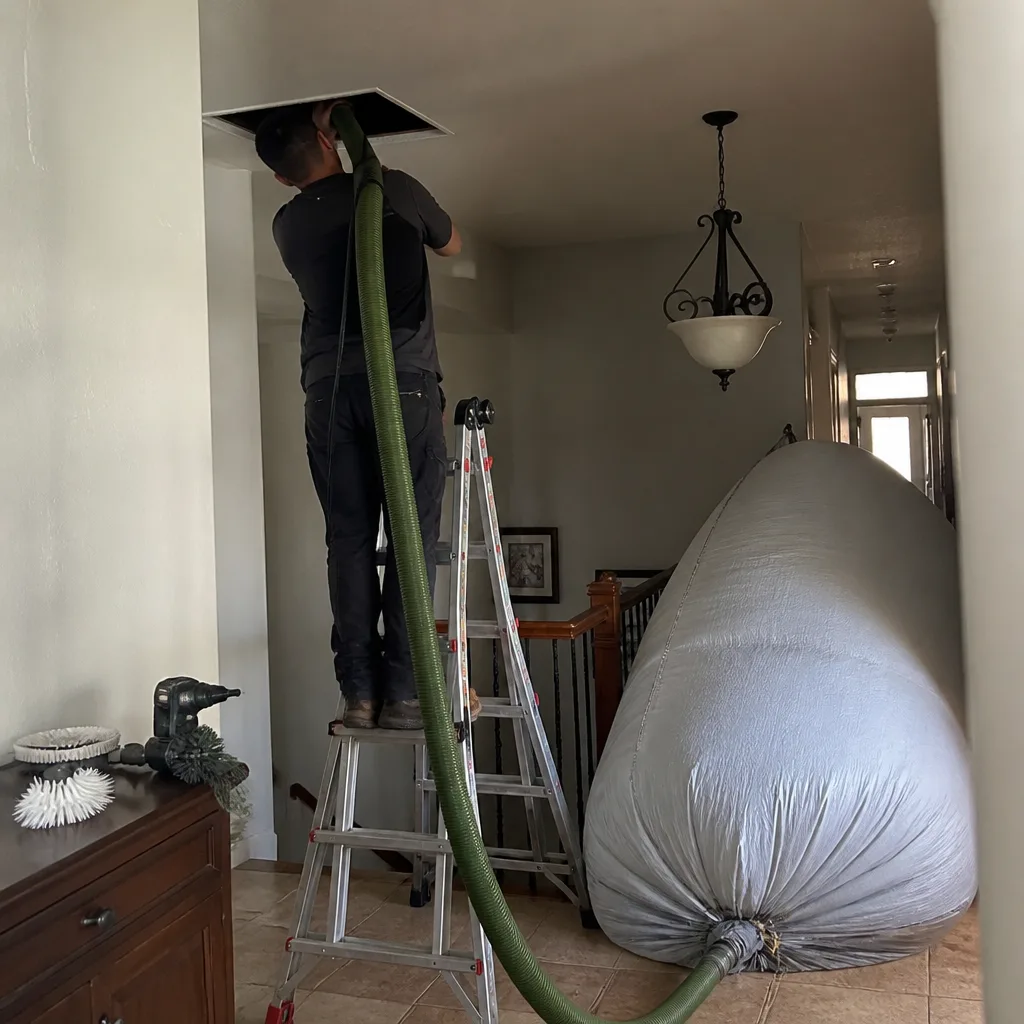
Cleaning means negative-pressure extraction with HEPA-filtered equipment, register and boot cleaning, and documented photo record of every run. Our standard uses Rotobrush and Nikro equipment with brush-agitation and vacuum extraction at the point of contact.
Signs that require repair before cleaning:
- Airflow imbalance >40% with confirmed duct disconnection or collapse
- Visible mold with active moisture source still present
- Pest intrusion with unsealed entry points
- Duct runs with compromised integrity (rusted metal, degraded flex, separated seams)
- In-slab ductwork with slab leak or groundwater intrusion
Repair means restoring duct integrity before any cleaning occurs. Cleaning compromised ducts is ineffective; contaminants re-enter through the same gaps, and damaged ducts may not withstand the pressure differential of extraction equipment.
We state the required sequence explicitly in our written scope. If a Scottsdale homeowner needs repair and cleaning, we schedule them as separate operations with separate documentation, not a bundled “duct service” that obscures what was actually done.
Common Mistakes to Avoid
- Assuming all register dust means dirty ducts. In Scottsdale’s construction-heavy market, filter bypass from improper replacement or upgrade accounts for more register dust than internal contamination. Verify filter fit and orientation before scheduling service.
- Treating ghosting stains with duct cleaning. We have cleaned ducts in homes where the stains returned within weeks because the thermal bridging was never addressed. Boot sealing and insulation correction solve ghosting; extraction does not.
- Accepting a per-vent price. Per-vent pricing incentivizes superficial work and obscures total cost. CleanRun quotes one flat price per system, agreed in writing before work starts, under Haven Standard Clause 1. A 12-vent system and a 20-vent system with identical contamination levels require identical effort; pricing should reflect that.
- Ignoring monsoon season timing. Scheduling duct cleaning during active July-August humidity without addressing coil drainage first invites immediate recontamination. We schedule coil and drainage inspection as a prerequisite during monsoon season.
- Cleaning without photo documentation. Without before-and-after images of every duct run, you have no evidence the work occurred. Our Documented Photo Record is standard on every job, delivered to the customer, not held “on file” at the office.
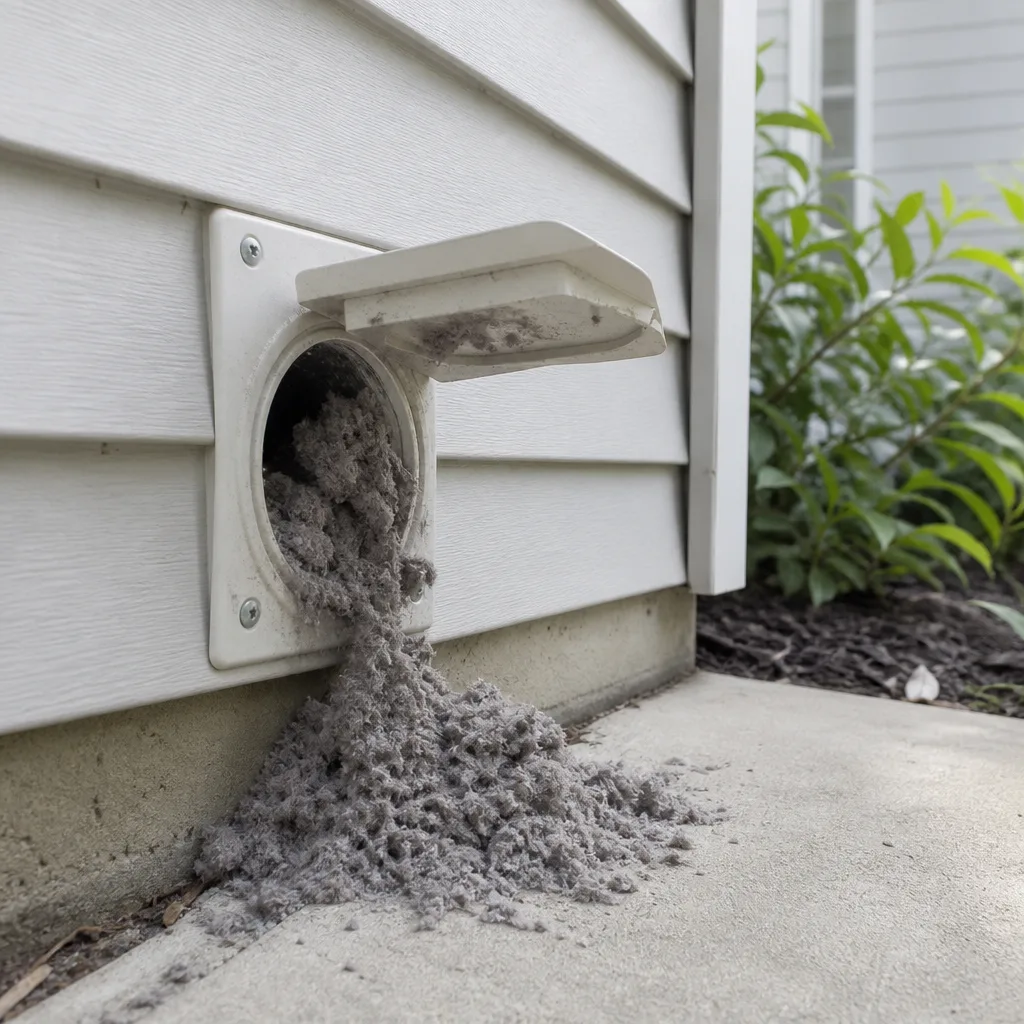
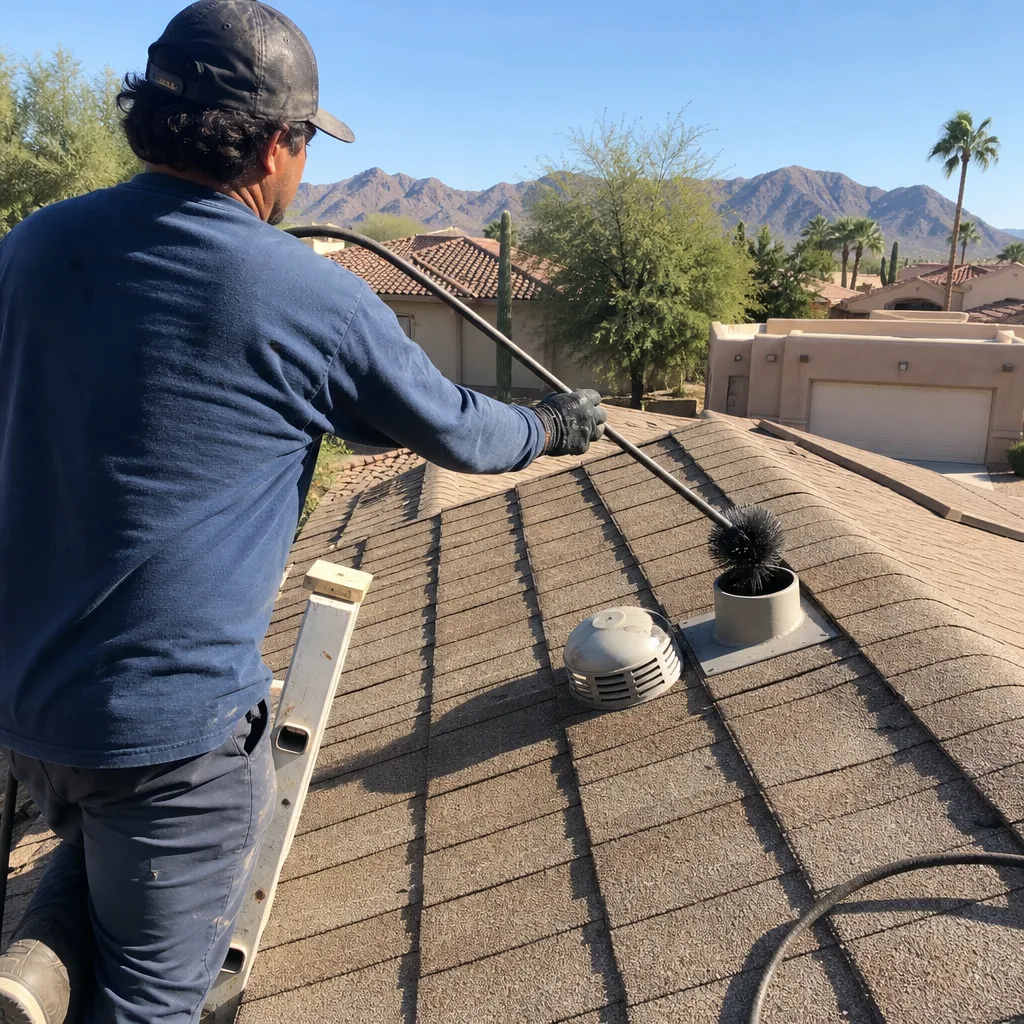
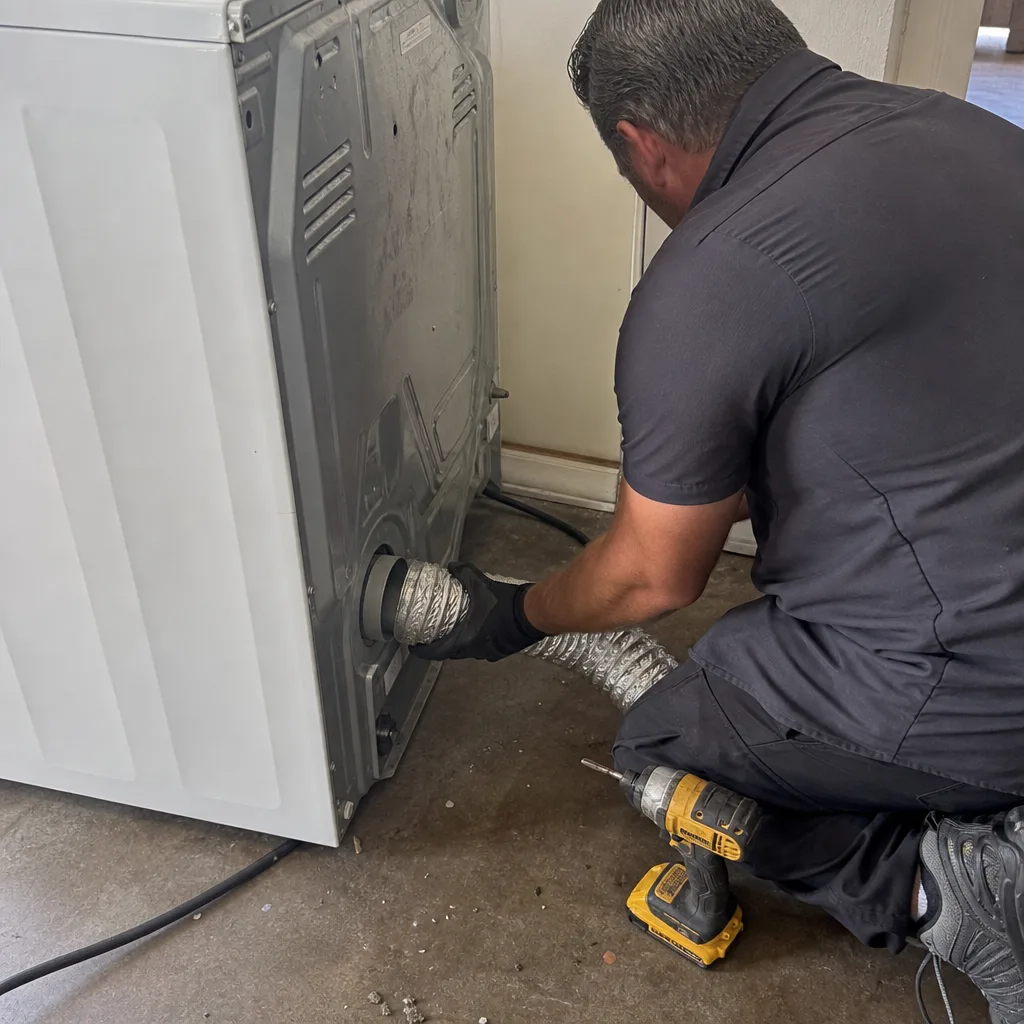
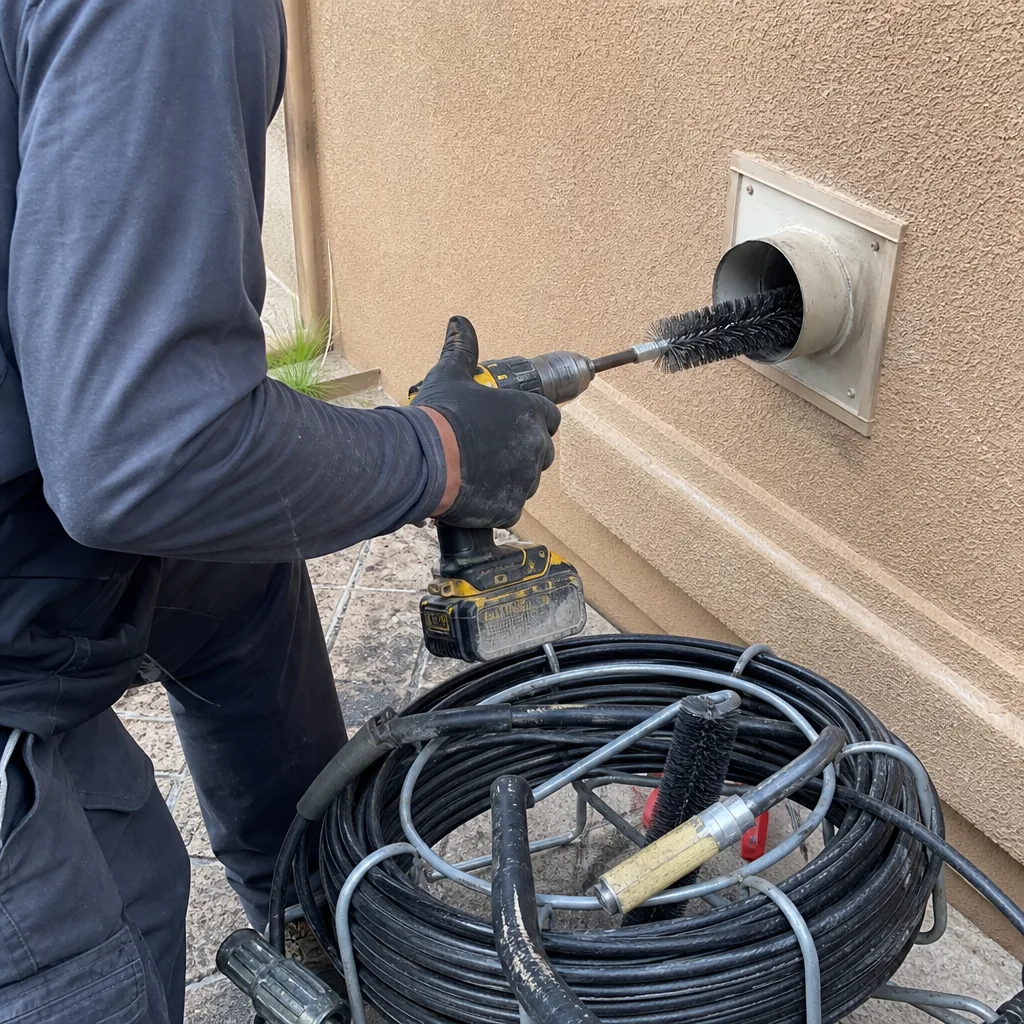
- Neglecting dryer vent inspection alongside duct cleaning. Lint accumulation in dryer vents produces similar airflow reduction and fire risk. Dryer Vent Cleaning in Scottsdale is a separate service with separate equipment, and we assess it during whole-system evaluations.
- Falling for $79 coupon pricing. This figure covers arrival and a brief vacuum at accessible registers, not full-system cleaning with documented results. The final invoice typically exceeds $400. We publish our price ranges and stick to them.
When to Call a Professional
Call for professional assessment when you have measured airflow imbalance, confirmed debris beyond filter bypass, or any odor accompanied by moisture or electrical symptoms. Do not attempt to access or clean ductwork yourself; sheet metal edges are sharp, attic work involves fall and heat-exposure risks, and disturbing microbial growth without containment spreads contaminants.
CleanRun Air Duct Cleaning Scottsdale offers free estimates in Scottsdale. We arrive with camera equipment, anemometer, and written pricing guidelines. Every assessment includes a documented photo record of what we find, whether or not work proceeds. Call (928) 267-0992 to schedule. Our technicians are background-checked, uniformed, and identified by name before arrival under Haven Standard Clause 3: Verified Crews.
Frequently Asked Questions
Whole-system air duct cleaning in Scottsdale typically ranges from $450 to $850 for a single HVAC system in a home under 3,500 square feet, depending on duct accessibility, contamination level, and whether sanitizing is included. Homes with multiple systems, extensive flex duct in unconditioned attics, or confirmed pest contamination fall at the higher end. CleanRun provides one flat price per system, agreed in writing before work starts, with no per-vent add-ons. Call (928) 267-0992 for an exact quote; estimates are free.
Low quotes typically cover arrival and surface-level vacuuming at accessible registers, not full-system negative-pressure extraction with brush agitation inside every duct run. The $79-$129 coupon price does not include plenum cleaning, boot cleaning, or photo documentation. Once on site, the provider identifies “additional vents,” “heavy contamination,” or “sanitizing needs” that multiply the final invoice. We publish our price range and deliver a single written price before any work begins.
Demand a documented photo record of every duct run, before and after, with timestamps. Without this, you have only the technician’s word. CleanRun includes this record as a standard deliverable on every job, not as an upgrade. The photos show the interior surface of each duct run, not just the register face, and are provided to you directly.
For most Scottsdale homes, every 5 to 7 years with standard fiberglass filters changed quarterly. Homes with pets that shed, recent construction or renovation, or occupants with respiratory sensitivities may need every 3 to 4 years. Monsoon seasons with active water intrusion, or any confirmed pest event, warrant immediate inspection regardless of schedule. More frequent cleaning without specific cause is generally unnecessary and may indicate a different problem being misdiagnosed.
No, not effectively or safely. Consumer-grade vacuums lack the negative-pressure capacity to extract debris from duct runs without dispersing it into living spaces. Attic ductwork involves fall hazards, heat exposure, and sharp metal edges. Most importantly, without camera inspection, you cannot verify what was removed or whether contamination remains. Professional equipment from Rotobrush and Nikro is designed for containment and verification.
Different, not simply dirtier or cleaner. Scottsdale’s low humidity reduces mold risk compared to Gulf Coast cities, but caliche dust, construction particulate, and extreme attic temperatures create distinct contamination profiles. The fine, angular caliche particles embed more tenaciously in duct lining than typical organic dust. Summer attic conditions accelerate flex duct degradation, increasing debris from insulation breakdown. A Scottsdale-specific assessment recognizes these factors rather than applying a generic national standard.
The Bottom Line
Warning signs are only useful when you can read what they indicate mechanically. Dust at a register can mean filter bypass, coil fouling, or duct contamination, and each requires a different response. Ghosting stains are thermal, not contamination. Musty odor demands moisture source identification before cleaning. Airflow imbalance usually indicates structural duct defects that cleaning cannot fix. In Scottsdale’s specific climate and construction environment, these distinctions matter because they determine whether your spending solves the problem or wastes it. Document what you observe, measure what you can, and demand photographic verification of any contamination a provider claims to find. The CleanRun Air Duct Cleaning Scottsdale home page outlines our full service structure and pricing approach.
Written by Tomas Reyes, Owner at CleanRun Air Duct Cleaning Scottsdale, serving Scottsdale since 2013.