
Last updated September 23, 2026
Whole-system duct and dryer vent check with before-and-after photos - you see exactly what came out of your vents
That "$99 whole-house special" is a bait ad - the real number appears once they are in your hallway, or the "clean" is a shop-vac at the register. We photograph the inside of your ducts before and after instead.
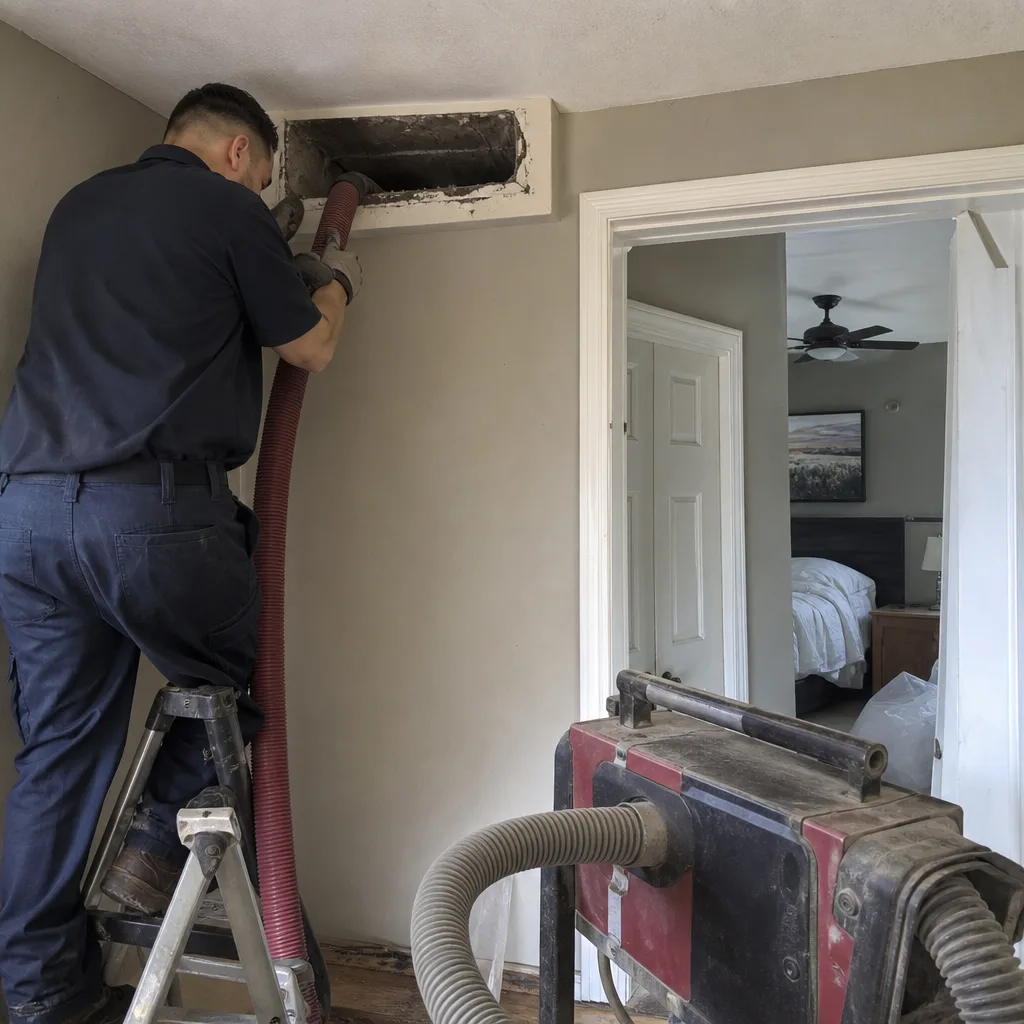 Before
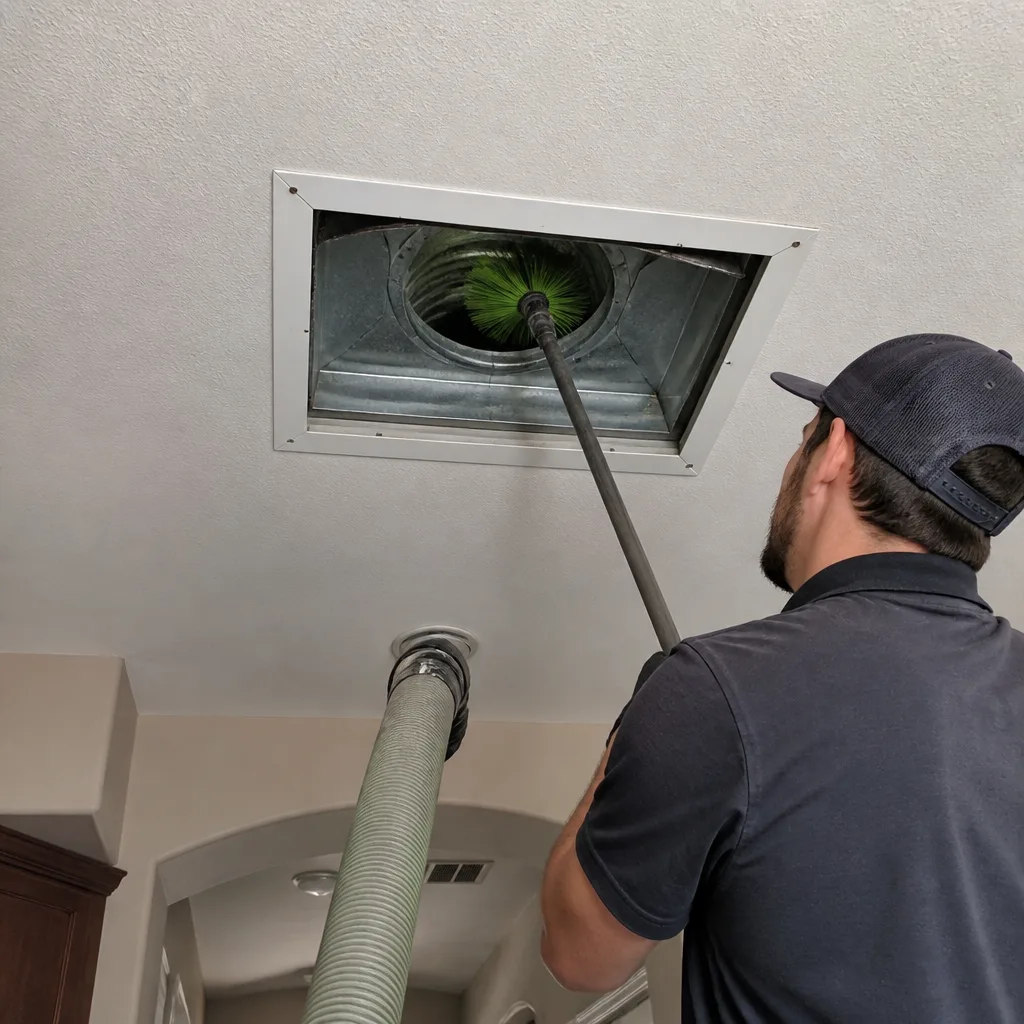 After
After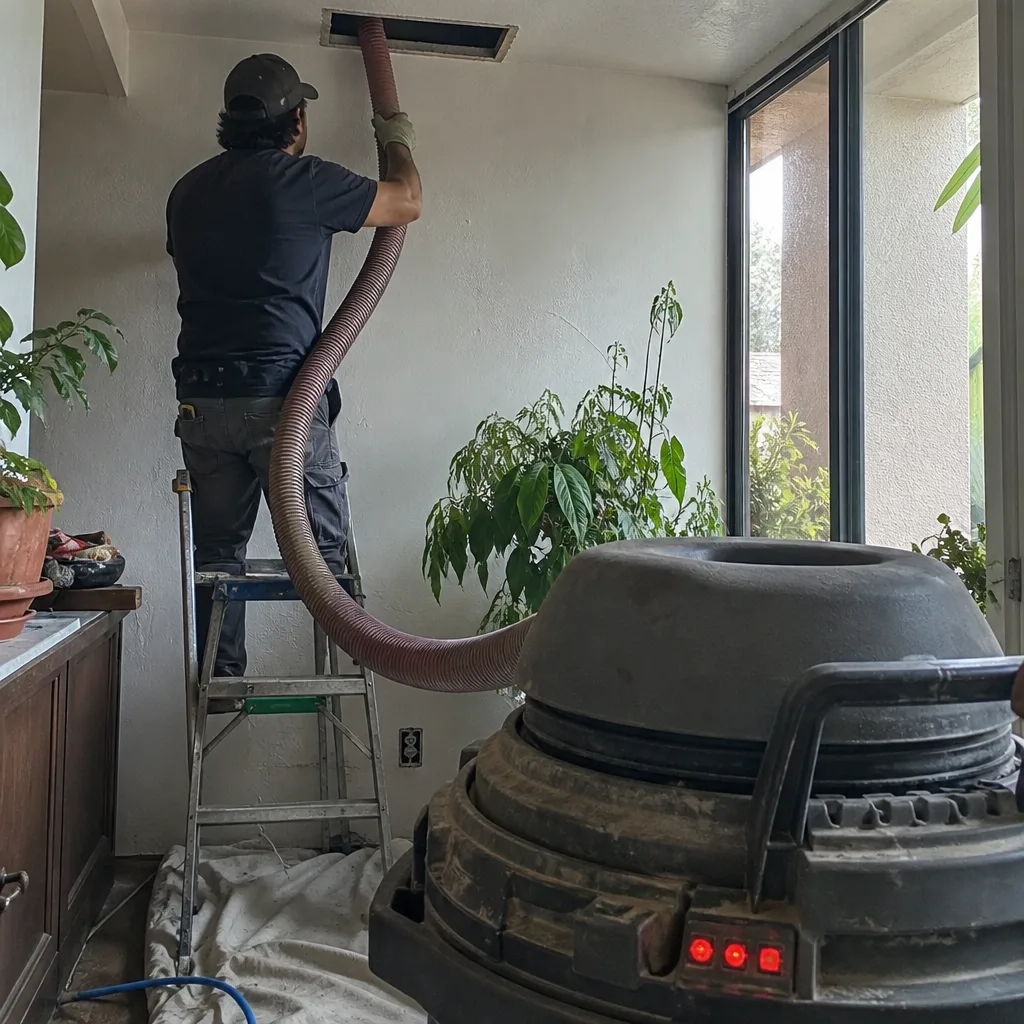 Before
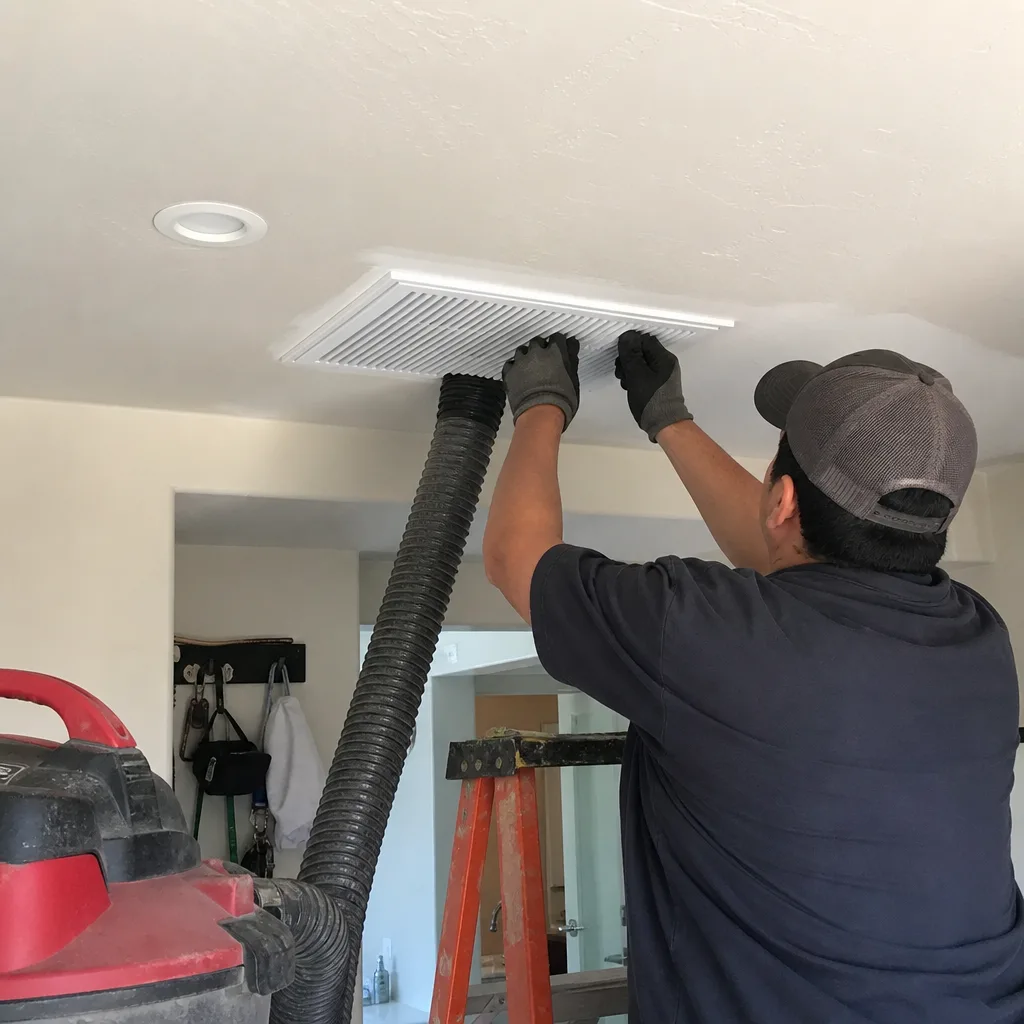 After
After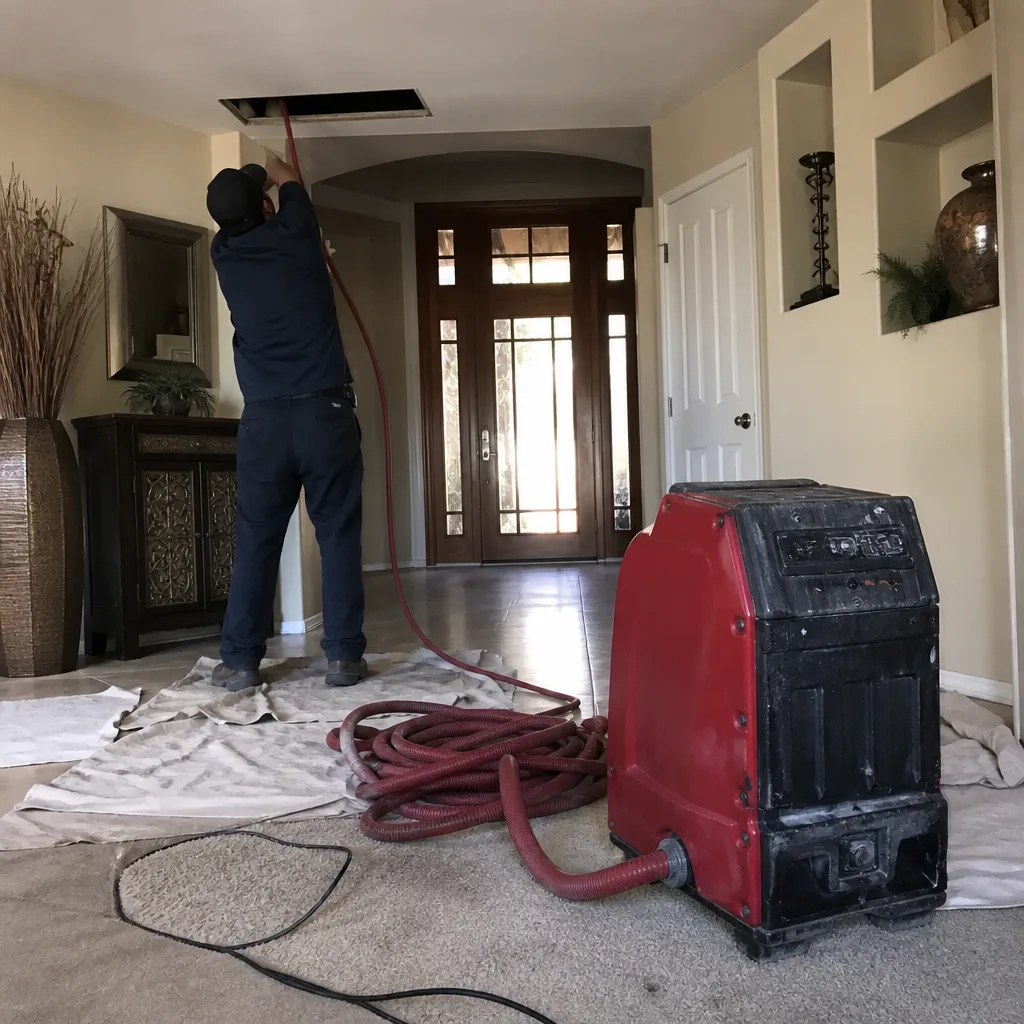 Before
 After
AfterDIY vs Professional Air Duct Cleaning: The Scottsdale Homeowner’s Decision Guide
A shop-vac generates roughly 60-80 CFM of suction at the nozzle. A truck-mounted vacuum collection unit used in professional source-removal cleaning generates 2,000-5,000 CFM maintained across the entire duct system simultaneously. These are not different grades of the same tool - they are physically different processes with different outcomes. In Scottsdale, where attic temperatures regularly hit 140°F in July and monsoon dust infiltrates through every penetration, the question of whether to clean your own ducts or hire a professional has less to do with ambition and more to do with what you can actually reach, measure, and prove happened. This guide breaks down exactly what DIY duct cleaning accomplishes, what it cannot, and how to decide whether to schedule our Air Duct Cleaning services or handle maintenance yourself.
Quick Answer
DIY duct cleaning in Scottsdale is worth doing for register maintenance, return-air boot cleaning, and visual inspection - tasks that require no specialized equipment and carry real preventive value. Professional cleaning becomes necessary when the goal is source removal from the full duct network, including flex runs, trunk lines, and the plenum, which requires negative-pressure extraction equipment and access points that most homeowners cannot safely create. The dividing line is access versus accountability: you can clean what you can see and touch, which is roughly 15% of a typical single-story duct system’s surface area.
Table of Contents
- The Anatomy of a Scottsdale Duct System: What You’re Actually Trying to Clean
- What DIY Cleaning Legitimately Accomplishes
- What Professional Source-Removal Cleaning Actually Does
- Scottsdale-Specific Conditions That Favor Professional Cleaning
- The Flashlight-and-Phone Inspection: How to Evaluate Your Own System
- What Photo Documentation Reveals About DIY vs. Professional Work
- Cost Comparison: Real Numbers for Scottsdale
- Common Mistakes to Avoid
- When to Call a Professional
- Frequently Asked Questions
- The Bottom Line
BeforeAfterThe Anatomy of a Scottsdale Duct System: What You’re Actually Trying to Clean
Most Scottsdale homes built between 1985 and 2020 - which covers the majority of the housing stock in neighborhoods like McCormick Ranch, DC Ranch, and the Shea corridor - use a combination of sheet-metal trunk lines and flexible duct runs (flex duct) that branch to individual rooms. The typical single-story layout places the air handler in a garage closet or attic, with a main trunk running either through the attic space or a soffit, then dropping flex runs down to ceiling registers.
Here’s what that means for cleaning:
- The plenum - the sheet-metal box attached directly to your air handler - is where all return air enters and all supply air exits. It’s typically 24-36 inches wide, sealed with mastic or foil tape, and inaccessible without removing panels that may be screwed or riveted in place.
- The trunk line - the main distribution artery - runs 10-20 feet in each direction from the plenum. In attic installations common in Scottsdale, this trunk is wrapped in insulation and may sit directly on blown cellulose or fiberglass.
- Flex runs - the flexible, insulated tubes that carry air to each room - are typically 6-8 inches in diameter, 10-25 feet long, and routed through attic framing or wall cavities. They connect to the trunk with zip ties or draw bands, then terminate at a boot that transitions to the ceiling register.
- Return-air pathway - often a single large duct or multiple smaller ones - pulls air from central returns back to the air handler. In Scottsdale homes, these are frequently located in hallways or high-traffic areas and can be 12-16 inches in diameter.
The critical point: a homeowner with a shop-vac and a brush can reach the first 6-12 inches of any duct opening. Beyond that, you’re dealing with elbows, reductions, and flex runs that turn corners you cannot navigate without cutting access points. In our work across Scottsdale since 2013, we’ve documented that the heaviest debris accumulation typically occurs 8-15 feet from the register - exactly where DIY access ends.
The Air Duct Cleaning in Scottsdale page details our full source-removal process, but the essential distinction is this: professional equipment creates negative pressure (suction) throughout the entire system simultaneously, while a shop-vac creates localized suction at a single point. You cannot clean what you cannot isolate under negative pressure.
What DIY Cleaning Legitimately Accomplishes
DIY duct cleaning is not worthless. It’s incomplete, and the distinction matters. Here are three tasks any Scottsdale homeowner can perform with household tools that deliver real value:
- Register and grille washing. Remove ceiling or floor registers, soak them in warm water with dish detergent, scrub with a stiff brush, and rinse. The grille itself traps significant dust and can harbor mold in humid conditions. This takes 20 minutes per register and costs nothing.
- Return-air boot cleaning. Remove the return-air grille and use a vacuum with a hose extension to clean the sheet-metal boot (the transition box between the wall cavity and the duct). This is often the dirtiest accessible point in the system because return air is unfiltered until it reaches the air handler. A flashlight and phone camera will show you the condition clearly.
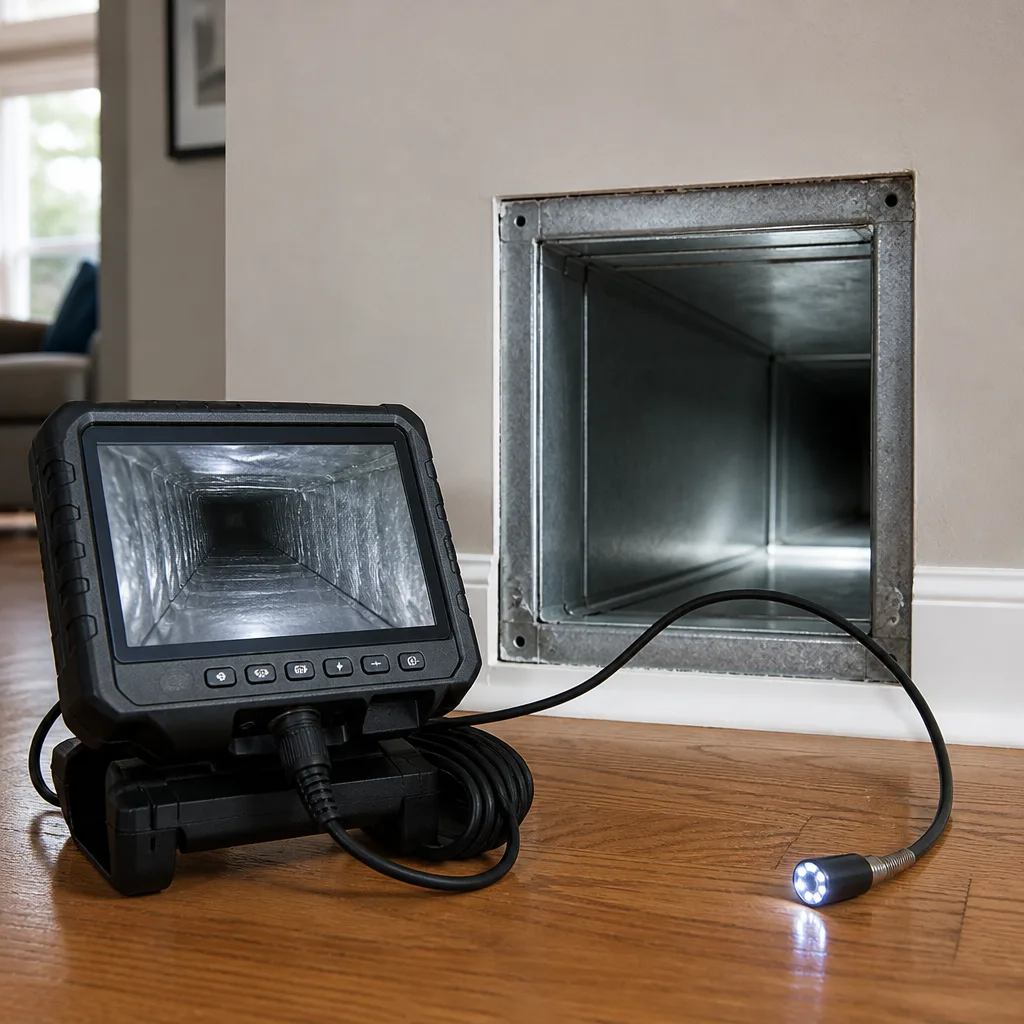
- Visual inspection with documentation. A phone camera extended into any duct opening will reveal debris depth, moisture staining, or pest activity. Take dated photos. This creates a baseline you can compare year to year, and it gives you evidence if you later hire a professional and want to verify their work.
What DIY cleaning does not accomplish: it does not clean flex runs beyond the first bend, it does not clean trunk lines, it does not clean the plenum, and it does not create the negative pressure required to dislodge adhered debris. The shop-vac will pull loose dust from accessible areas. It will not remove the 2-4 millimeters of compacted debris that we regularly photograph in Scottsdale homes, particularly those near construction zones or with recent landscaping disturbances.
The CleanRun Air Duct Cleaning Scottsdale home page outlines our full service scope, but for this guide, the relevant point is that we document every run - not because DIY cleaning is fraudulent, but because it is structurally limited by physics and access.
What Professional Source-Removal Cleaning Actually Does
Professional air duct cleaning, when performed to NADCA (National Air Duct Cleaners Association) standards, is a mechanical process - not a chemical one. The goal is source removal: physically dislodging and removing debris from the interior surfaces of the entire duct network. Here’s how the equipment differs from what a homeowner can assemble:
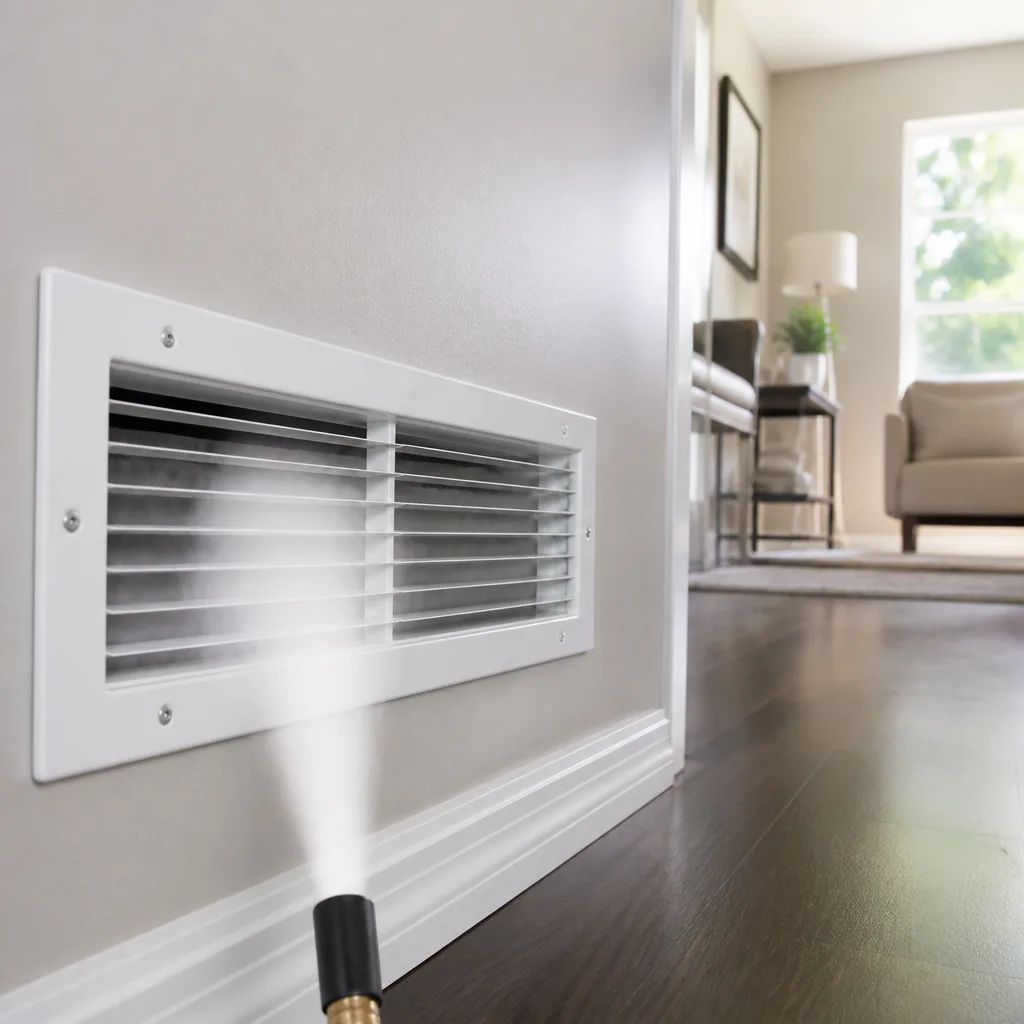
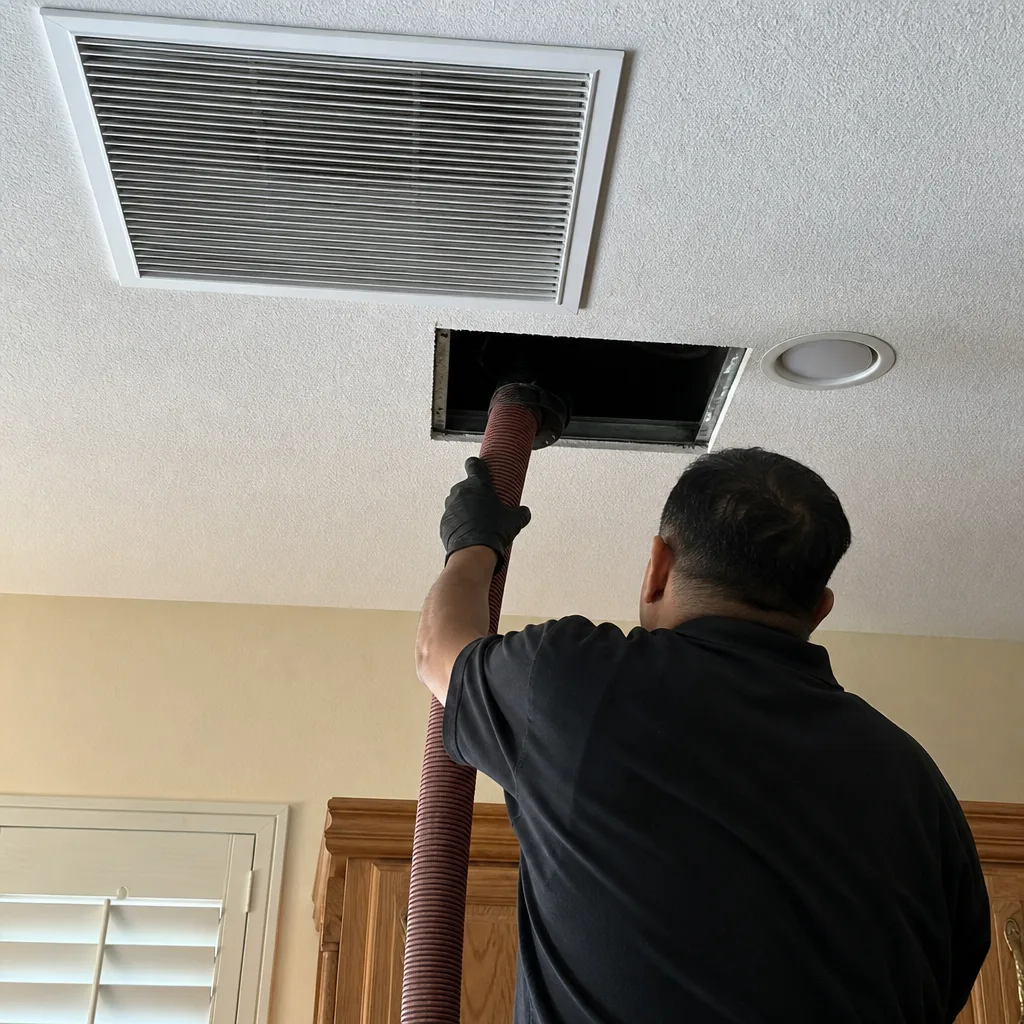
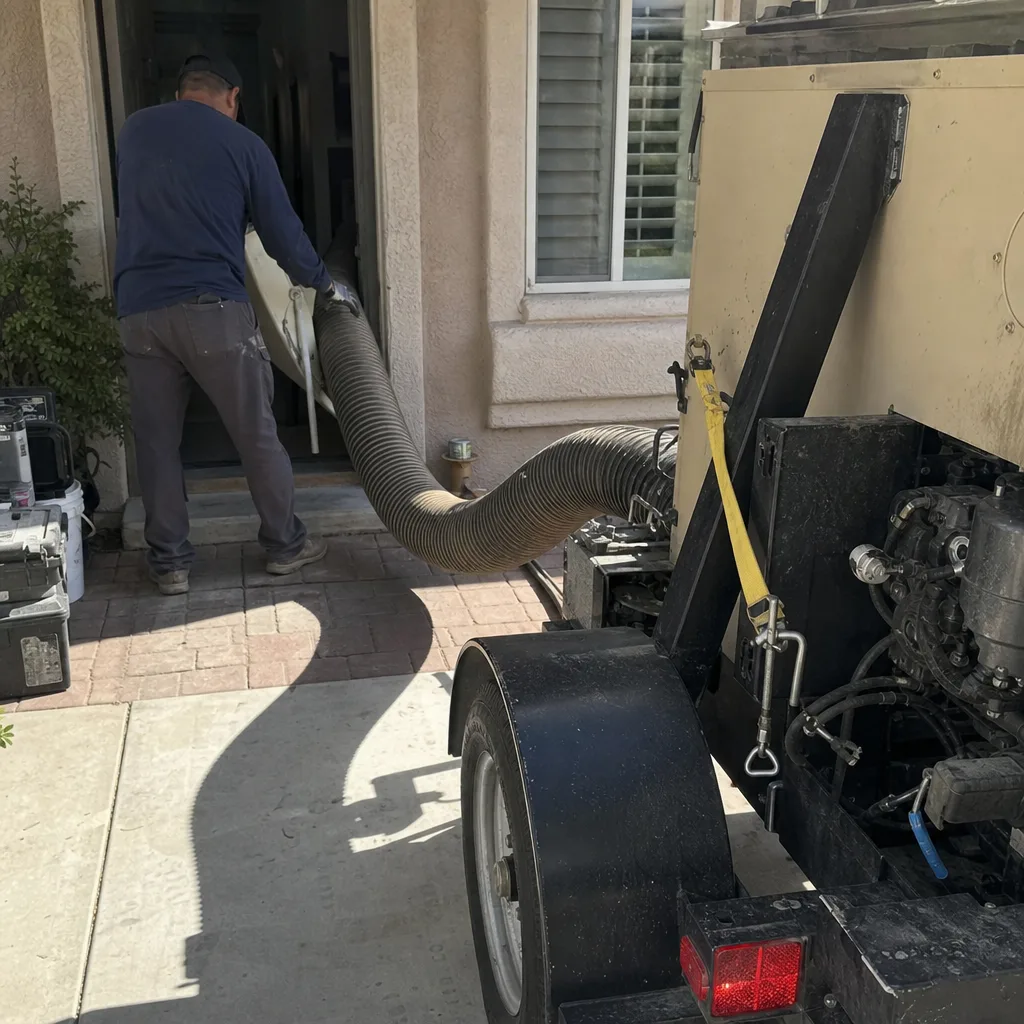
Negative-pressure extraction. A truck-mounted or portable vacuum collection unit - we use equipment from Abatement Technologies and Nikro on our Scottsdale jobs - connects to the duct system at the air handler or a strategically cut access point. This unit maintains 2,000-5,000 CFM of airflow, creating suction throughout the entire network. Every register is sealed except the one being cleaned, so the vacuum pulls from that single point back to the collection unit.
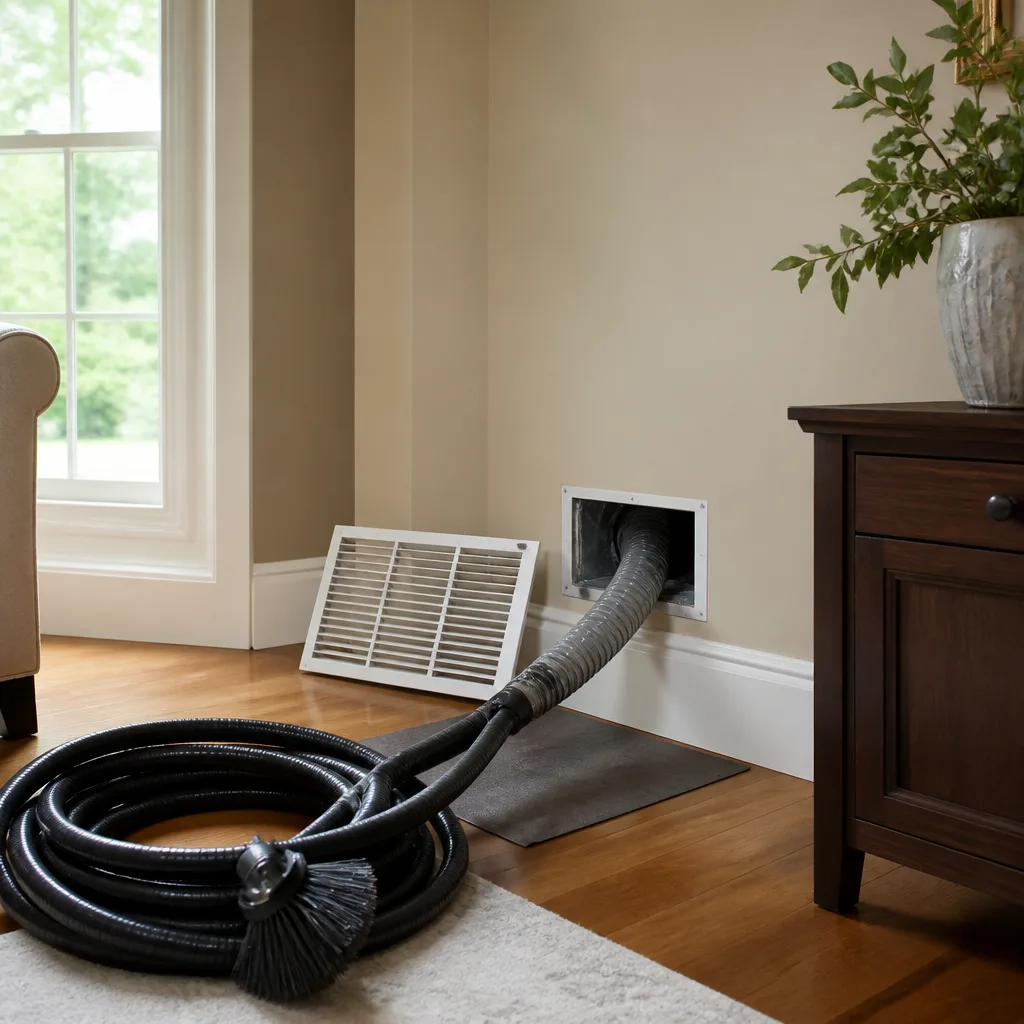
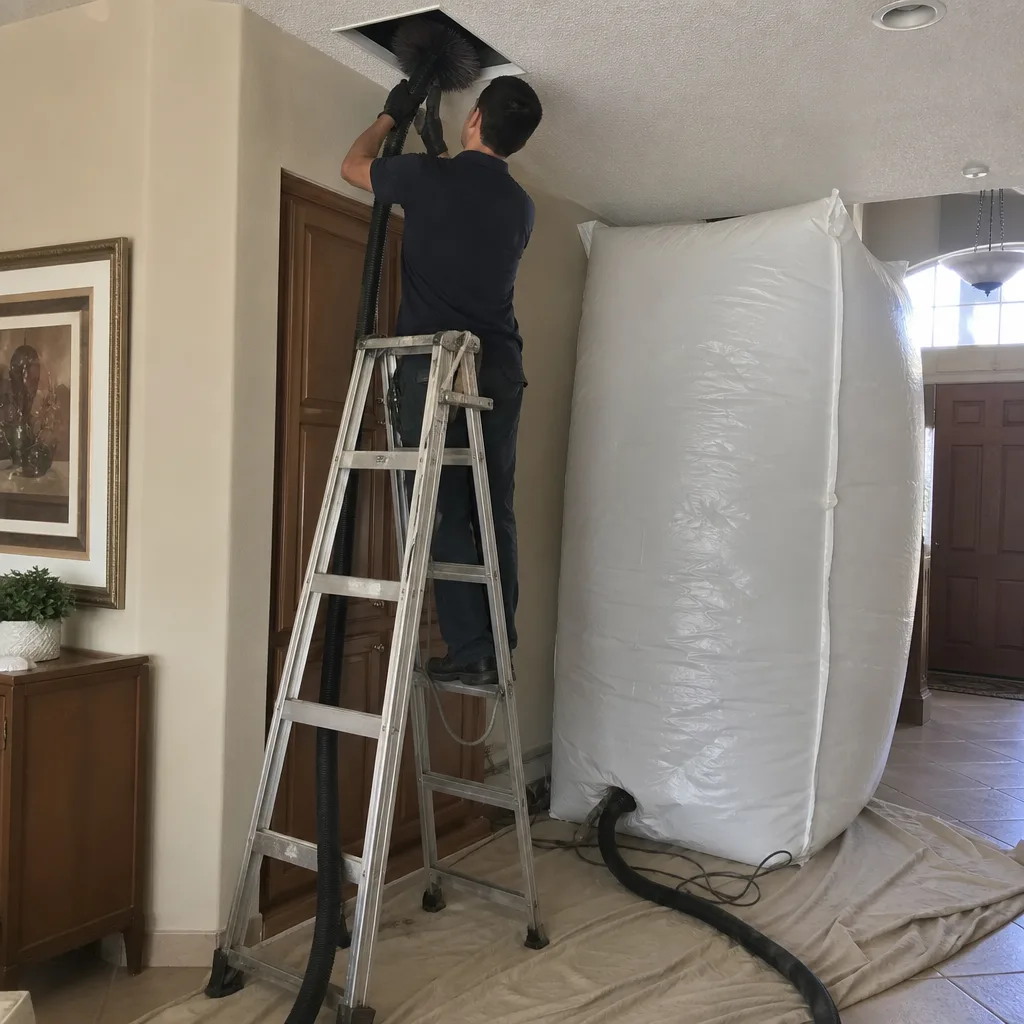
Agitation tools. Compressed-air whips, rotary brushes, and skipper balls are inserted into each duct run and driven by compressed air or mechanical motors. These tools physically strike the duct walls, dislodging adhered debris that suction alone cannot remove. The debris is immediately captured by the negative-pressure airflow and transported to the collection unit’s filtration system, which typically uses HEPA-rated filters.
Access creation. Technicians cut sealed access points in trunk lines or plenums to insert agitation tools and inspection cameras. These access points are sealed with code-compliant sheet-metal patches and mastic after cleaning. In Scottsdale, this work falls under the Arizona Registrar of Contractors’ jurisdiction for any modification to the HVAC distribution system.
System-wide isolation. The entire duct network is zoned and cleaned run by run, with verified airflow at each stage. This is not a faster version of register cleaning - it is a fundamentally different process that treats the duct system as an integrated mechanical component rather than a collection of openings.
Our crews use Rotobrush equipment for certain residential applications where duct configuration demands flexible-shaft access, and we select tools based on what the pre-cleaning inspection reveals. The equipment roster is not decorative - customers can verify manufacturer specifications independently, and we publish what we use because Haven Standard Clause 1 requires written transparency before any work starts.
Scottsdale-Specific Conditions That Favor Professional Cleaning
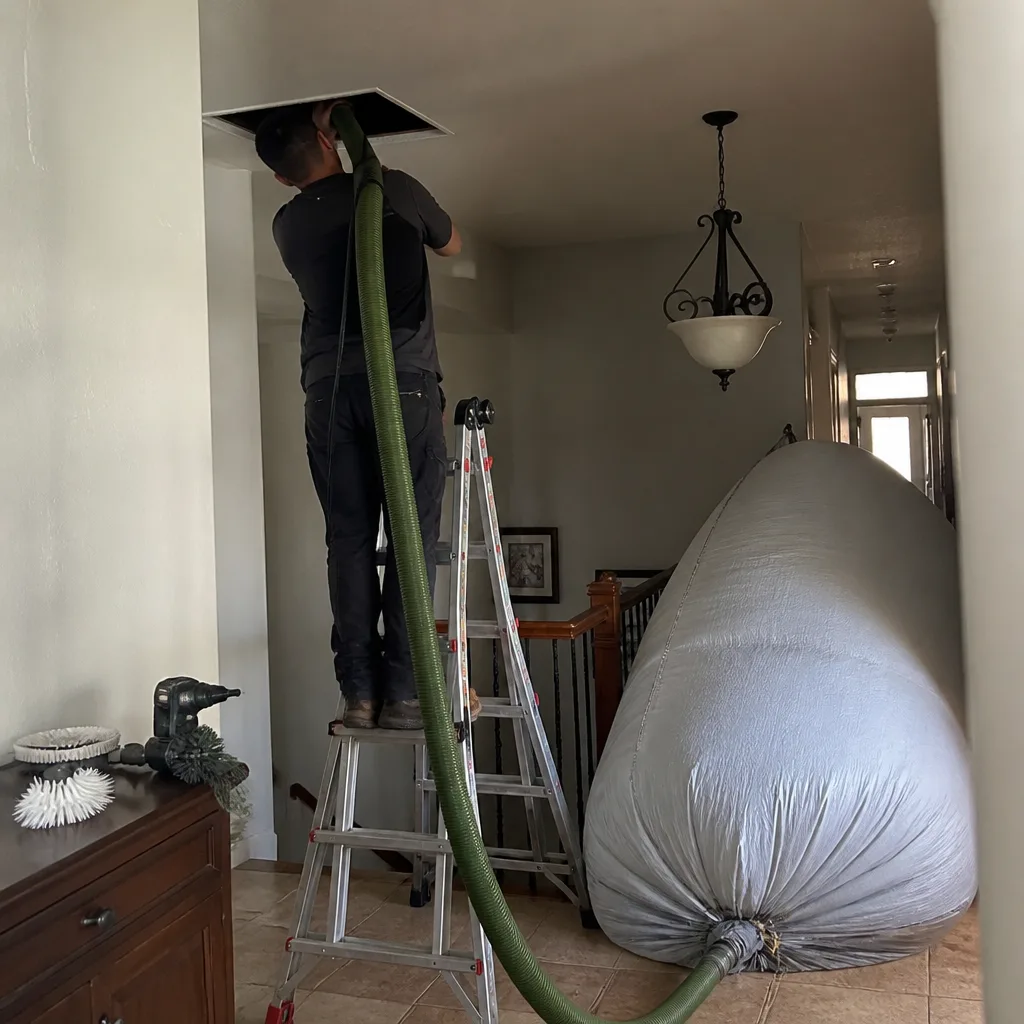
Not every market makes professional duct cleaning equally defensible. In Scottsdale, several environmental and construction factors push the calculation toward professional service:
Attic heat cycling. Attic temperatures in Scottsdale routinely exceed 130°F from May through September. Flex duct in attic spaces expands and contracts with daily temperature swings, degrading the inner liner and creating micro-fractures where debris accumulates. The adhesive mastic used to seal duct connections also degrades faster under thermal stress. A homeowner cannot inspect these flex runs without attic access, protective equipment, and knowledge of where to step without compressing insulation or damaging low-voltage wiring.
Monsoon dust loads. July and August dust storms introduce fine particulate through every building penetration. In Scottsdale’s desert soil, this dust carries a higher mineral content than organic debris in humid climates, meaning it compacts harder and adheres more tenaciously to duct surfaces. We’ve photographed 3-4 millimeter buildup at first elbows in homes less than five years old, particularly in areas near active construction or unpaved access roads.
Pest pressure at penetrations. Pack rats, roof rats, and pigeons are persistent in Scottsdale’s hillside and wash-adjacent neighborhoods. Duct penetrations through rooflines or eaves provide entry points, and we’ve found nesting material in return plenums in homes from Troon to Pinnacle Peak. A phone camera inspection of the return boot will sometimes reveal droppings or nesting debris that warrants professional remediation - not just cleaning, but sealing and repair.
Higher-than-average HVAC runtime. Scottsdale’s cooling season runs 6-7 months annually, with air handlers operating 12-16 hours daily in peak summer. More runtime means more air volume passing through the ducts, more filter loading, and more opportunities for bypassed debris to accumulate. Homes with 1-inch pleated filters (the most common in tract construction) allow more fine particulate through than 4-inch media filters or electronic air cleaners.
These conditions don’t make DIY cleaning pointless. They make it insufficient for comprehensive maintenance, particularly in homes that have never had professional cleaning or are showing symptoms - uneven airflow, visible dust at registers, or increased filter replacement frequency. For Seasonal Air Duct Cleaning Care for Scottsdale: Year-Round Homeowner’s Guide, see our seasonal maintenance recommendations.
The Flashlight-and-Phone Inspection: How to Evaluate Your Own System
Before spending money on any duct cleaning - DIY supplies or professional service - a homeowner should have actual data. Here’s the inspection protocol we recommend to Scottsdale homeowners who call us uncertain whether they need service:
- Turn off the HVAC system entirely. You need still air to see debris patterns and avoid pulling loose material into your face during inspection.
- Remove one supply register in a bedroom and one in a common area. Choose rooms you use daily, not guest rooms that see minimal airflow.
- Extend your phone into the duct with the flashlight on and video recording. Record for 30 seconds while slowly rotating the phone to capture all surfaces. Note the distance you can see clearly - typically 2-4 feet before the duct turns or flex duct begins.
- Remove the return-air grille in your central hallway. This is usually the largest grille, often 20×30 inches or larger. Inspect the boot and the first section of duct with your phone camera. Return ducts are typically dirtier than supply ducts because they carry unfiltered air.
- Inspect the air handler closet or attic unit. Look for dust accumulation on the return side of the evaporator coil, water staining in the drain pan, or gaps in the plenum seams. These indicate system-wide issues that register cleaning cannot address.
- Compare your footage to NADCA’s visual assessment guidelines. Visible debris on more than one surface, debris accumulation deeper than 1/16 inch, or any sign of moisture or pest activity suggests professional evaluation is warranted.
This inspection takes 45 minutes and costs nothing. It gives you dated documentation of your system’s condition, which is useful whether you clean yourself, hire a professional, or need to dispute a warranty claim with your HVAC manufacturer. In Scottsdale’s hard-water and high-dust environment, we recommend this inspection annually, ideally in October after monsoon season ends and before heating season begins.
The HVAC Cleaning in Scottsdale page covers full system cleaning that includes the evaporator coil and blower assembly - components this inspection may reveal need attention beyond ductwork alone.
What Photo Documentation Reveals About DIY vs. Professional Work
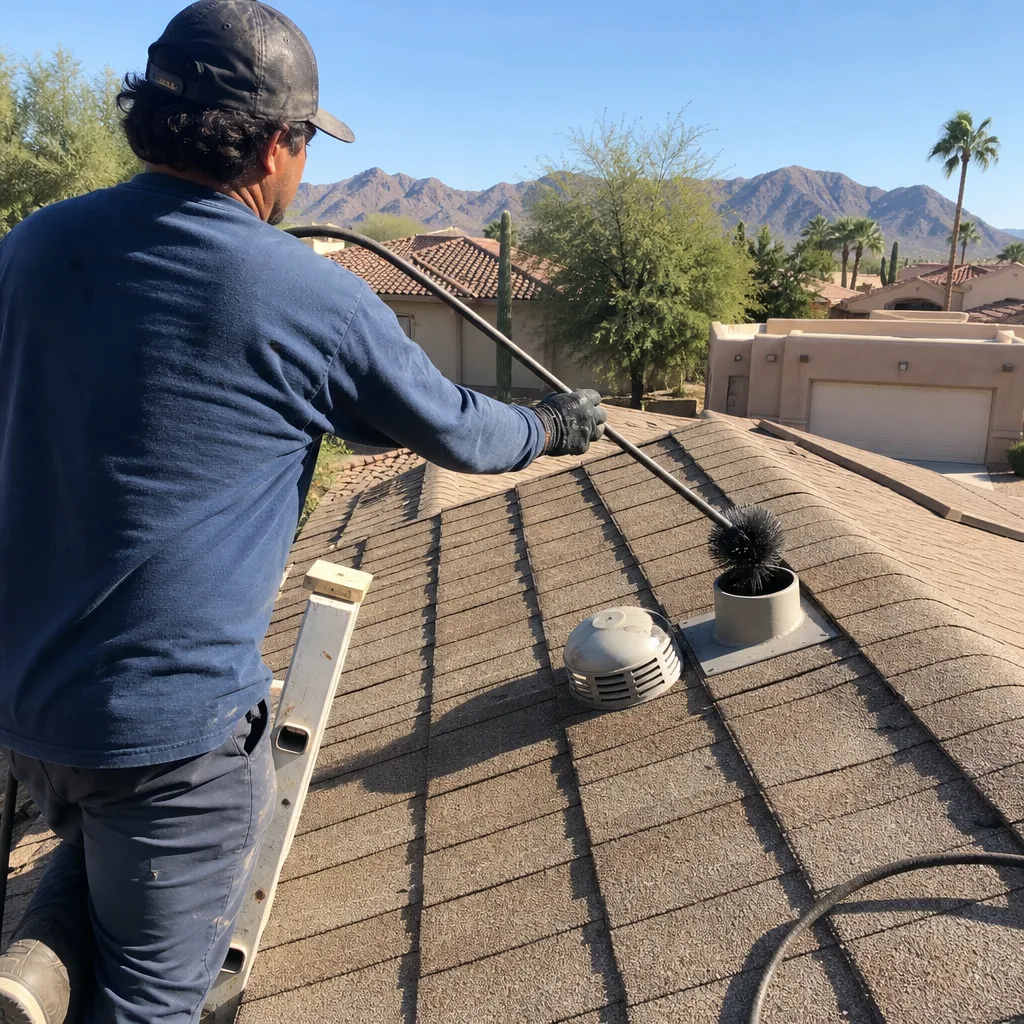
This is where the access-versus-accountability frame becomes concrete. A professional duct cleaning job should produce a documented record that you could show any HVAC technician in five years - dated, geotagged, with identifying markers for each duct run. A DIY job produces no such record, which matters for three reasons:
Warranty and insurance claims. If you experience a fire originating in your HVAC system, or if you need to file a homeowner’s insurance claim related to indoor air quality, documentation of professional cleaning with dated photos supports your position. A self-reported DIY cleaning does not.
HVAC warranty compliance. Some manufacturer warranties require “regular maintenance” that includes duct cleaning intervals. A photo record from a licensed contractor satisfies this requirement more reliably than homeowner assertion.
Resale disclosure. In Scottsdale’s competitive resale market, documented HVAC maintenance - including duct cleaning records - appears on disclosure forms and pre-inspection reports. Buyers’ agents increasingly request this documentation, particularly for homes in the $700,000+ range where buyers expect move-in-ready mechanical systems.
At CleanRun, our Documented Photo Record is not a marketing feature - it’s a standard deliverable included on every job since 2013. Every duct run is photographed before and after, with a reference marker showing the register location. Customers receive these images as part of their job record, stored for the duration of the 365-Day Done Right Promise. If a customer calls us back with a concern, we pull the original photos and compare them to current conditions. This is accountability that DIY cleaning cannot replicate, not because homeowners are dishonest, but because no one photographs their own work with the same rigor.
The Dryer Vent Cleaning in Scottsdale page shows how this same documentation standard applies to dryer vent systems, where lint accumulation creates documented fire risk.
Cost Comparison: Real Numbers for Scottsdale
DIY duct cleaning has a cost, even when you already own the tools. Here are the actual numbers for Scottsdale homeowners in 2024-2025:
| Approach | Equipment/Materials | Time Investment | Total Cost | System Coverage |
|---|---|---|---|---|
| DIY register cleaning only | Shop-vac, brush, detergent | 2-3 hours | $0-$40 | Registers and boots only |
| DIY with rented duct-cleaning kit | Rental unit, brushes, hoses | 4-6 hours | $150-$300 | Accessible trunk lines, limited flex runs |
| Professional source-removal cleaning | Truck-mounted or portable HEPA system | 3-5 hours (crew of 2) | $450-$850 for typical Scottsdale single-story (2,000-3,500 sq ft) | Full system: plenum, trunk, all runs, returns |
| Professional with repair/sealing | As above, plus mastic, metal, access patches | 5-7 hours | $650-$1,400 | Full system plus leak sealing, access closure |
The rental kit option deserves scrutiny. Most equipment available for homeowner rental is essentially a heavy-duty shop-vac with longer hoses and rotary brushes. It does not create true negative pressure across the system, and the brushes are often too aggressive for flex duct inner liners - we’ve been called to repair torn flex duct after DIY attempts in Desert Ridge and Grayhawk. The rental cost plus your time, plus risk of damage, approaches the lower end of professional pricing without delivering equivalent results.
CleanRun’s pricing follows Haven Standard Clause 1: written price delivered before any work starts, based on system size and configuration measured during a free estimate visit. We do not quote per-vent or per-register pricing because that structure incentivizes rushed, incomplete work. One flat price per system, agreed in writing, with the scope defined before a single panel comes off.
Common Mistakes to Avoid
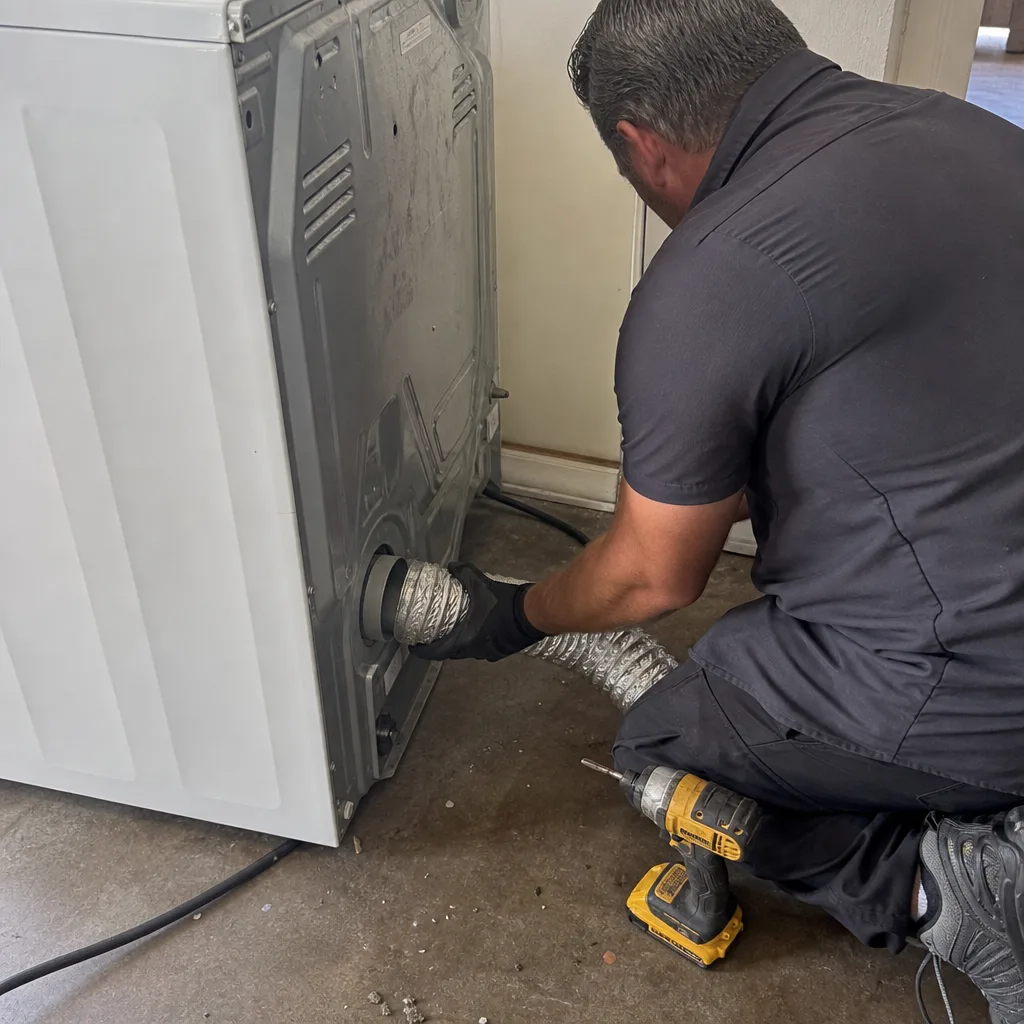
- Using a standard vacuum without HEPA filtration. A shop-vac exhausts fine particulate back into the room through its blower port. Without HEPA containment, you’re redistributing the dust you just removed. In Scottsdale’s low-humidity environment, this fine dust remains airborne for hours.
- Agitating debris without containment. Brushing duct walls with a long-handled brush dislodges material that then settles deeper in the system or blows out at the next HVAC cycle. Negative pressure is what captures dislodged debris - without it, you’re just moving dirt around.
- Ignoring flex duct fragility. The inner liner of flex duct is a thin plastic film supported by a wire helix. Aggressive brushing or sharp tools puncture it easily. In Scottsdale’s attics, damaged flex duct is often inaccessible without professional equipment and safety protocols for heat exposure.
- Cleaning ducts while ignoring the source. If your return duct is loaded with dust because your filter has been missing for six months, cleaning the duct without addressing filter maintenance wastes money. The duct will recontaminate within weeks.
- Trusting visual cleanliness at the register. A clean register proves nothing about trunk line or plenum condition. We’ve shown customers pristine registers attached to trunk lines with 1/4-inch debris buildup - the register is the easiest 2% to clean and the least important.
- Hiring based on coupon price without verifying scope. The $79 duct cleaning advertised in Scottsdale mailers typically covers register vacuuming only, with upselling to “full system” cleaning once the crew arrives. Ask for written scope before booking any service.
When to Call a Professional
Call a professional when your inspection reveals debris beyond accessible areas, when you suspect pest intrusion or moisture damage, or when your home has never had documented professional cleaning and is more than seven years old. See How to Hire a Air Duct Cleaning Contractor in Scottsdale: A Step-by-Step Guide for vetting contractors. In Scottsdale’s climate, these conditions warrant source-removal cleaning: visible debris deeper than 1/16 inch on duct surfaces, uneven airflow between rooms that persists after filter replacement, musty odors at startup that suggest microbial growth in the plenum, or recent construction or landscaping that introduced unusual dust loads.
CleanRun Air Duct Cleaning Scottsdale offers free estimates in Scottsdale - call (928) 267-0992. Every estimate includes the written price before work starts, and our Free Second Opinion on any written competitor estimate lets you compare scope and pricing directly.
Frequently Asked Questions
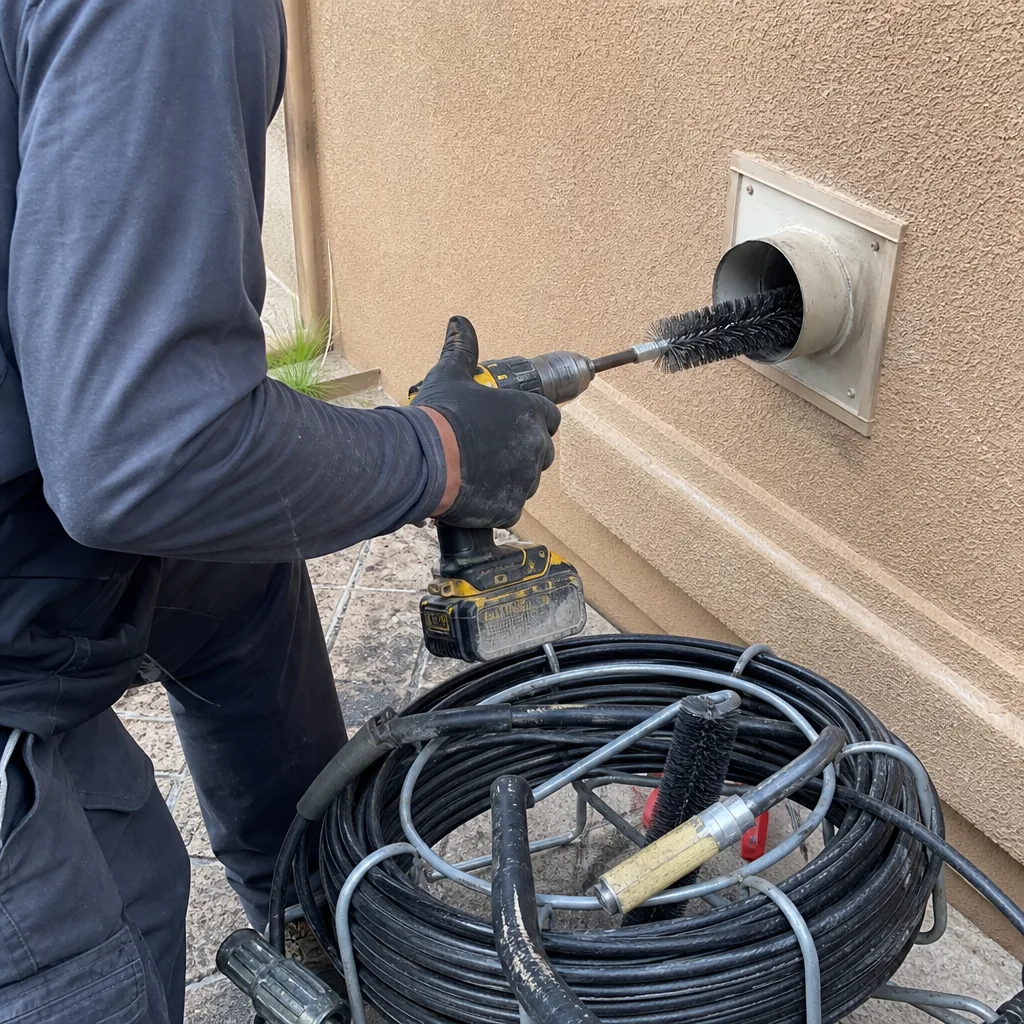
For a typical Scottsdale single-story home of 2,000-3,500 square feet, professional source-removal duct cleaning ranges from $450 to $850, with jobs requiring duct repair or sealing extending to $650-$1,400. The price varies with system size, attic accessibility, and whether the home has a single or dual HVAC system. CleanRun delivers a written price before any work starts - no per-vent pricing, no post-arrival upselling. Call (928) 267-0992 for an exact quote; estimates are free.
Low quotes typically reflect limited scope: register vacuuming only, without trunk line or plenum access, or without negative-pressure equipment. The $79-$149 coupon offers common in Scottsdale mailers almost always convert to higher invoices on-site through “recommended additional services.” A legitimate source-removal job requires 3-5 hours with two technicians, truck-mounted or portable HEPA collection equipment, and agitation tools - costs that cannot be delivered at coupon pricing without cutting scope. Always request written scope before booking.
Demand a documented photo record of every duct run, before and after, with register location markers. At CleanRun, this is standard on every job - not an add-on - and customers receive the images as part of their job record. If a contractor cannot or will not provide this documentation, you have no verification that the work occurred as described. The photo record also serves as baseline documentation for future maintenance intervals.
For most Scottsdale homes, every 3-5 years under normal conditions, and every 2-3 years if you have pets, recent construction, or live near active desert landscaping or unpaved roads. Monsoon seasons accelerate accumulation, so inspecting in October and scheduling cleaning if needed before winter heating season is a practical rhythm. Homes with 1-inch pleated filters should inspect annually; those with 4-inch media filters or electronic air cleaners may extend intervals.
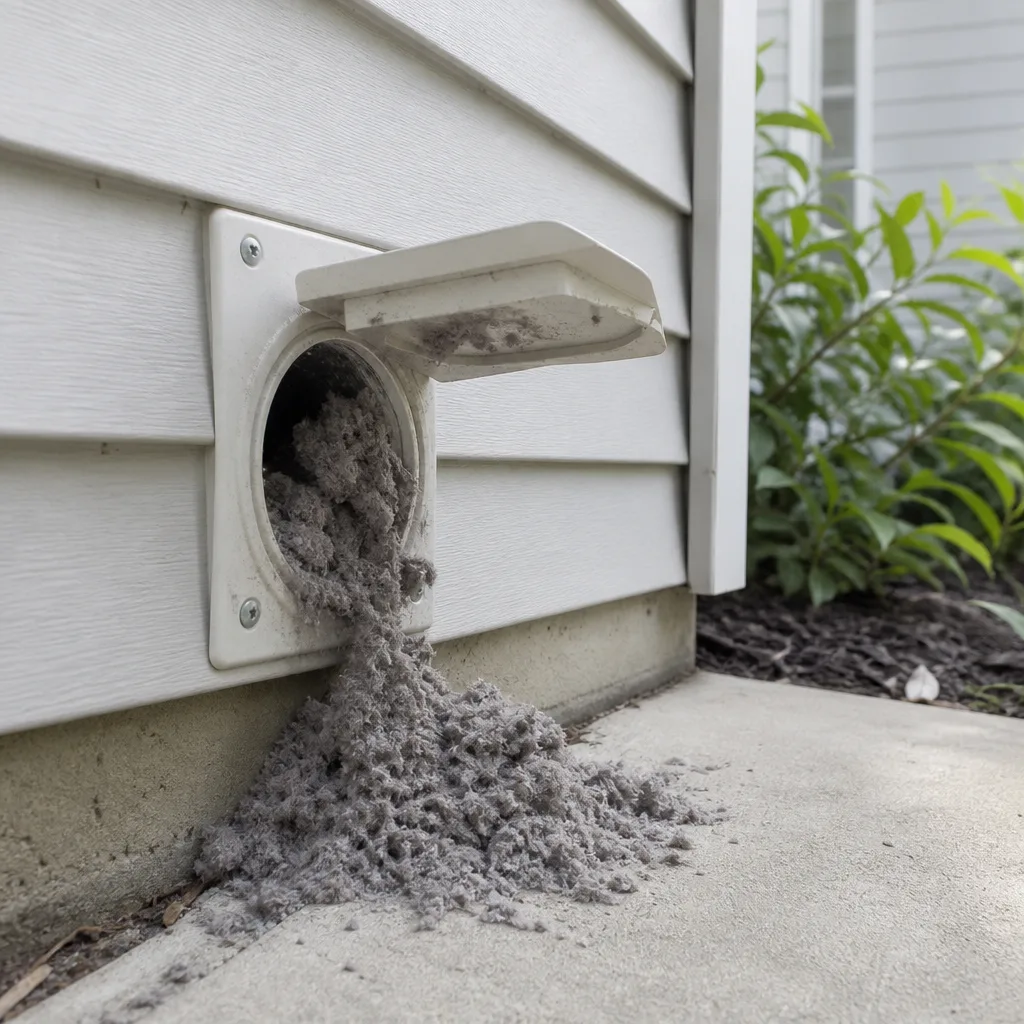
Dryer vent cleaning is a separate task with different risks. While you can clean the lint trap and the first few feet of duct behind the dryer, the full run - particularly roof-vented systems common in Scottsdale’s single-story homes - requires specialized equipment and roof safety protocols. Lint accumulation is a documented fire hazard, and roof access in summer heat creates genuine safety concerns. The Dryer Vent Cleaning in Scottsdale page covers our approach, which includes full-run rotary cleaning and airflow verification.
Moderately, but not dramatically. Clean ducts reduce airflow resistance, which can improve system efficiency by 5-15% in heavily restricted systems. The larger benefit in Scottsdale is reduced runtime strain: when airflow is restricted, the air handler runs longer to achieve thermostat setpoints, accelerating wear on motors and compressors. Duct cleaning is primarily an air quality and system longevity measure; efficiency gains are secondary and depend on how restricted the system was before cleaning.
The Bottom Line
DIY duct cleaning in Scottsdale delivers real value for register maintenance, return-boot cleaning, and annual inspection - tasks that require no specialized equipment and create useful documentation. It does not deliver source removal from flex runs, trunk lines, or plenums, which together constitute roughly 85% of a typical system’s surface area. Professional cleaning becomes the rational choice when your inspection reveals debris beyond accessible areas, when environmental conditions (monsoon dust, attic heat cycling, pest pressure) accelerate accumulation, or when you need documented accountability for warranty, insurance, or resale purposes. The decision frame is not cost versus quality - it’s access versus accountability, and in Scottsdale’s climate, the accountability side carries more weight than in milder markets. Browse more guides & resources for additional homeowner maintenance advice.
Written by Tomas Reyes, Owner at CleanRun Air Duct Cleaning Scottsdale, serving Scottsdale since 2013.