
Last updated September 23, 2026
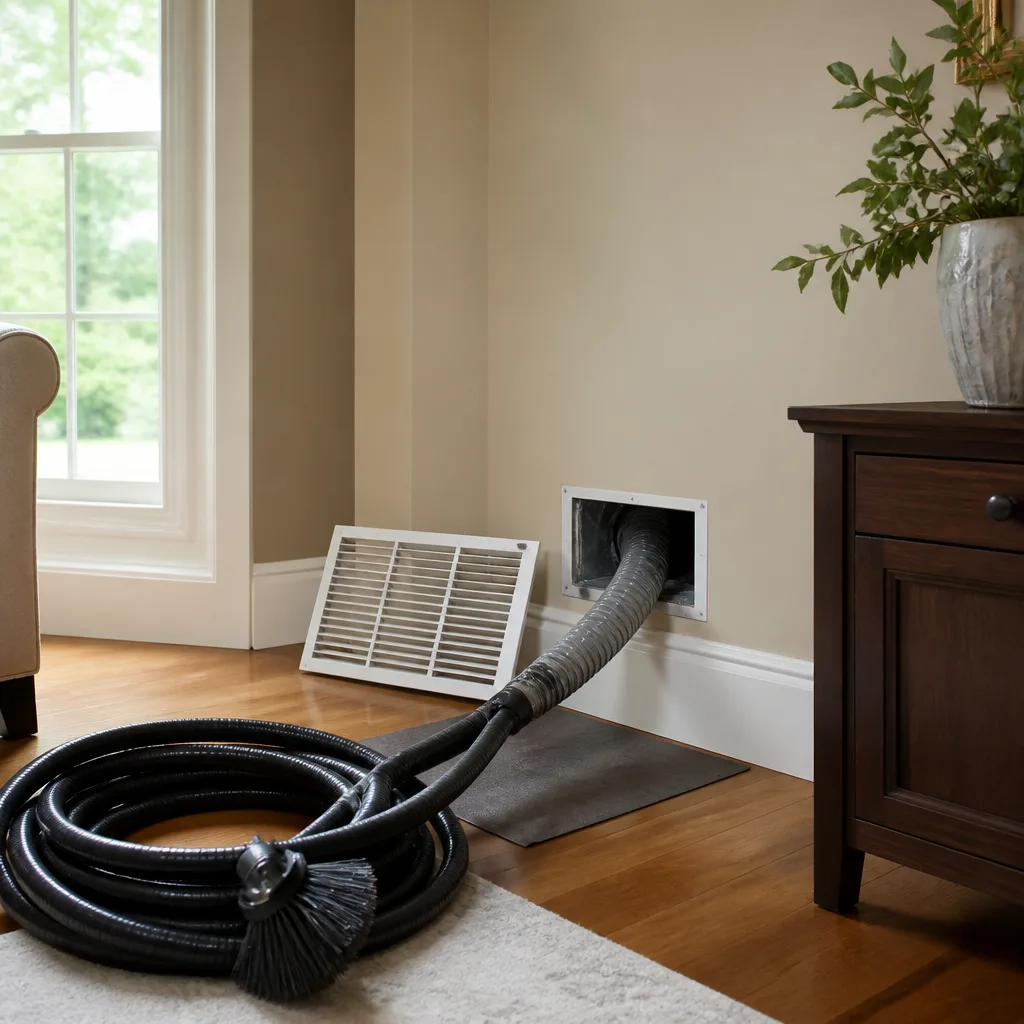
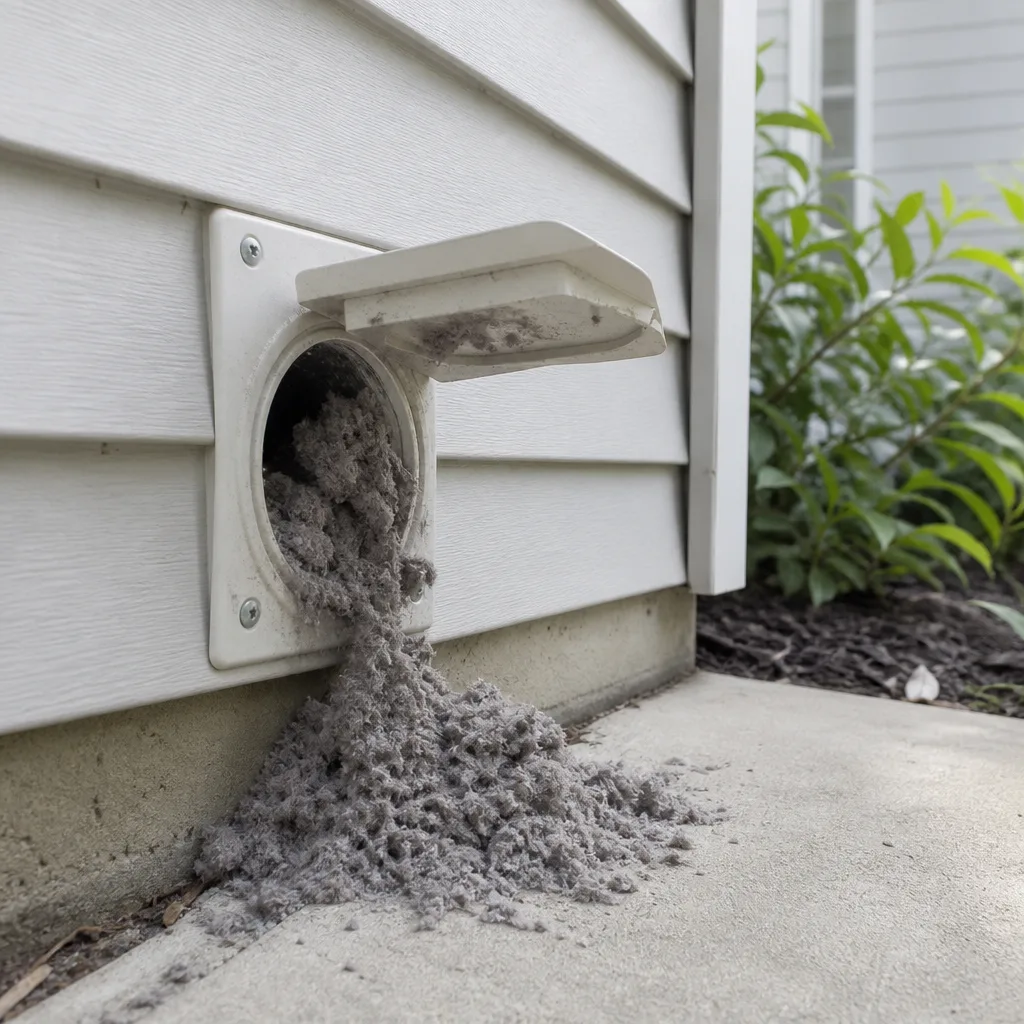
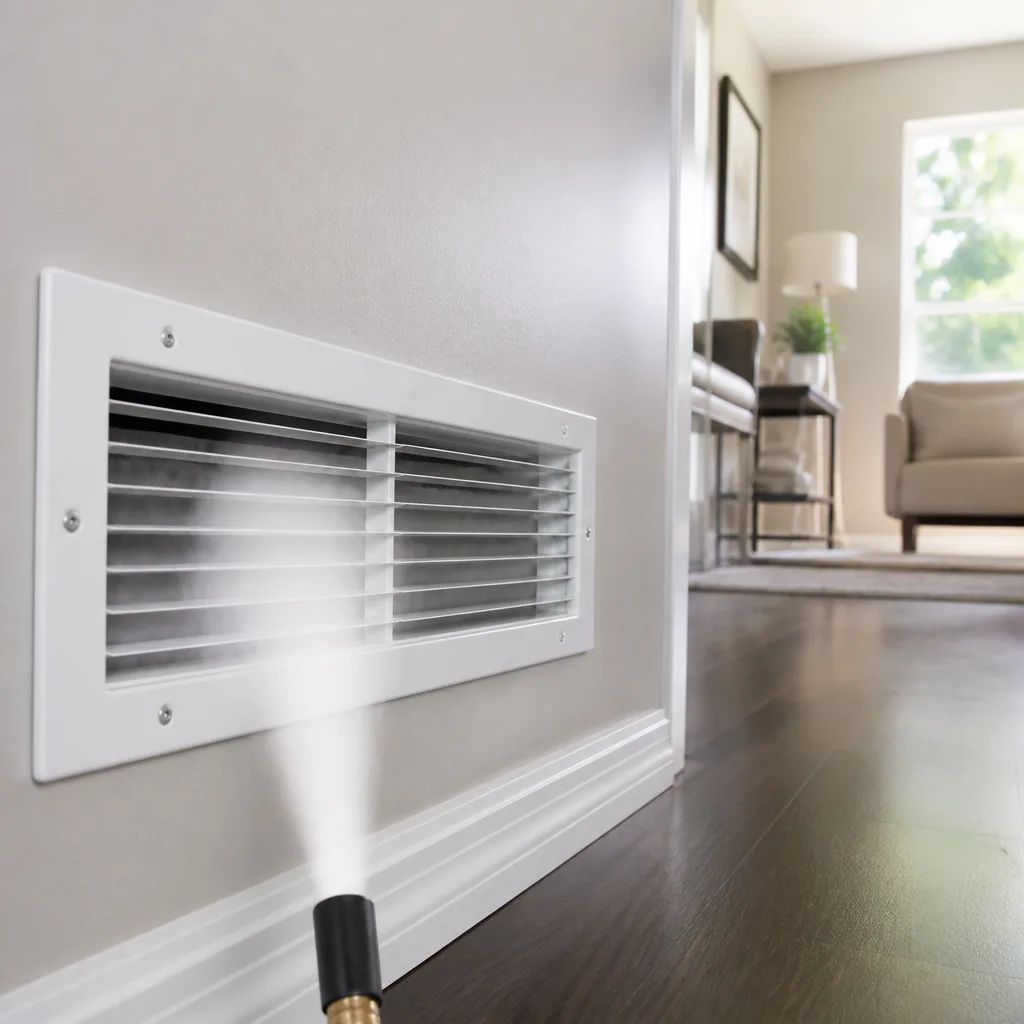
Whole-system duct and dryer vent check with before-and-after photos - you see exactly what came out of your vents
That "$99 whole-house special" is a bait ad - the real number appears once they are in your hallway, or the "clean" is a shop-vac at the register. We photograph the inside of your ducts before and after instead.
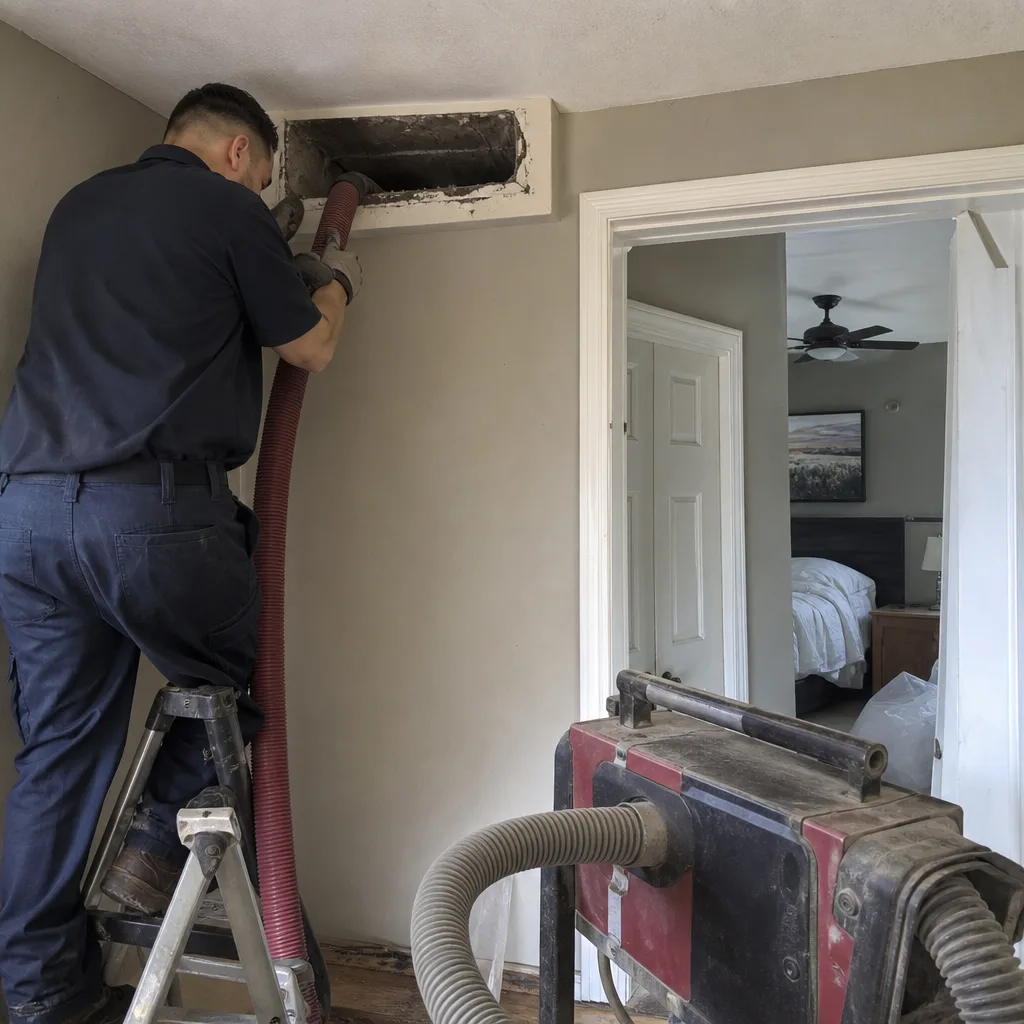 Before
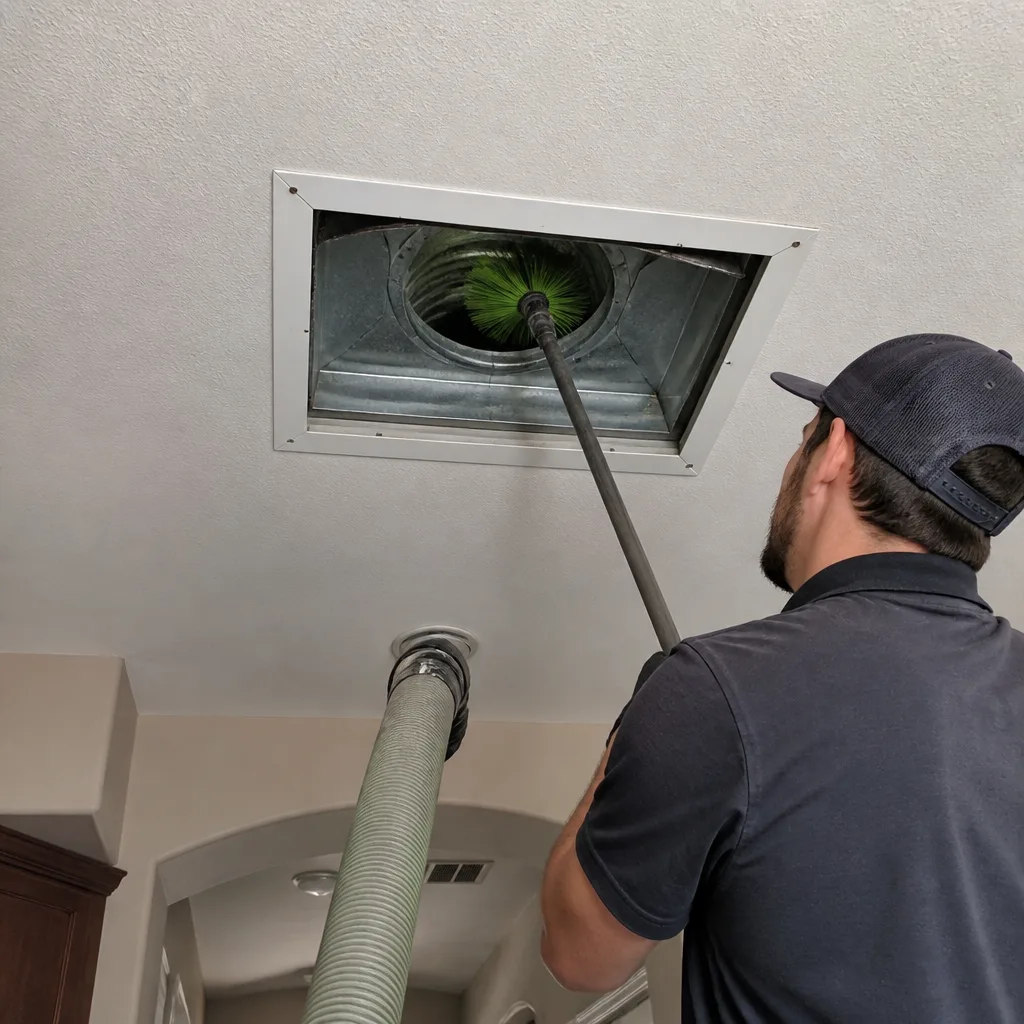 After
After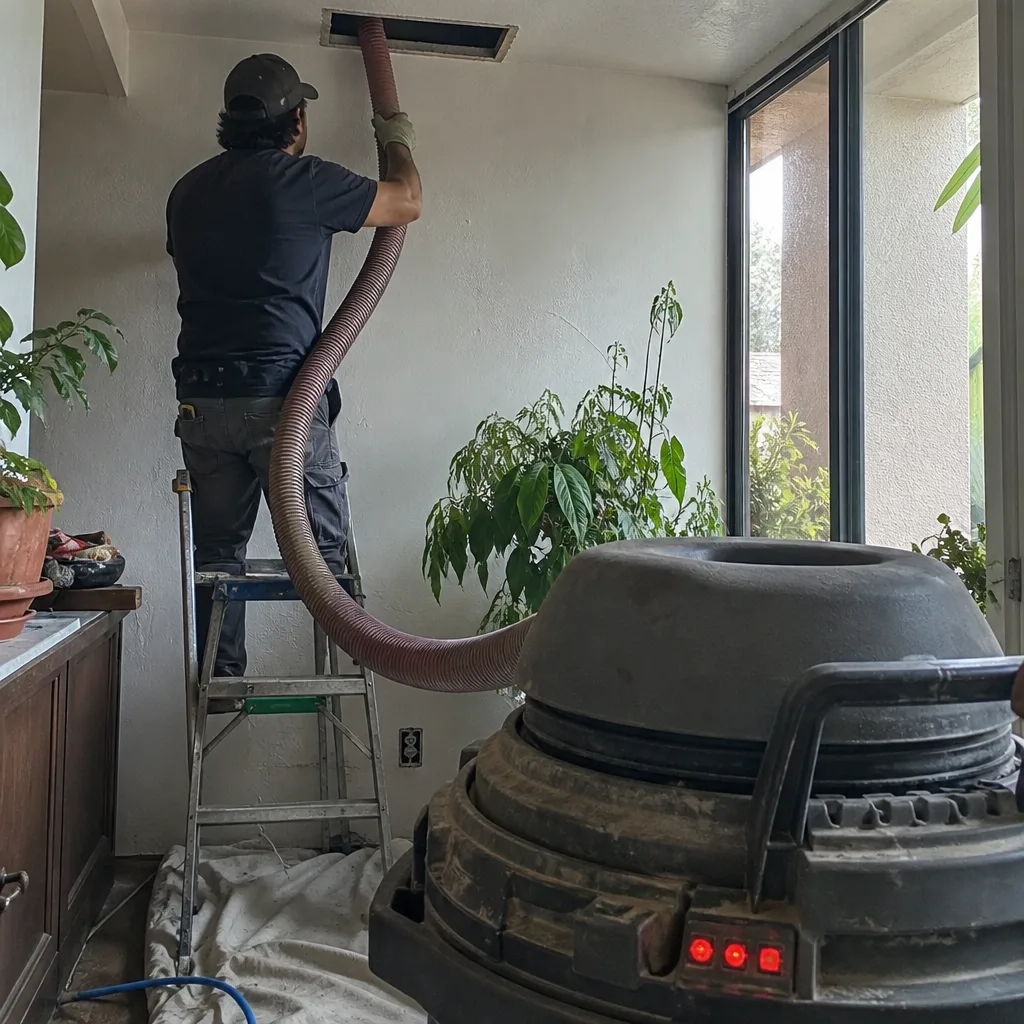 Before
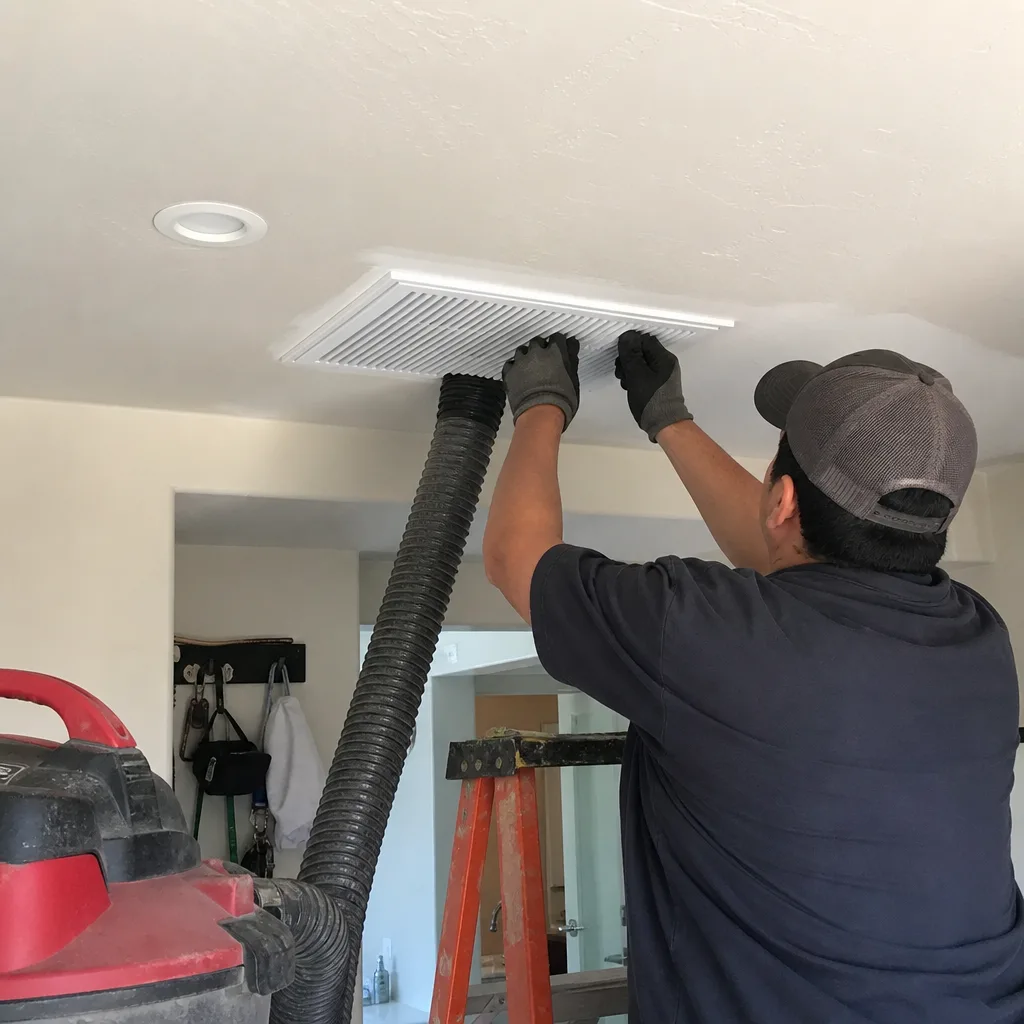 After
After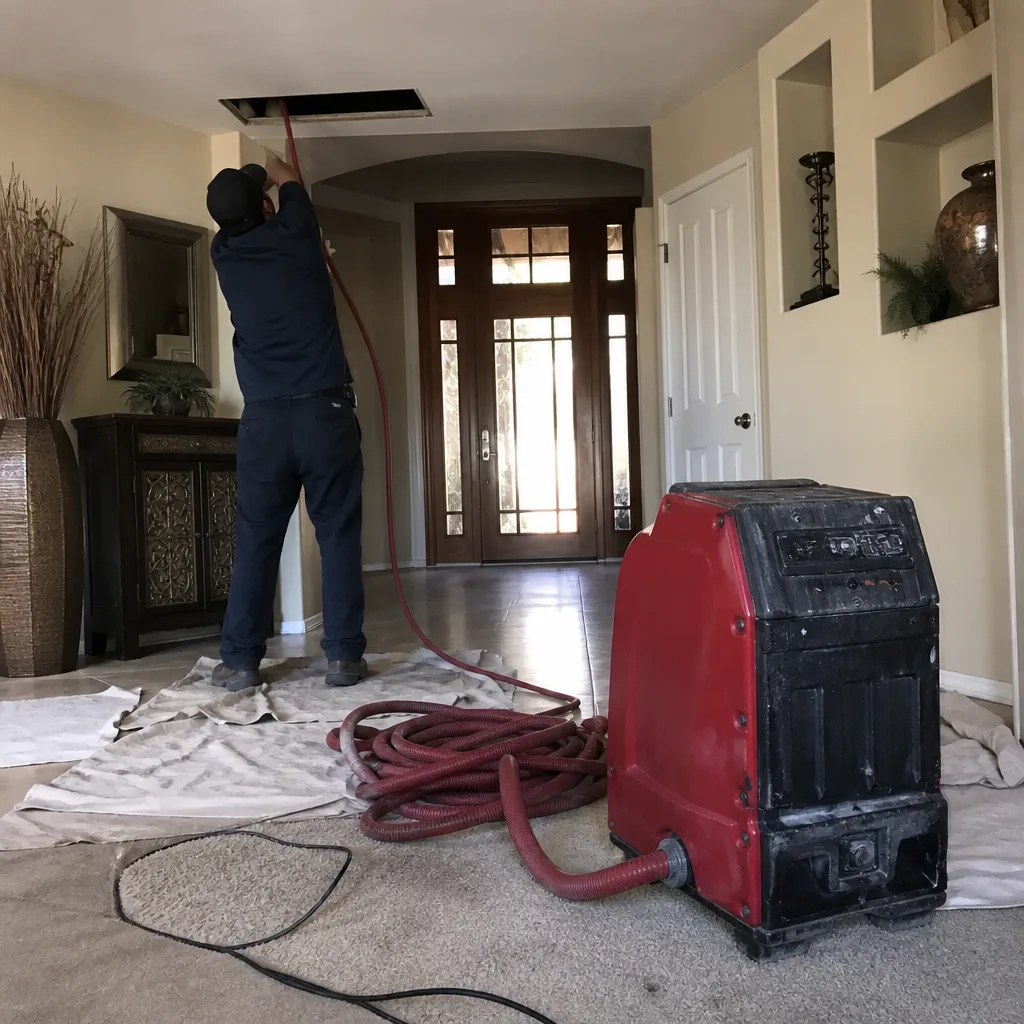 Before
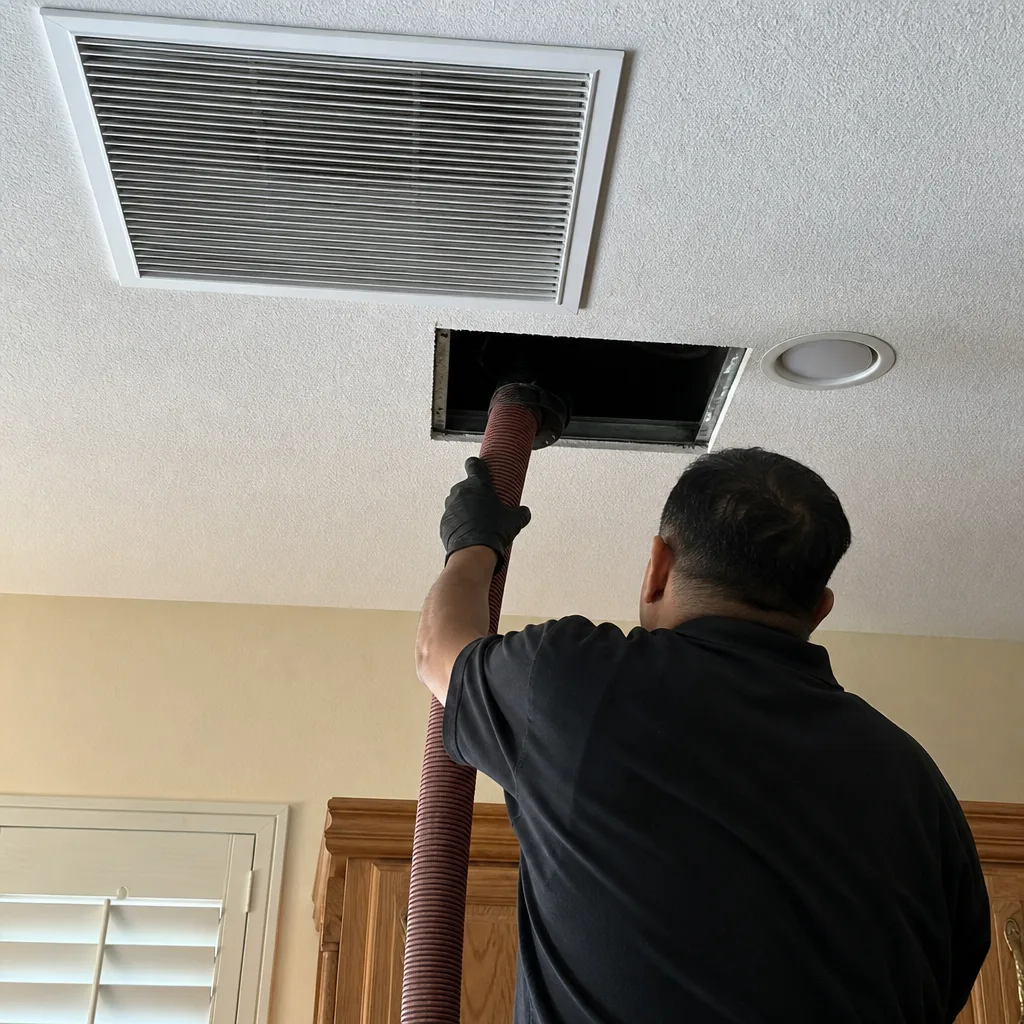 After
AfterHow to Hire a Air Duct Cleaning Contractor in Scottsdale: A Step-by-Step Guide
The $79 duct cleaning coupon has circulated in the Phoenix metro since at least 2008. The Arizona Attorney General’s office has logged complaints about duct cleaning upsells every year since, yet homeowners in Scottsdale, Paradise Valley, and Arcadia keep making the same hiring mistake: they evaluate contractors on phone manner instead of paperwork. In this guide, we’ll show you the four documents to request before anyone touches your registers, how to read an estimate line by line, and the on-site test that separates real technicians from vacuum noise.
Quick Answer
Hiring a qualified air duct cleaning contractor in Scottsdale means requesting four documents before scheduling (written itemized estimate, proof of liability insurance, NADCA membership verification, and their photo documentation process in writing), verifying their Arizona ROC license classification, and asking three process questions that reveal whether they use negative-pressure extraction or just a brush and a shop vac. The contractors who pass this screen are the ones who document their work, not the ones with the friendliest voice on the phone.
Table of Contents
- Why Documentation Matters More Than Phone Manner
- The Four Documents to Request Before Scheduling
- How to Read an Estimate Line by Line
- Arizona ROC License Lookup for HVAC Cleaning Contractors
- Three Questions That Reveal Process Quality
- The On-Site Test: What Happens When the Truck Arrives
- Scottsdale-Specific Considerations: Climate, Codes, and Common Issues
- Common Mistakes to Avoid
- When to Call a Professional
- Frequently Asked Questions
- The Bottom Line
BeforeAfterWhy Documentation Matters More Than Phone Manner
We’ve been in Scottsdale homes since 2013, and the pattern never changes. The homeowner who got burned by a $79 coupon almost always says the same thing: “He seemed so nice on the phone.”
Phone manner is not a credential. It cannot be photographed, written down, or verified by a third party. In an industry where the average complaint to the Arizona Attorney General involves a final bill three to five times the advertised price, the contractors who survive scrutiny are the ones who put evidence on paper before the truck leaves the shop.
At CleanRun Air Duct Cleaning Scottsdale home, we’ve built our entire process around this principle. Every job starts with a written price under Haven Standard Clause 1. Every duct run is photographed before and after. The 365-Day Done Right Promise is not a policy subject to manager approval; it’s a written guarantee included with the job record.
This is not how most duct cleaning companies in the Phoenix metro operate. The standard model is a low entry price, a technician who finds “mold” or “dangerous buildup” once inside the home, and a final invoice that bears no resemblance to the phone quote. The homeowner has no documentation of what was promised, no photos of what was found, and no recourse beyond a complaint form.
The documentation-first approach flips this dynamic. When you have a written estimate, verified insurance, and a stated photo process before anyone arrives, the contractor has already demonstrated accountability. The rest of this guide shows you exactly how to obtain and evaluate that documentation, or explore more guides & resources on protecting your home.
The Four Documents to Request Before Scheduling
Any contractor who resists providing these four items in writing before scheduling is telling you something. Listen to them.
1. Written Itemized Estimate
The estimate must list every component of the job separately: supply ducts, return ducts, main trunk lines, plenum (the distribution box where heated or cooled air collects before entering the duct runs), and registers (the visible grilles in each room). It must state whether the price covers the whole system or is calculated per vent.
Per-vent pricing is the standard trap. A Scottsdale home built after 2015 typically has 12 to 18 vents. A $39 “per vent” quote becomes $468 to $702 before the technician opens the first panel, and that price still does not include the main trunk or plenum. Whole-system pricing, by contrast, covers every component for one flat fee agreed before work starts.
Haven Standard Clause 1 requires a written price before any work begins. We do not deviate from this. A contractor who says “we need to see it first” or “the technician will assess on site” is preparing to upsell.
2. Proof of Liability Insurance With Your Address as Job Site
Request a certificate of insurance (COI) that names your specific address as the job site. Generic proof of insurance is not sufficient; it does not confirm the policy is active or that your property is covered.
The COI should show general liability coverage of at least $1 million per occurrence. In Scottsdale, where homes in neighborhoods like DC Ranch and Silverleaf routinely exceed $1.5 million in value, this minimum matters. If a technician damages a ceiling, a custom finish, or an HVAC component, the homeowner bears the gap if coverage is inadequate.
3. NADCA Membership Verification
The National Air Duct Cleaners Association (NADCA) maintains a public membership directory at nadca.com. NADCA membership is not a license; it is a voluntary standard that requires adherence to ACR, the NADCA Standard for Assessment, Cleaning, and Restoration of HVAC Systems.
Verify membership directly through NADCA’s site, not by taking the contractor’s word. Some Scottsdale-area companies have allowed membership to lapse while still displaying the logo. The directory shows current status and the member’s certification level.
4. Photo Documentation Process in Writing
Ask specifically: “How many photos will I receive, of which duct runs, and in what format?” The answer should be specific: “12 to 20 photos, before and after each supply and return run, delivered via email link within 24 hours.”
Vague answers (“we take photos if needed”) or promises to “show you on the camera” without delivering files are disqualifying. The photo record is your only evidence that work occurred inside the ducts you cannot see. At CleanRun, we photograph inside every duct run, before and after, and deliver the set as a standard job record. We’ve done this since our first job in 2013.
How to Read an Estimate Line by Line
Estimates in the Scottsdale market fall into two categories: whole-system flat pricing and itemized per-component pricing. Both can be legitimate. The danger lies in estimates that appear flat but contain undefined variables.
Red Flags in Estimate Language
- “Starting at” or “as low as” - the final price will not be the starting price
- “Technician will evaluate on site” - a blank check for upsells
- “Basic cleaning” versus “deep cleaning” or “premium service” - undefined tiers that exist only to escalate the price
- “Sanitizing available if recommended” - a $200 to $400 add-on sold after the homeowner sees a flashlight beam through dust
- “Mold remediation if found” - the most common upsell trigger, often based on a technician’s subjective assessment with no laboratory verification
What a Legitimate Estimate Includes
| Line Item | What It Covers | Scottsdale Market Range |
|---|---|---|
| Whole-system air duct cleaning | All supply ducts, return ducts, main trunk lines, plenum, and registers | $450 - $850 |
| Dryer vent cleaning (separate service) | Full lint removal from dryer duct to exterior termination | $120 - $250 |
| HVAC cleaning (coils, blower) | Evaporator coil and blower cabinet - distinct from duct cleaning | $200 - $400 |
| Duct repair or sealing | Reconnection of separated joints, sealing of leaks with mastic or metal tape | $150 - $500 per repair |
| Photo documentation | Before and after images of each duct run, delivered to customer | Included or $50 - $100 |
Whole-system pricing in Scottsdale typically runs $450 to $850 for a single-family home between 2,000 and 4,000 square feet. Prices below this range rarely cover the full system with professional equipment. The Air Duct Cleaning in Scottsdale page details what our whole-system service includes at a flat, written price.
Ask how the contractor defines “system.” Some count only the visible registers and ignore the main trunk lines. Others exclude the return-air plenum, which in Scottsdale’s dust-prone environment often contains the heaviest buildup. The estimate should list every component by name.
Arizona ROC License Lookup for HVAC Cleaning Contractors
Arizona requires specific licensing for contractors who alter or repair HVAC systems. Duct cleaning occupies a gray area that many companies exploit.
License Classifications That Apply
The Arizona Registrar of Contractors (ROC) issues several relevant classifications:
- R-39/R-39R (Air Conditioning and Refrigeration) - Required for installation, repair, or modification of HVAC systems. Duct cleaning alone does not require this license, but duct repair, sealing, or any work that disturbs refrigerant lines does.
- B-3 (General Residential Remodeling and Repair) - Permits minor duct modifications but not full system work.
- C-39 (Insulation) - Relevant if the contractor offers duct insulation services.
Many duct cleaning companies in the Phoenix metro operate with no ROC license at all, claiming that cleaning is not construction. This is technically defensible for pure cleaning, but it becomes problematic when technicians disconnect ducts, remove panels, or attempt repairs. An unlicensed contractor who damages your HVAC system has no bond or recovery fund to pay for repairs.
How to Verify a License
- Visit roc.az.gov and select “Verify a License”
- Enter the contractor’s business name or individual ROC number
- Confirm the license status is “Active” and not “Suspended,” “Revoked,” or “Expired”
- Check the classification matches the work being performed
- Verify the license holder’s name matches the business owner or qualifying party listed on the estimate
In Scottsdale, we have encountered competitors using an employee’s personal ROC number without that employee performing or supervising the work. The qualifying party must be actively involved. If the name on the license does not match anyone who will be on your property, ask why.
CleanRun operates under the H.A.V.E.N. Standard, which includes Haven Standard Clause 3: Verified Crews. Our license number is published on every page, not buried in a footer, and our background-checked, uniformed technicians are identified by name before arrival.
Three Questions That Reveal Process Quality
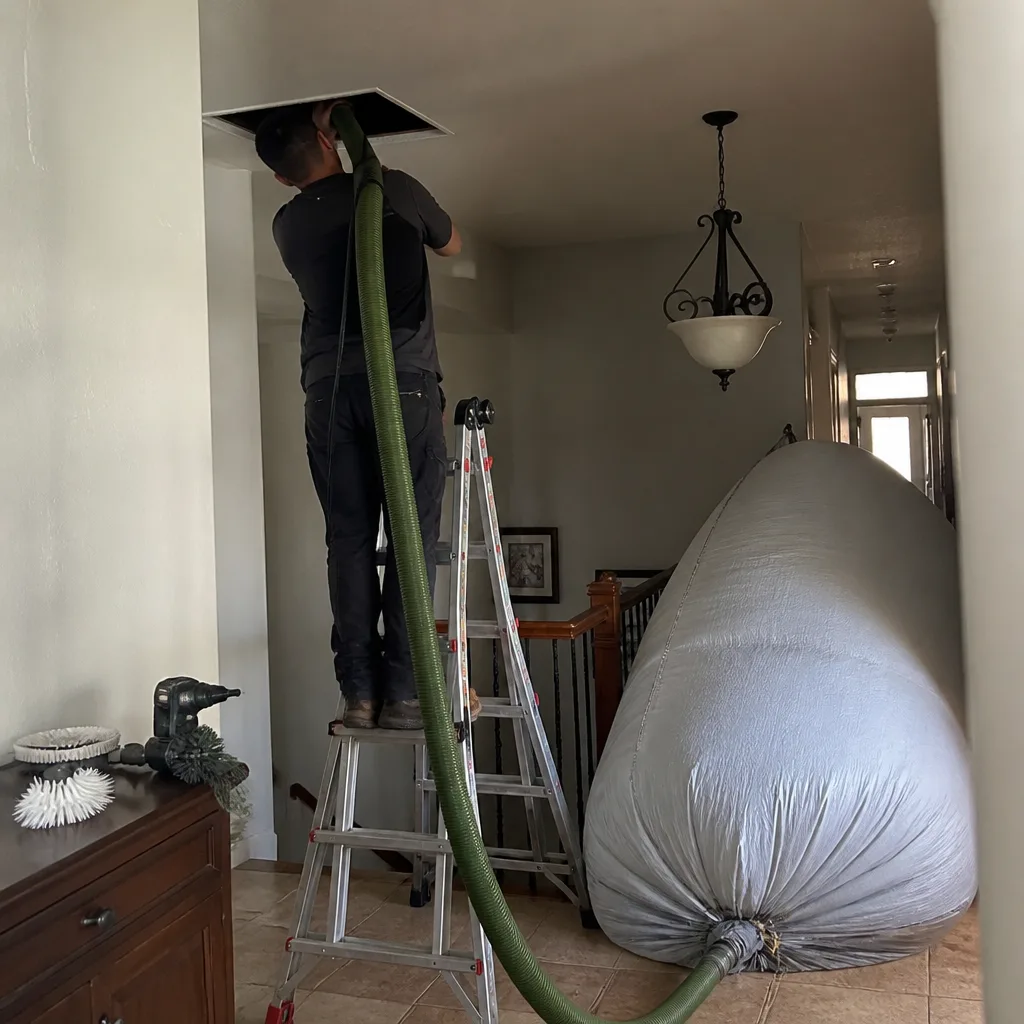
These questions separate contractors who understand negative-pressure extraction from those who run a brush on a cordless drill and call it done. Ask them on the phone before scheduling. The answers should be specific and immediate.
Question 1: “How do you create negative pressure in the duct system?”
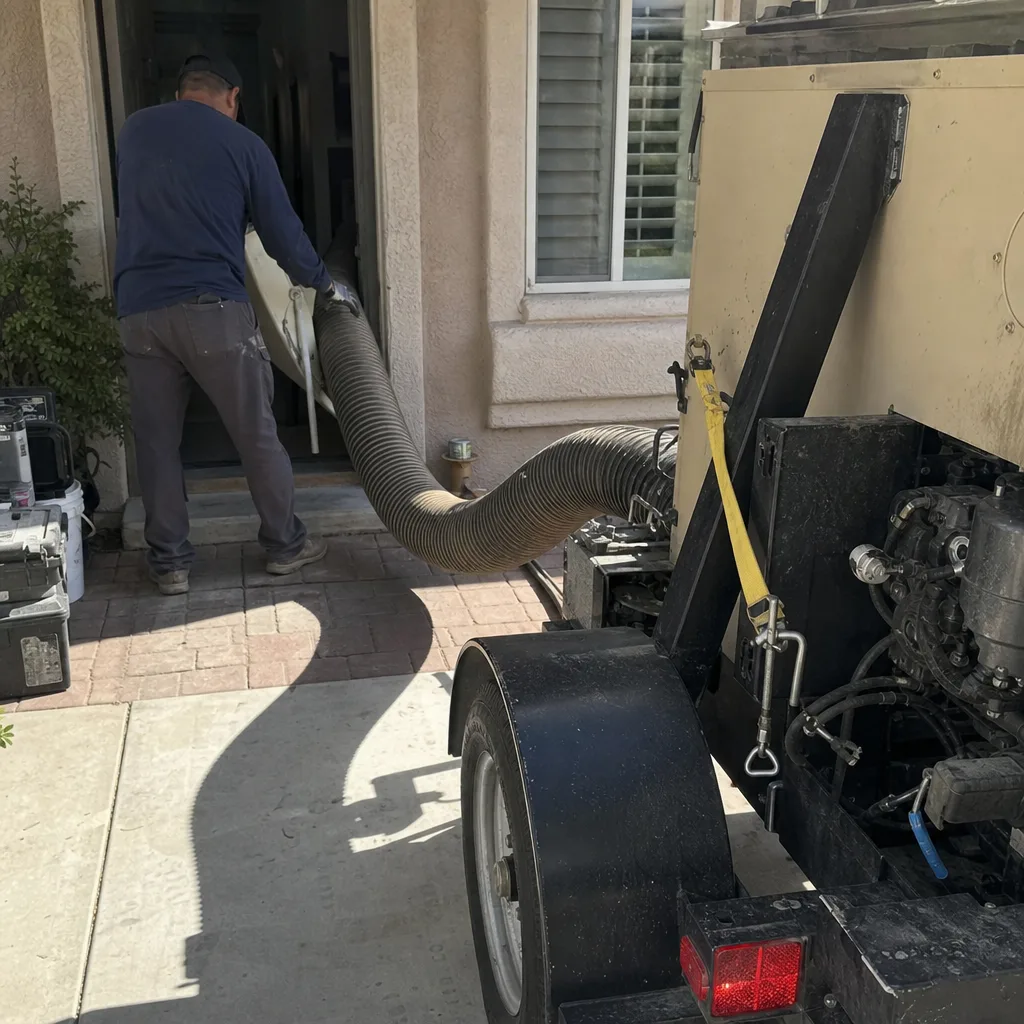
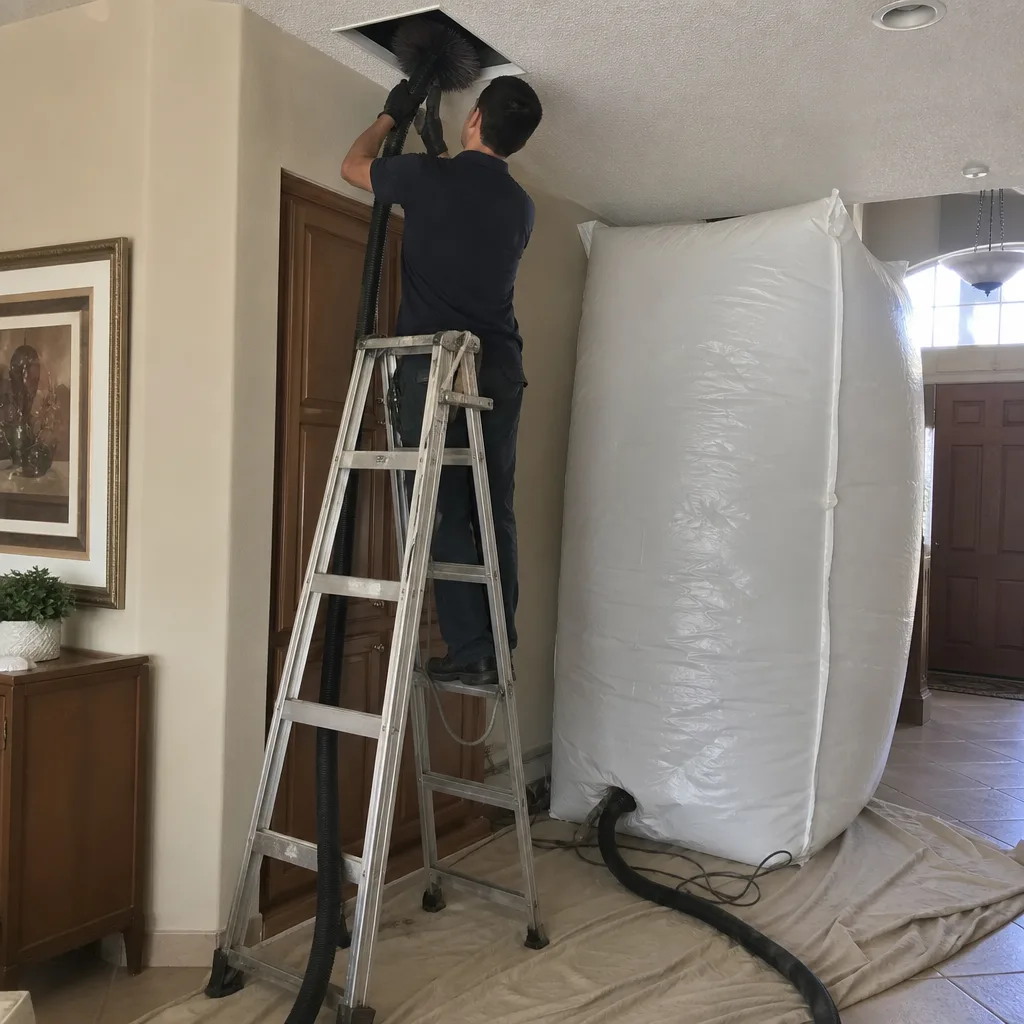
The correct answer involves a vacuum collection unit connected to the ductwork, creating suction that prevents debris from escaping into the living space during agitation. The contractor should name the equipment: a Nikro or Abatement Technologies portable HEPA vacuum, or a Rotobrush system with contained collection.
Wrong answers include “we use a powerful shop vac” (insufficient airflow for whole-system extraction), “we seal the registers” (sealing alone does not create negative pressure), or “our brushes are self-contained” (brushes agitate; they do not collect). Negative pressure is the defining feature of professional duct cleaning per NADCA standards.
Question 2: “Where do you connect the vacuum collection unit?”
The answer reveals whether the contractor understands your system’s layout. For a typical Scottsdale home with a centralized air handler in the attic or garage, the vacuum typically connects at the plenum or at a strategically removed register. The contractor should explain this without prompting.
Vague answers (“wherever works best”) or a claim to connect at every vent simultaneously (physically impossible with standard equipment) indicate inexperience. The connection point matters because it determines whether debris is extracted or merely redistributed.
Question 3: “How many photos will I receive and in what format?”
As noted in the documentation section, the answer must be numerical and specific. “We’ll show you on the tablet” is not acceptable. You need files you can review after the crew leaves, share with your HVAC technician, or reference if problems arise.
At CleanRun, the answer is: 12 to 20 photos minimum, before and after every supply and return duct run, delivered via secure email link within 24 hours. This is not an upgrade. It is standard on every visit, included in the written price, and has been since 2013.
The On-Site Test: What Happens When the Truck Arrives
Documentation before scheduling protects you from the wrong contractor. The on-site test confirms you hired the right one.
The Flashlight Test
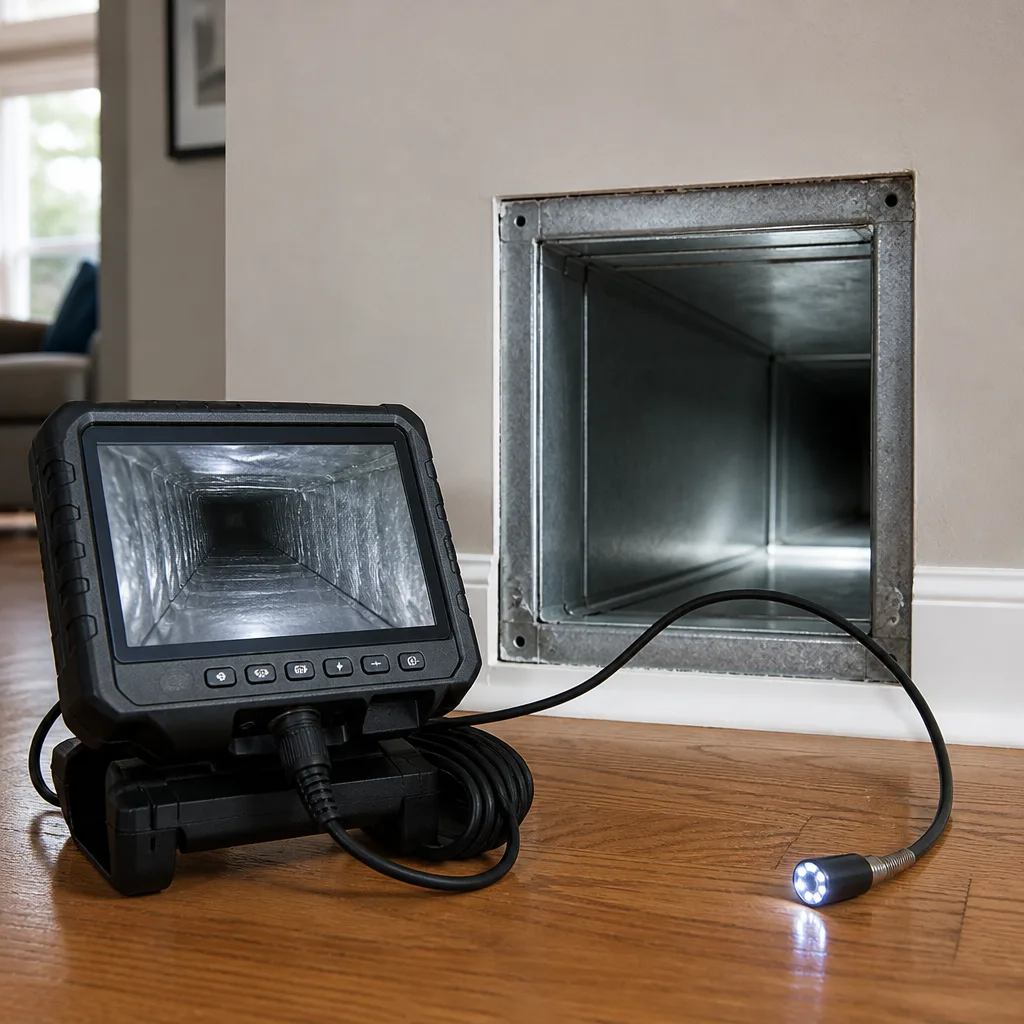
Before any work begins, ask the technician to show you the inside of one return-air duct with a borescope or inspection camera. A contractor confident in their process will do this without hesitation. The image reveals what you are actually paying to clean.
In Scottsdale homes near the McDowell Mountains or in older neighborhoods like Old Town, we regularly see 2 to 4 inches of compacted dust and pollen at the first elbow of return ducts. In newer construction in North Scottsdale, we find construction debris - drywall dust, wood fragments, insulation scraps - that builders left in 2019 and no homeowner has seen. The camera shows this in seconds.
A technician who refuses the flashlight test, who claims “we’ll see it when we start,” or who becomes defensive is telling you their process does not hold up to scrutiny. Document this refusal and consider canceling the job.
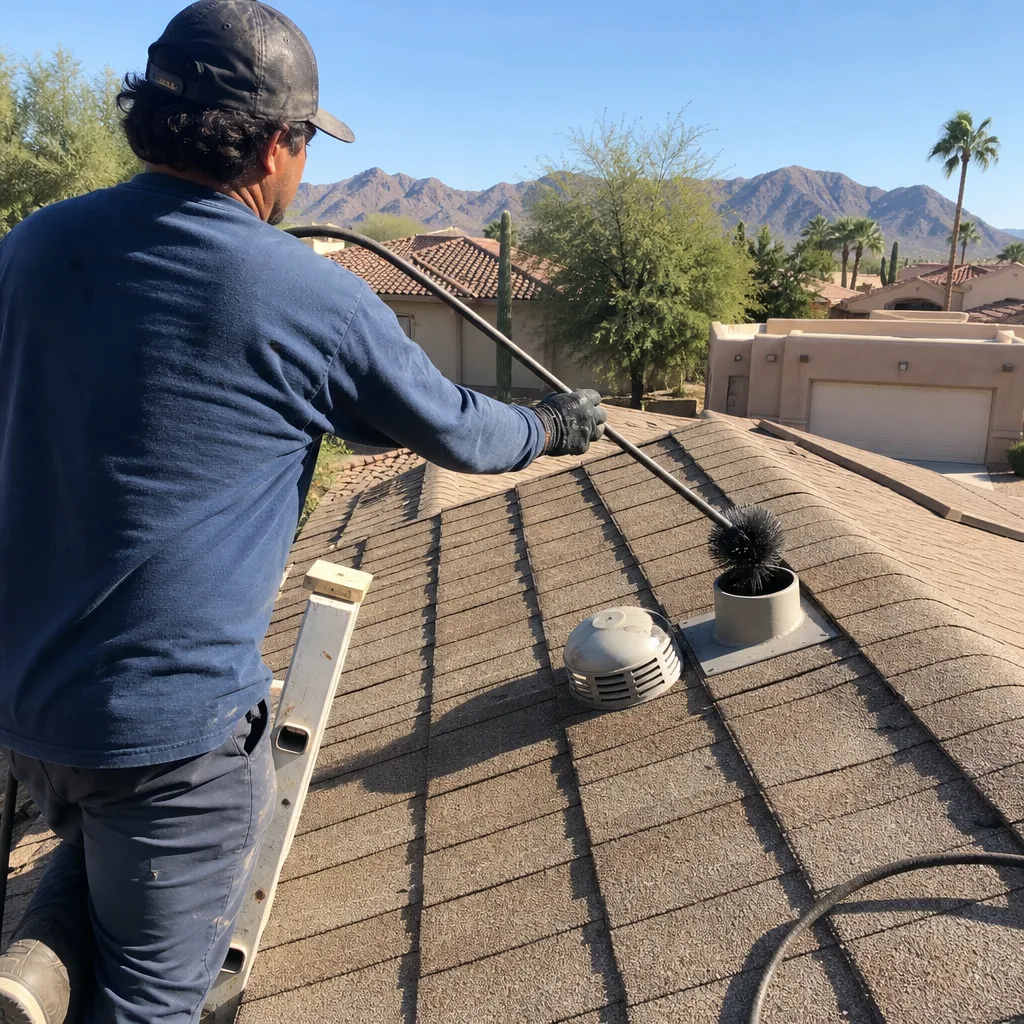
What Professional Equipment Looks Like
Professional-grade equipment is not a secret. The brands are established and verifiable:
- Rotobrush - Rotating brush systems with HEPA-contained collection, common in residential duct cleaning
- Nikro - Portable HEPA vacuums and agitation tools used in negative-pressure extraction
- Abatement Technologies - Commercial-grade HEPA filtration and containment systems
- Honeywell and Aprilaire - Air quality components and filtration media, relevant for post-cleaning recommendations
The technician should be able to name their equipment without prompting. If they describe it only as “commercial grade” or “industrial strength,” ask for the manufacturer. Generic claims are a cover for inadequate tools.
The Written Scope Before Work Starts
Haven Standard Clause 1 requires a written price before any work begins. This means the technician reviews the system, confirms the estimate matches the actual configuration, and produces a signed scope before removing the first register. Not after. Not “once we see how bad it is.”
The scope should match the estimate line for line. Any deviation - “this register is extra,” “the plenum needs separate cleaning,” “we found mold” - requires a new written scope with a new signature. Verbal authorizations are not valid under this standard.
Scottsdale-Specific Considerations: Climate, Codes, and Common Issues
Scottsdale’s environment creates duct conditions that differ from other markets. A contractor who treats your home like a generic Phoenix property will miss these factors.
Desert Dust and Pollen Load
Scottsdale receives approximately 7 inches of annual rainfall, with most falling during July and August monsoons. The remaining ten months produce sustained dust storms, pollen from desert vegetation, and airborne particulate from construction in rapidly developing areas like SkySong and the Scottsdale Airpark.
This dust loads return ducts heavily. In homes without sealed return plenums, the air handler becomes a collection point for particulate that bypasses the filter. We have photographed return plenums in Scottsdale homes with 3-inch buildup at the filter rack, reducing airflow by an estimated 20 to 30 percent before the homeowner noticed any temperature imbalance.
Construction Debris in Post-2015 Homes
Scottsdale’s building boom between 2015 and 2022 produced thousands of homes with ductwork installed before final cleanup. Drywall dust, in particular, is fine enough to pass through standard filters and accumulate in supply ducts. The first cleaning of a new home often produces surprising quantities of this material.
A contractor who does not ask when your home was built, or who assumes “newer is cleaner,” is not evaluating your system properly.
HOA and Municipal Requirements
Some Scottsdale HOAs, particularly in gated communities like DC Ranch, Silverleaf, and Desert Mountain, require notification before service vehicles access the property. A contractor familiar with Scottsdale will ask about HOA requirements when scheduling. If they do not, you may face a fine or service denial at the gate.
The city of Scottsdale does not require a permit for routine duct cleaning. However, duct modification - resizing, rerouting, or sealing as part of an energy upgrade - may require a building permit if it affects the HVAC system’s capacity. A contractor who proposes structural changes without mentioning permits is either unaware of the requirement or avoiding accountability.
Hard Water and Evaporator Coil Condition
Scottsdale’s water hardness exceeds 200 ppm in many areas. This affects evaporator coils, where mineral scale reduces heat transfer efficiency. Duct cleaning alone does not address coil condition. If your contractor does not inspect or offer HVAC cleaning as a distinct service, you are receiving an incomplete assessment. Our HVAC Cleaning in Scottsdale service addresses this specifically.
Common Mistakes to Avoid
- Booking based on coupon price alone. The $79 Scottsdale duct cleaning special has never resulted in a $79 final bill. The average upsell to “mold remediation” or “sanitizing” runs $400 to $800, and the work performed rarely matches the price charged.
- Accepting verbal estimates. A phone quote without a written follow-up is not an estimate; it is a marketing hook. Arizona courts have consistently ruled that verbal home improvement quotes are unenforceable.
- Ignoring license verification. We have found three Scottsdale-area duct cleaning companies advertising ROC numbers that belong to inactive or unrelated licenses. The five-minute lookup at roc.az.gov prevents this.
- Assuming NADCA membership equals NADCA certification. Membership is organizational; certification is individual. A company can be a member while sending uncertified technicians. Verify the specific technician’s certification if this matters to you.
- Not asking about the photo process until after the work is done. By then, it is too late. The absence of documentation means you have no evidence of what occurred inside your ducts.
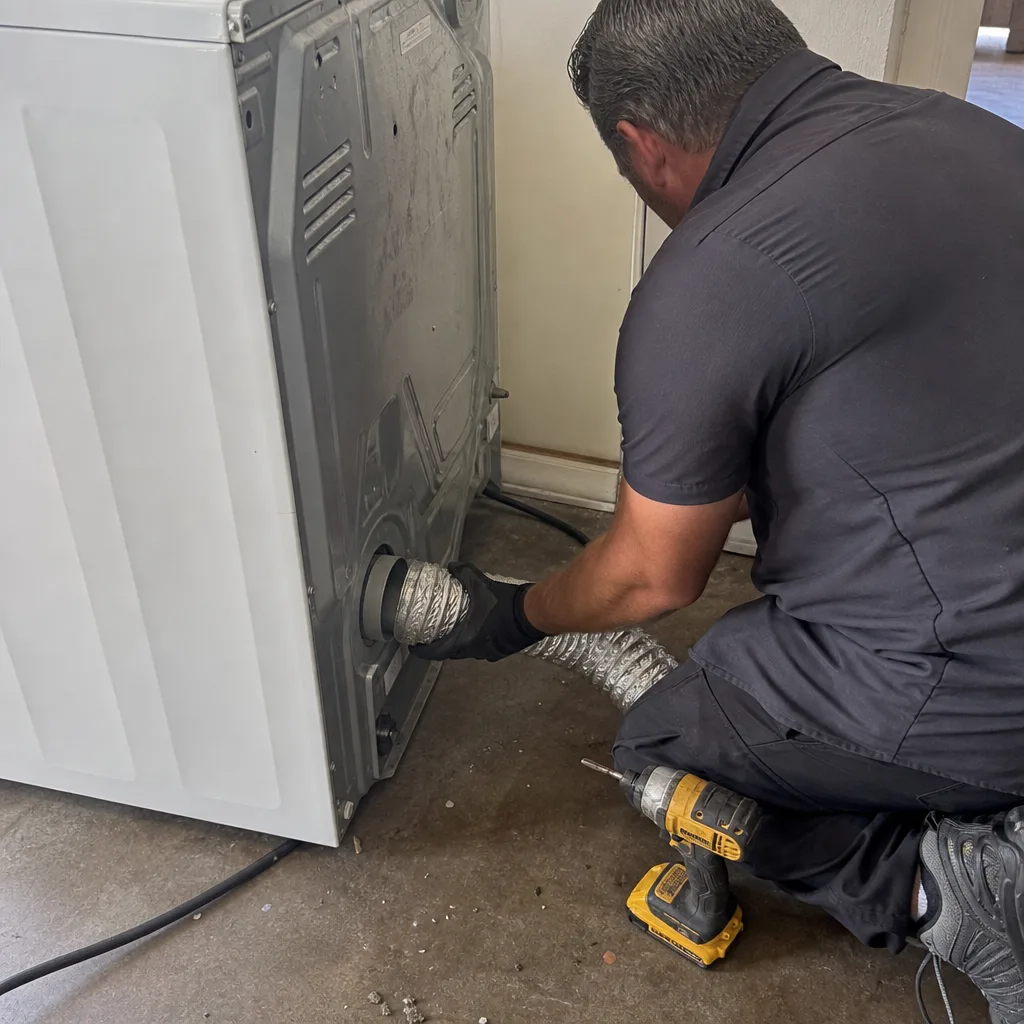
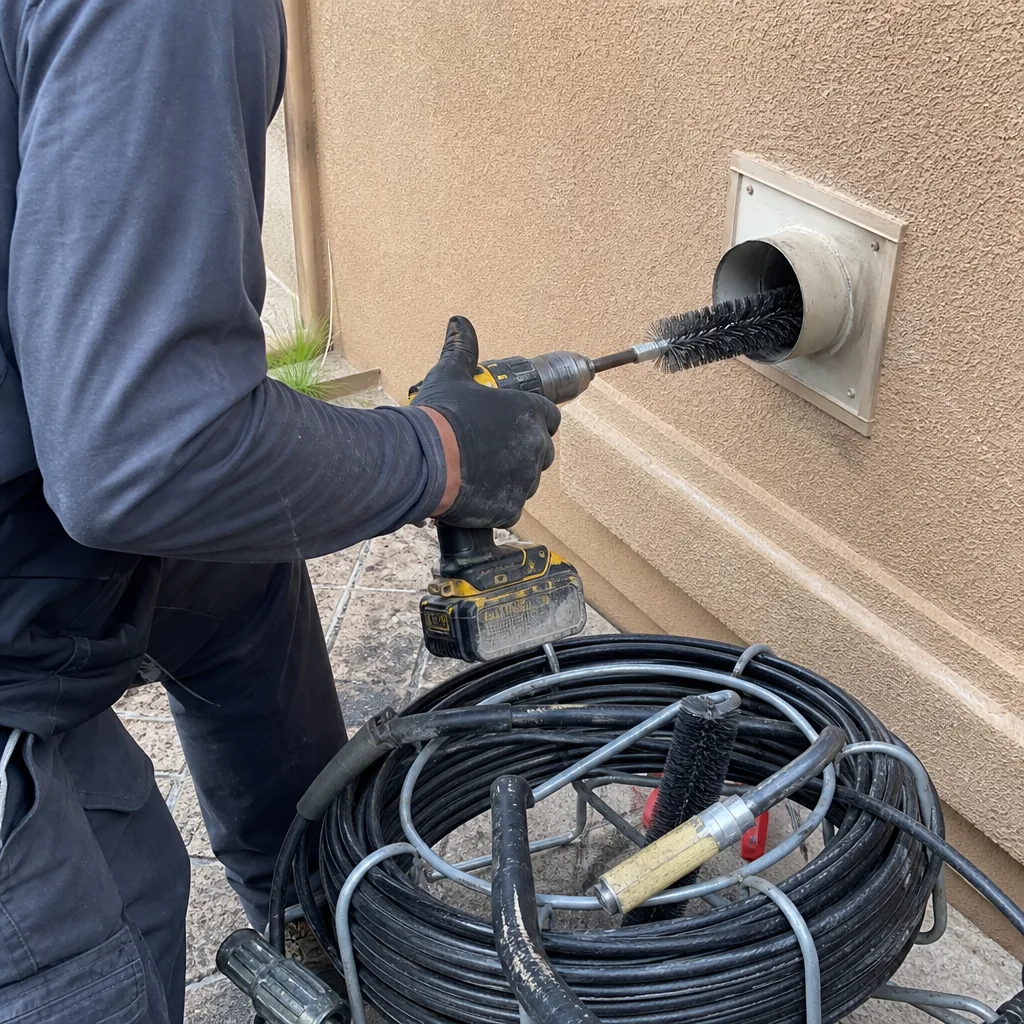
- Scheduling duct cleaning without inspecting the dryer vent. In Scottsdale’s lint-prone environment, a clogged dryer vent creates more immediate fire risk than dirty ducts. The Dryer Vent Cleaning in Scottsdale page explains why this service is often more urgent.
- Treating “sanitizing” as a standard part of cleaning. EPA-registered sanitizers exist for ductwork, but their application requires specific conditions: clean surfaces first, controlled dwell time, and post-application verification. Most $99 “sanitizing” upsells involve a technician spraying an unlabeled bottle into registers.
When to Call a Professional
Call a duct cleaning contractor when you can document one or more of these conditions: visible dust emission from registers when the system cycles, persistent dust accumulation on surfaces within 48 hours of cleaning, uneven heating or cooling between rooms that persists after filter changes, or a musty odor that intensifies when the HVAC runs. These symptoms indicate duct contamination or airflow restriction that filtration alone cannot address.
Do not wait for an emergency. Duct conditions degrade gradually, and the homeowner adapts to reduced performance without recognizing the decline. A documented inspection, with photos, establishes a baseline for comparison.
CleanRun Air Duct Cleaning Scottsdale offers free estimates in Scottsdale. Every estimate is written, itemized, and delivered before any work begins. Call (928) 267-0992 to schedule. We also provide a Free Second Opinion on any written estimate from another contractor - bring their quote, and we will put our number next to it in writing, with no obligation.
Frequently Asked Questions
Whole-system air duct cleaning for a typical Scottsdale single-family home runs $450 to $850, depending on system size, accessibility, and contamination level. Per-vent pricing, often advertised at $39 to $59 per register, typically results in a higher final bill and rarely includes main trunk lines or the plenum. Call (928) 267-0992 for a written estimate at no charge - our price covers the complete system, agreed before work starts.
Low quotes use one of three models: per-vent pricing that excludes major components, bait-and-switch tactics where the technician invents necessary add-ons on site, or minimal equipment that agitates dust without extracting it. A legitimate whole-system quote in Scottsdale cannot be executed for $79 with professional equipment, trained technicians, and proper insurance. The gap between advertised price and actual cost is where most consumer complaints originate.
Require a photo record of every duct run, before and after, delivered in a format you can retain. Visual inspection of registers and the air handler cabinet is not sufficient; most of the duct system is concealed. At CleanRun, the photo record is standard on every visit, included in the written price, and delivered within 24 hours. If your contractor cannot produce this, you are trusting their word for work you cannot see.
NADCA recommends cleaning every three to five years for typical residential systems, with shorter intervals for homes with pets, smokers, recent construction, or occupants with respiratory conditions. In Scottsdale’s high-dust environment, we find that homes without sealed return plenums benefit from inspection every two to three years. The correct interval for your home depends on factors a phone quote cannot assess; a documented inspection establishes the actual condition.
Pure duct cleaning does not require an ROC license, but most legitimate contractors hold an R-39 or R-39R (Air Conditioning and Refrigeration) classification because duct work often involves system access that licensed HVAC contractors are qualified to perform. If the contractor offers duct repair, sealing, or any modification, verify they hold the appropriate classification. Always check license status at roc.az.gov, regardless of what the contractor claims.
Scottsdale’s combination of low rainfall, high particulate load from desert vegetation and construction, and extended cooling seasons creates conditions that accelerate duct contamination. The monsoon season (July through September) introduces humidity spikes that can activate mold in dust-laden systems. These factors do not make cleaning more “necessary” by calendar, but they do mean that Scottsdale homes reach contamination thresholds faster than homes in wetter, less dusty climates. A camera inspection reveals whether your system has reached that point.
The Bottom Line
Hiring a duct cleaning contractor in Scottsdale is a documentation exercise, not a personality contest. The four documents - written itemized estimate, insurance certificate with your address, NADCA membership verification, and stated photo process - eliminate most unqualified candidates before they reach your driveway. The three process questions about negative pressure, vacuum connection, and photo delivery separate technicians with professional equipment from those with a brush and a sales script. The flashlight test, conducted before work begins, confirms that the condition inside your ducts matches what you were told.
Every red flag in this industry is visible in writing before anyone opens a register. The contractors who refuse to provide documentation are telling you exactly what kind of service to expect. The ones who deliver it - with specific numbers, verifiable credentials, and a stated process - are the ones worth hiring.
CleanRun Air Duct Cleaning Scottsdale has operated under these principles since 2013. Every one of our 52,000+ jobs began with a written price and concluded with a documented photo record. The 365-Day Done Right Promise is included in writing on every job. If you are evaluating contractors and want a documented comparison, call (928) 267-0992 for a free estimate or bring a competitor’s written quote for our Free Second Opinion.
Written by Tomas Reyes, Owner at CleanRun Air Duct Cleaning Scottsdale, serving Scottsdale since 2013.